
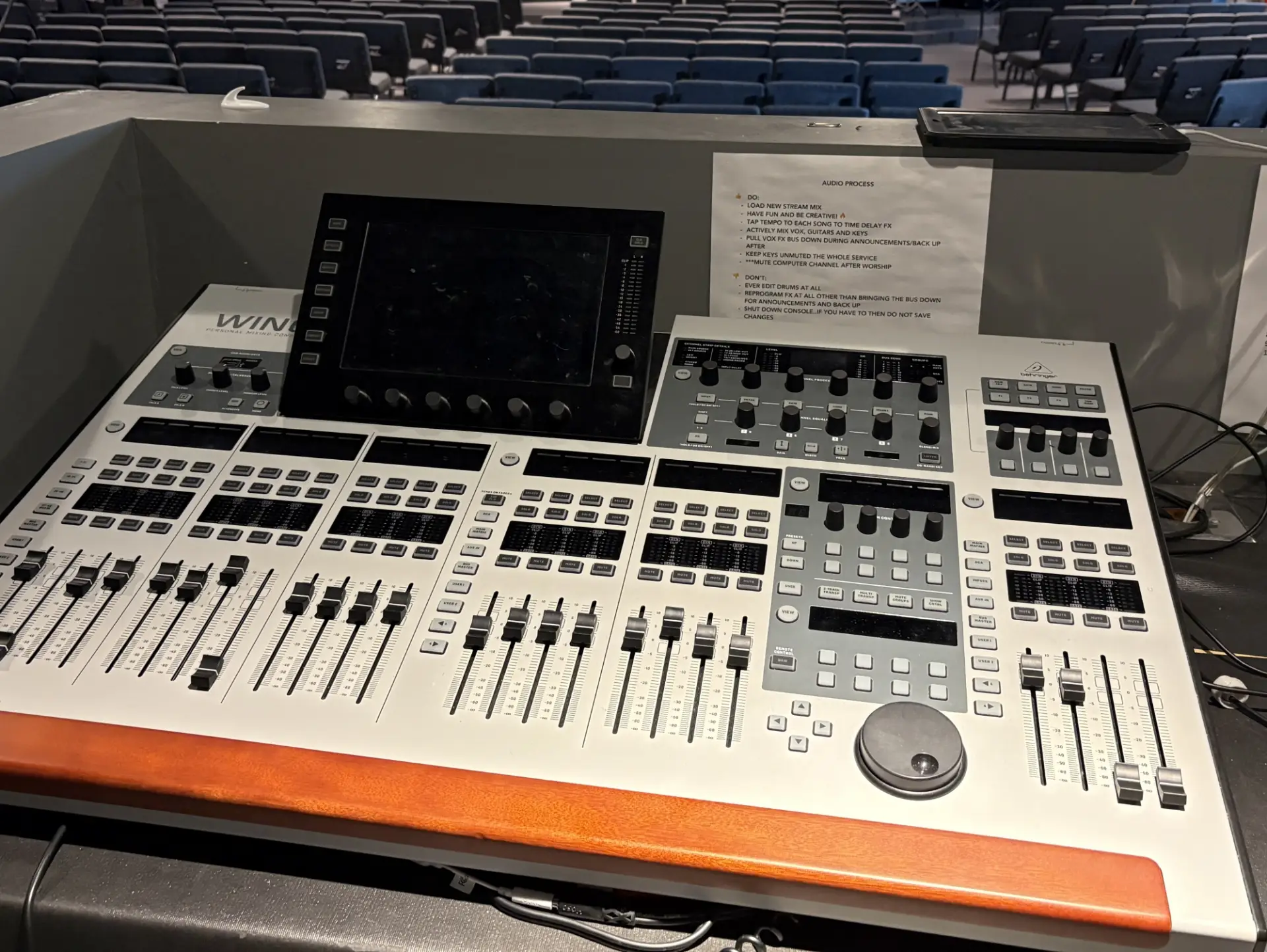
Sunday morning in a small sanctuary can feel very big when the sound isn’t right. Someone near the front feels blasted. Someone in the back is straining to catch the sermon. A bit of feedback pops up during a quiet moment of prayer, and your volunteer at the mixing board is quietly panicking.
We’ve worked with houses of worship across a range of sizes, and the small church conversation is one of the most important ones we have. Because the answer almost never starts with gear — it starts with understanding what your space actually demands.
Small churches don’t need concert rigs. You need clear sound, a setup your volunteers can manage confidently, and a system that fits the way your church actually worships. Here’s how to think through it.
Start With the Room You Actually Have
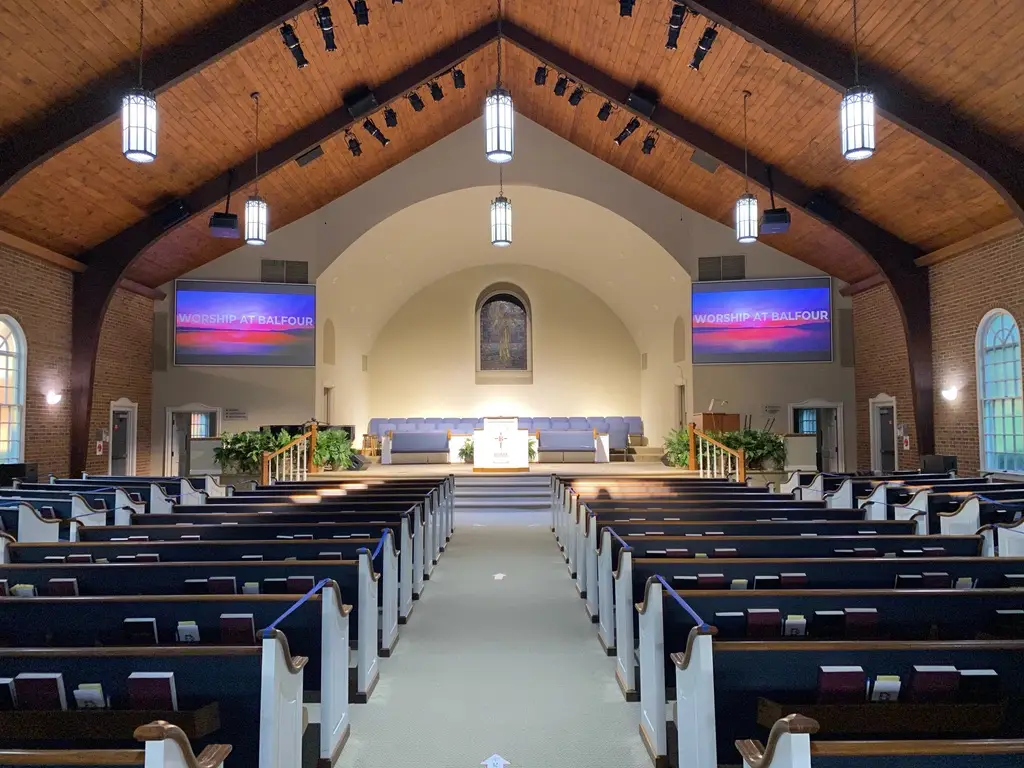
Every small church sound system lives inside a room, and that room sets hard limits on what your speakers can do. This is true in large sanctuaries and it’s just as true when you’re working with 80 or 150 seats.
Many small sanctuaries are acoustically challenging by design — tile floors, drywall, high ceilings, glass, multipurpose rooms that double as fellowship halls. Hard surfaces reflect sound. The result is echo, harsh high frequencies, and smeared intelligibility. People hear noise instead of detail. When a system feels “echoy” or harsh, the speakers are rarely the whole problem. The room is part of it.
You don’t have to rebuild the building to improve things. A few targeted moves help a lot: rugs in front of the stage, padded chairs instead of bare metal or plastic, curtains on the most reflective walls, and a modest number of acoustic panels in key spots. Then make sure your speakers are pointed at the people, not at the ceiling.
A well-placed, modestly-priced system in a treated room will almost always outperform an expensive rig in a live, untreated space. Room acoustics are leverage — they multiply the value of everything else you do.
Match Your System to How Your Church Actually Worships
Before looking at any equipment, take an honest look at what you do week to week. Small churches tend to fall into a few clear patterns, and the right system for each one is different.
Some churches are primarily spoken word — a pastor mic, maybe a reader or a solo vocalist. In that context, a simple setup with a quality wireless system for the pastor, a compact mixer, and a pair of well-placed powered speakers can serve you very well. You don’t need more than what the job requires.
Other churches have a small band — two or three vocal mics, a guitar, keys, maybe light percussion. Here you need a mixing board with more room. A 12- to 24-channel mixer gives you space to manage those inputs without overwhelming your team. Full-range powered speakers, a modest subwoofer, and a couple of stage monitors are usually enough for most small rooms.
Some churches are portable — setting up every week in a school, gym, or rented hall. Portable small church sound systems need to be light, fast, and repeatable. That means powered speakers, a simple mixer, clearly labeled cables and stands, and a setup your team can execute consistently with minimal surprises.
The key idea: design for what you are, not what you imagine you might become. A system sized for your actual worship style will serve your people better than one built for a hypothetical larger version of your church.
What Actually Matters in a Small Church Sound System
Clear, Even Coverage
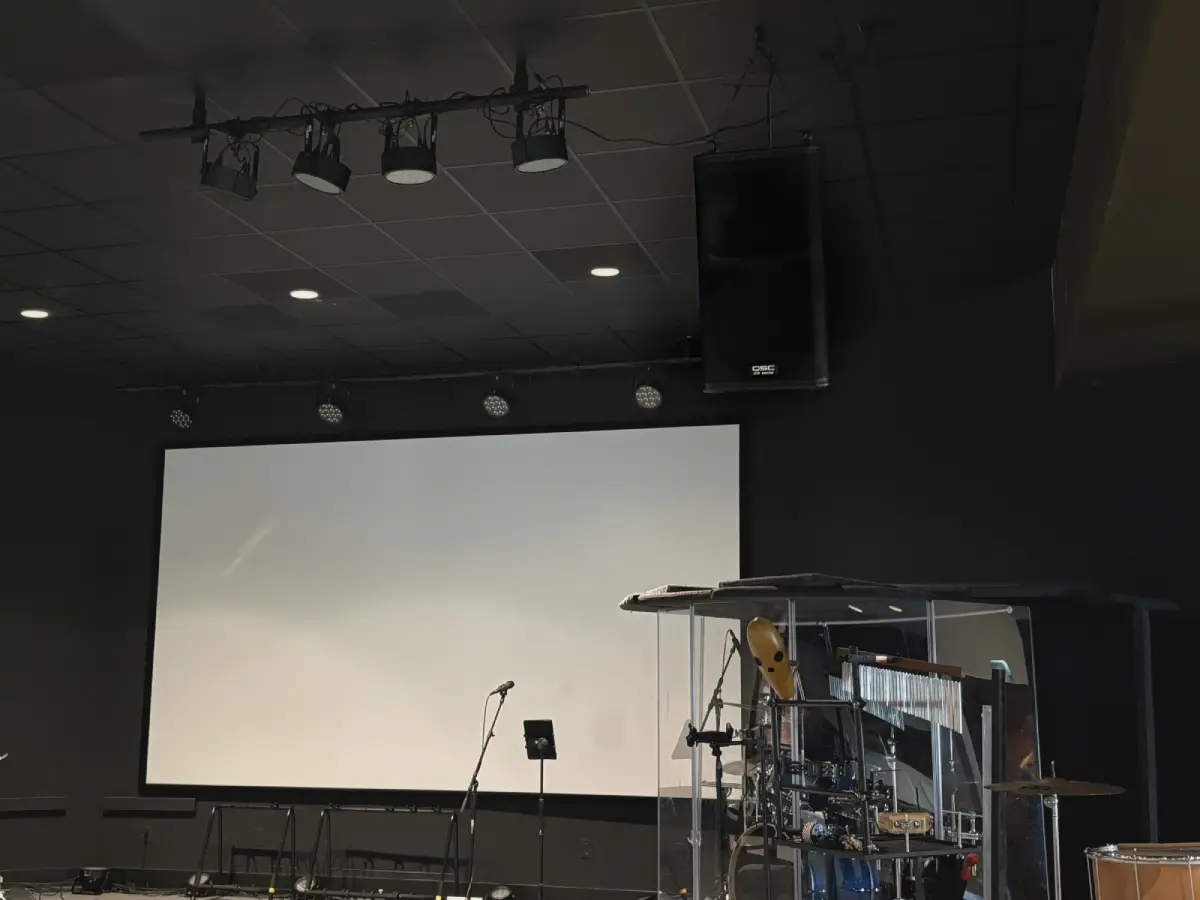
You don’t need a line array in a small sanctuary. You need everyone to hear clearly at a comfortable volume. Two well-placed speakers covering the seating area evenly will do more for you than a bigger box with a higher watt rating in the wrong position. The goal is consistent level from front to back — not blasting the front row so the back row can barely hear.
In longer rooms, a small pair of delay speakers placed partway back can help coverage feel even without pushing the main speakers harder. It’s a basic technique, but it respects how sound actually moves through a space.
Good Microphones and Stage Volume Control
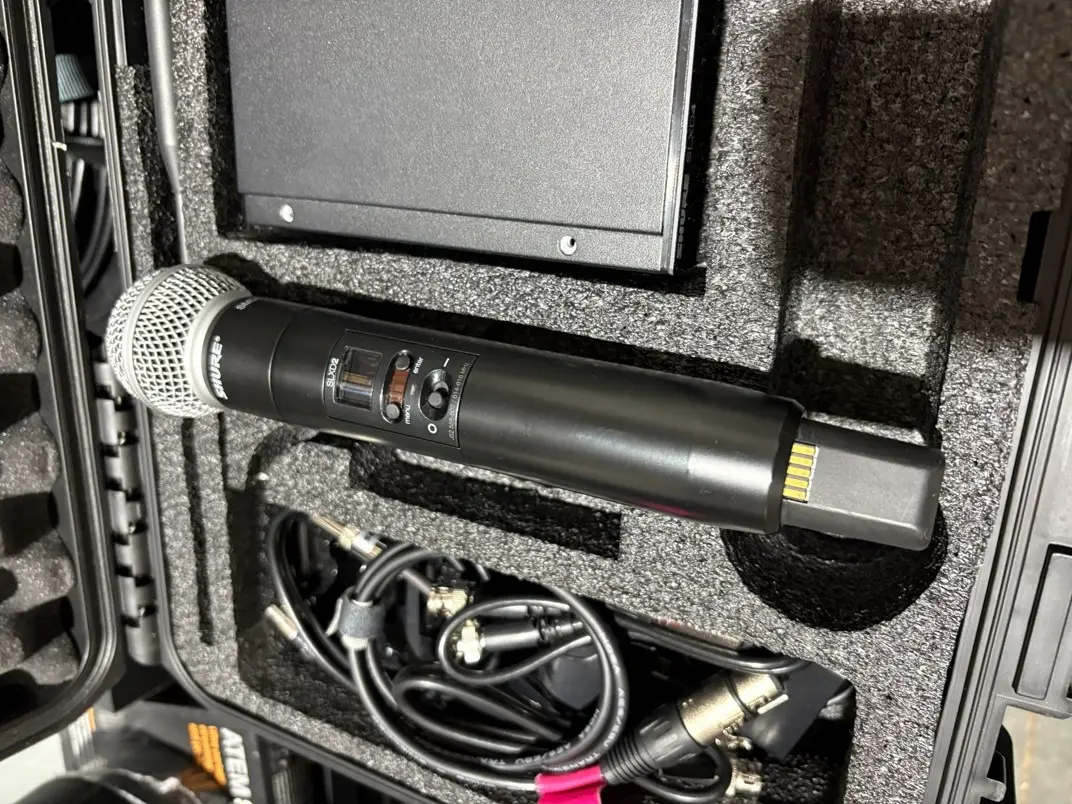
A reliable wireless system for your pastor is almost always worth the investment. Clear speech intelligibility is the primary job of most church sound systems. For vocalists, a few quality microphones that resist feedback will serve you better than a box full of cheap ones.
Stage volume also matters more than people realize. When the band is too loud on stage, you lose control of the room. Keep stage monitors at sensible levels. If your team is open to it, in-ear monitoring reduces stage volume significantly and gives your front-of-house volunteer a much easier job.
Simple Mixers and Clean Gain Structure
Digital consoles can look impressive, but in most small churches they only help if the team actually understands them. The fundamentals of the job haven’t changed: set each channel so the signal is strong but not clipping, before you touch EQ. A mixer with clear metering makes this less intimidating for a new volunteer — and that matters when your tech team turns over.
Having a professional tune your system once is one of the highest-value things you can do. Some strategic system EQ and smart routing can save your volunteers from weekly battles with feedback — and that’s worth more than most gear upgrades.
Volunteer Training and Simple Processes
Most small churches run on volunteers, not full-time tech staff. Your system design should respect that. Label every channel clearly — “Pastor,” “WL Vocal,” “Keys” — not just numbers. Build a few basic presets or starting points if your mixer allows it. Write a simple pre-service checklist and post it at the board.
Short, repeated training sessions work better than one long class. Walk team members through the checklist before every service until it becomes habit. That consistency builds confidence, and confident volunteers make better decisions under pressure.
What Usually Doesn’t Matter as Much as You Think
Large-format digital consoles with dozens of unused channels add cost and complexity without improving what your congregation hears on Sunday. If you have twelve inputs, you don’t need a sixty-four-channel surface. The same logic applies to touring-style line array systems — powerful tools, but built for large venues, not a 100-seat room.
Spec sheets can be distracting. Bit depth, sample rate, and other technical details have their place, but they won’t solve an echo problem in a hard room. A stage box supporting sixty inputs is impressive; if you use ten, it’s not serving your volunteers.
Consumer gear is worth calling out specifically. Home theater receivers and speakers marketed for living rooms are not built for steady weekly church use. They’re difficult to service, and they fail under the consistent load of regular services. The economics that make them attractive on the front end often reverse quickly on the back end.
Fancy control apps and touchscreens are in this category too. In the hands of a trained tech they can be genuinely useful. For a rotating group of volunteers, they can make simple tasks feel complicated in the worst possible moment.
Plan Small, Smart Upgrades — and Know When to Call for Help
Good stewardship in small churches isn’t about chasing impressive gear. It’s about clear sound, calm volunteers, and a plan that fits your room and your worship style.
When you focus first on room acoustics, even speaker coverage, the right microphones, clean gain structure, and steady volunteer training, your congregation hears more of the message and feels less of the strain. Each upgrade builds on the last one. The goal is moving from surviving Sunday to feeling confident every week.
Some of that work is DIY-friendly. But the professional work — rigging, system tuning, streaming paths, infrastructure decisions — is worth getting right the first time. A professional who understands the unique demands of small church sound systems can help you avoid the expensive mistakes that come from well-intentioned guesswork.
Ready to Talk Through Your Space?
We work with houses of worship of all sizes and understand the practical realities of small church AV. If you’re ready to sort through your current setup, design sound reinforcement that fits your room and budget, or plan the next step in your upgrade path, we’re glad to help. Reach out to RYGID AV and we’ll walk through it with you.
RYGID AV
122 Backstretch Ln., Mooresville, NC 28117
(980) 268-8066 • info@rygidav.com
.webp)
Recommended articles
Explore our latest news & articles below


Where to Contact + Connect with RYGID AV
Mooresville, NC 28117