
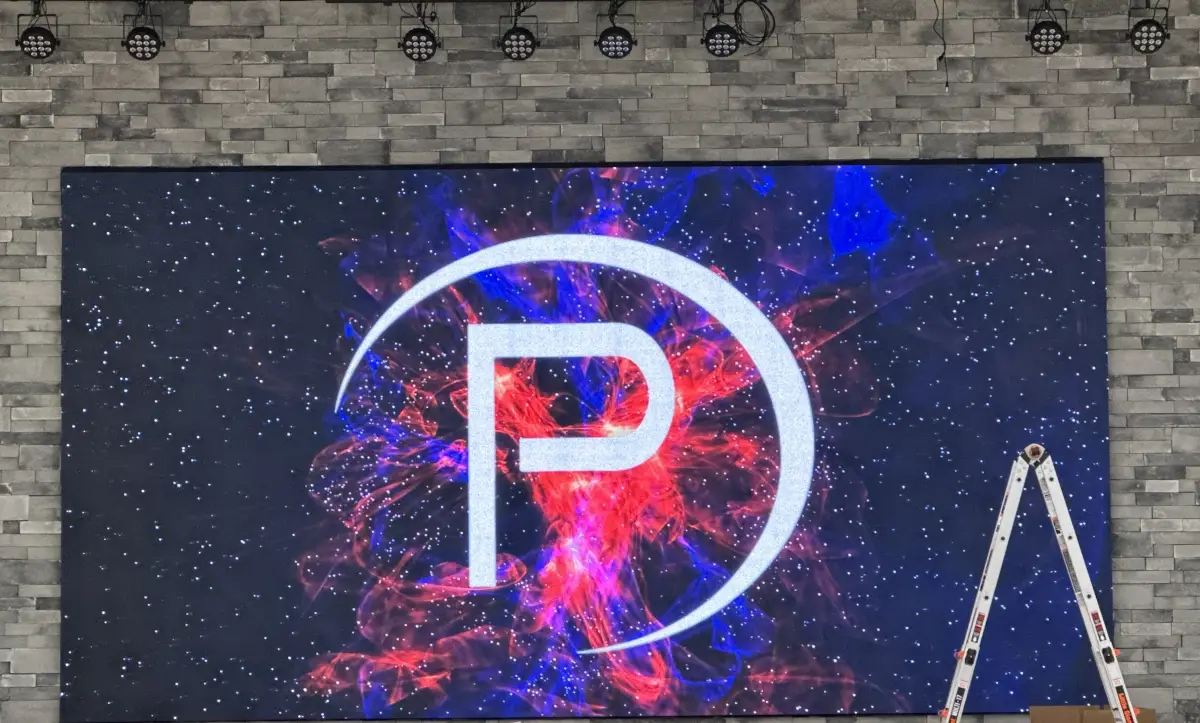
Walk into enough corporate offices or churches today and you'll start noticing something. Those big digital screens that look way brighter and sharper than a typical TV? Those are video walls, and they've become the go-to solution when a single display just isn't enough.
Some stretch across entire lobby walls. Others sit behind a stage carrying camera feeds, lyrics, or presentations. They're not regular TVs. They're purpose-built systems designed to handle the demands of commercial spaces.
More organizations want better ways to communicate, share content, and create visuals that actually stick with people. A single screen often feels too small for a large room, and projectors wash out under bright lights. That's why LED video walls and other video wall technologies have taken off.
This guide breaks everything down in straightforward terms. You'll learn what a video wall actually is, how LED panels work, and what you should think through before installing one. The goal is to make the whole concept easy to understand, even if display technology isn't your thing.
What Is a Video Wall?
A video wall is a collection of digital screens working together as one large display. Instead of using a single screen, you combine several displays to form a bigger surface. You've probably seen walls built from LCD panels in older conference centers or airport terminals. That older style still shows up in many places - you can spot them by the thin lines where each panel meets.
Modern video walls rely much more on LED technology. LED panels fit together tightly without visible borders, creating a smooth, uninterrupted surface that looks like one giant digital display. Brighter, cleaner, and easier to scale to large sizes.
Video walls can be simple or extremely advanced. They can show one large image, or they can display several content sources at once. That flexibility is why they work so well for control rooms, broadcast environments, and large meeting spaces.
What Makes an LED Video Wall Different
Most people can recognize the difference between older LCD panels and newer LED panels the moment they walk into a room. LED video walls have a crisp look that stands out, especially in bright locations.
Brightness and Visibility
LED panels create their own light, which means they stay readable even in spaces with large windows or strong room lighting. A traditional projector or some LCD panels wash out in a bright lobby. LED walls don't.
Seamless Surface
LED tiles lock together in a way that removes visible seams. Stand back even a short distance and the wall looks like one clean piece. That's one of the biggest reasons businesses choose LED over other options when they want a focal point that looks sharp.
Flexible Size and Shape
These panels can be arranged in many configurations. You can build a long, wide wall for a stage backdrop or create a tall, narrow display in a hotel lobby. Some setups even curve or wrap around corners - flexibility that typical LCD panels can't match.
Durability and Life Expectancy
LED video walls last. They're designed for heavy use and often run for long hours each day, making them suitable for digital signage in busy buildings, long presentations, and continuous monitoring in control rooms.
Key Components of an LED Video Wall System
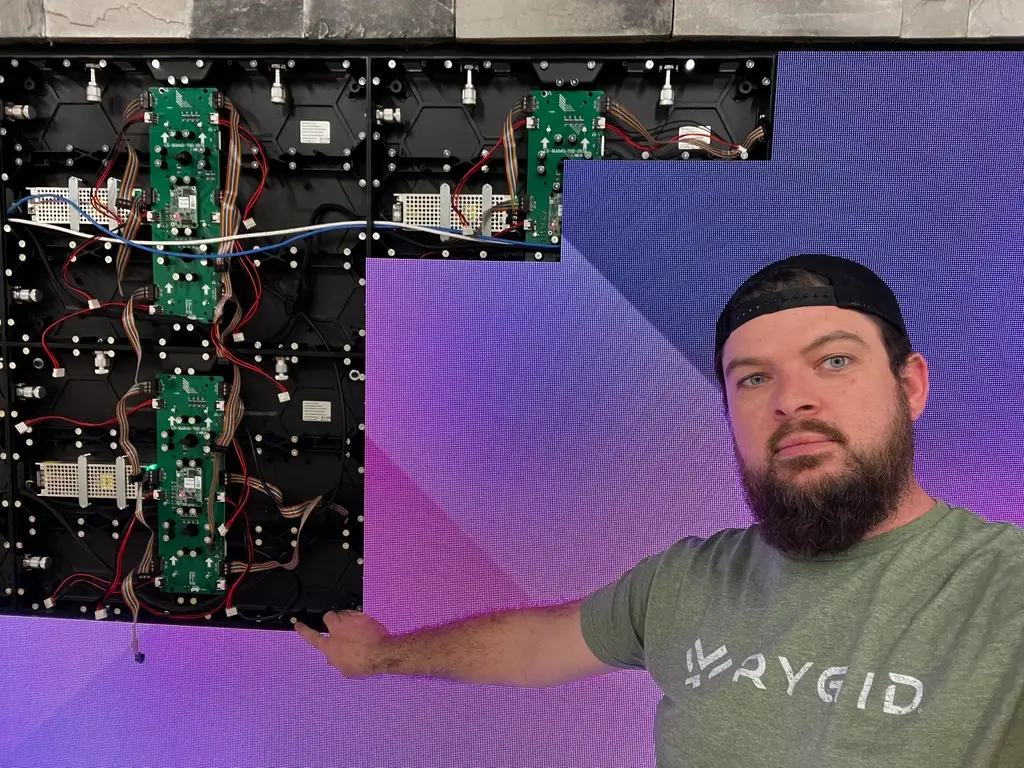
LED video walls look simple once they're powered on, but there are several pieces working behind the scenes. Here's what you need to know.
1. LED Panels / Tiles
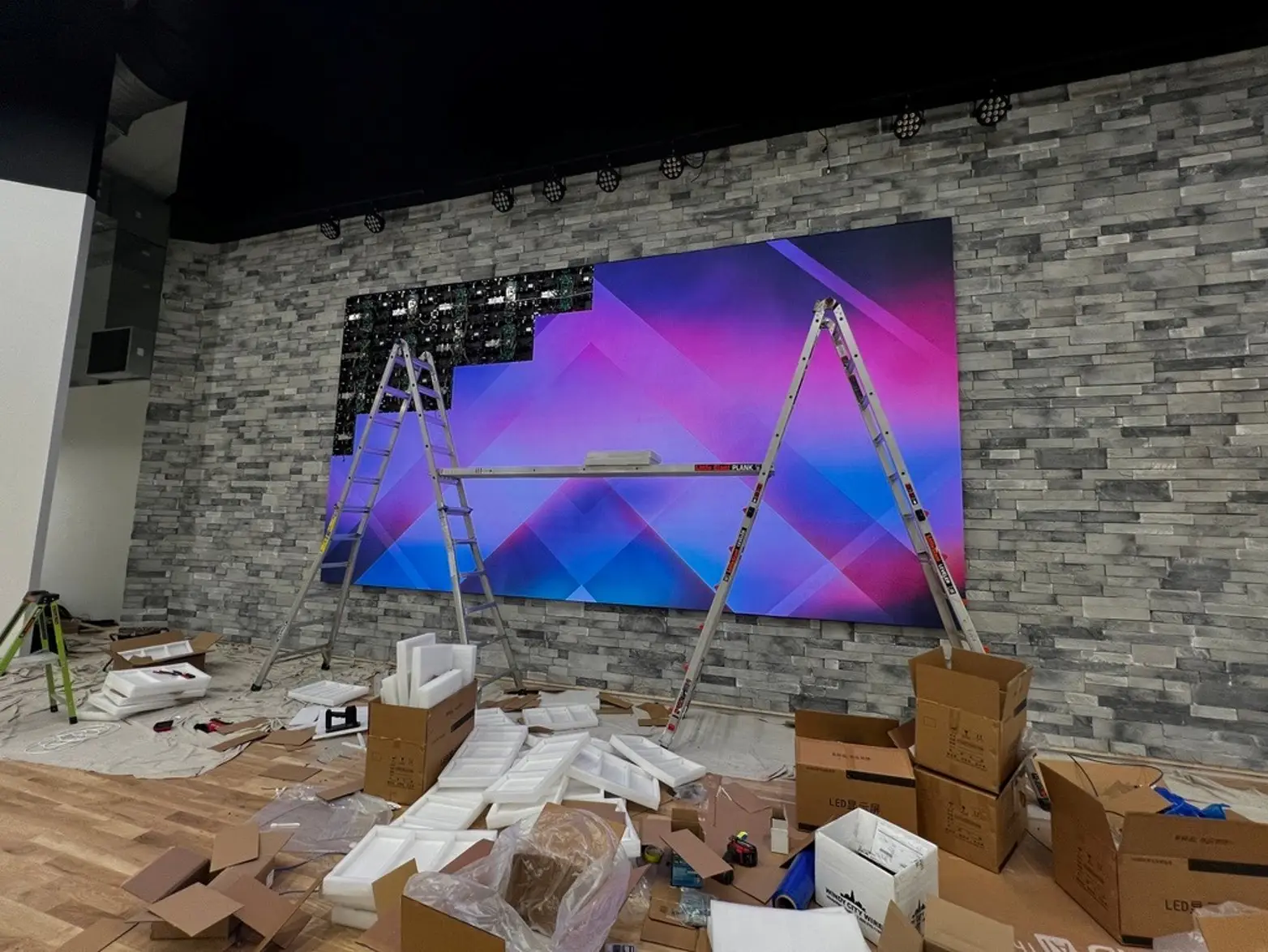
These are the building blocks. Each panel contains clusters of tiny LEDs that create the pixels. Connect many panels together and you get the full image. Pretty straightforward scaling.
2. Mounting and Installation Frame
The panels need a strong frame so they line up correctly. A mounting frame keeps them in place and ensures the surface stays even. Good framing also helps with future maintenance and alignment.
3. Video Wall Processor
This processor receives content from your devices and maps the image across the entire wall. It lets you switch inputs, resize windows, or show multiple videos at once. Without it, the wall can't function the way it's meant to.
4. Signal and Power Distribution
Cables run through the wall to carry power and content. Proper distribution keeps the wall stable and avoids interruptions.
5. Control Software
Control software lets users switch layouts, trigger scenes, or schedule content for digital signage. Most software is designed so a non-technical team member can operate the system with basic training.
Understanding Pixel Pitch, Pixel Density, and Image Quality
When people shop for LED video walls, one term comes up constantly: pixel pitch. Pixel pitch is just the distance between each pixel. Smaller pitch means pixels pack tighter together, which gives you a sharper image. Larger pitch has a bit more space between pixels, so it works better at longer viewing distances.
How to Match Pixel Pitch to the Environment
- Short viewing distance: You need a smaller pixel pitch and higher pixel density. Common in conference rooms, studios, and interactive video walls.
- Long viewing distance: A wider pixel pitch works fine. Typical for auditoriums, sanctuaries, and large corporate lobbies.
Choosing the right pitch helps you get a clear picture without overspending on unnecessary resolution.
Video Wall Technologies Compared
Not every display technology is the same, and choosing the right one depends on your environment.
LED Video Walls vs LCD Panels
- LED walls offer seamless surfaces
- LCD video walls have visible lines where each screen meets
- LED handles brightness better and has wider viewing angles
- LCD can be more affordable for small, simple setups
LED Video Walls vs Projectors
- LED walls stay bright even in well-lit rooms
- Projectors rely on a surface that reflects light and often fade under room lighting
- LED has higher durability and lower maintenance over time
- Projectors can be a budget-friendly choice for temporary or small spaces
LED Video Walls vs Single Large Displays
- Large displays are limited in size
- LED walls can be as big as the room allows
- LED scales easily for custom shapes and unique layouts
Common Spaces Where LED Video Walls Make Sense
Video walls appear in almost every type of modern space because they solve practical problems.
Corporate Offices
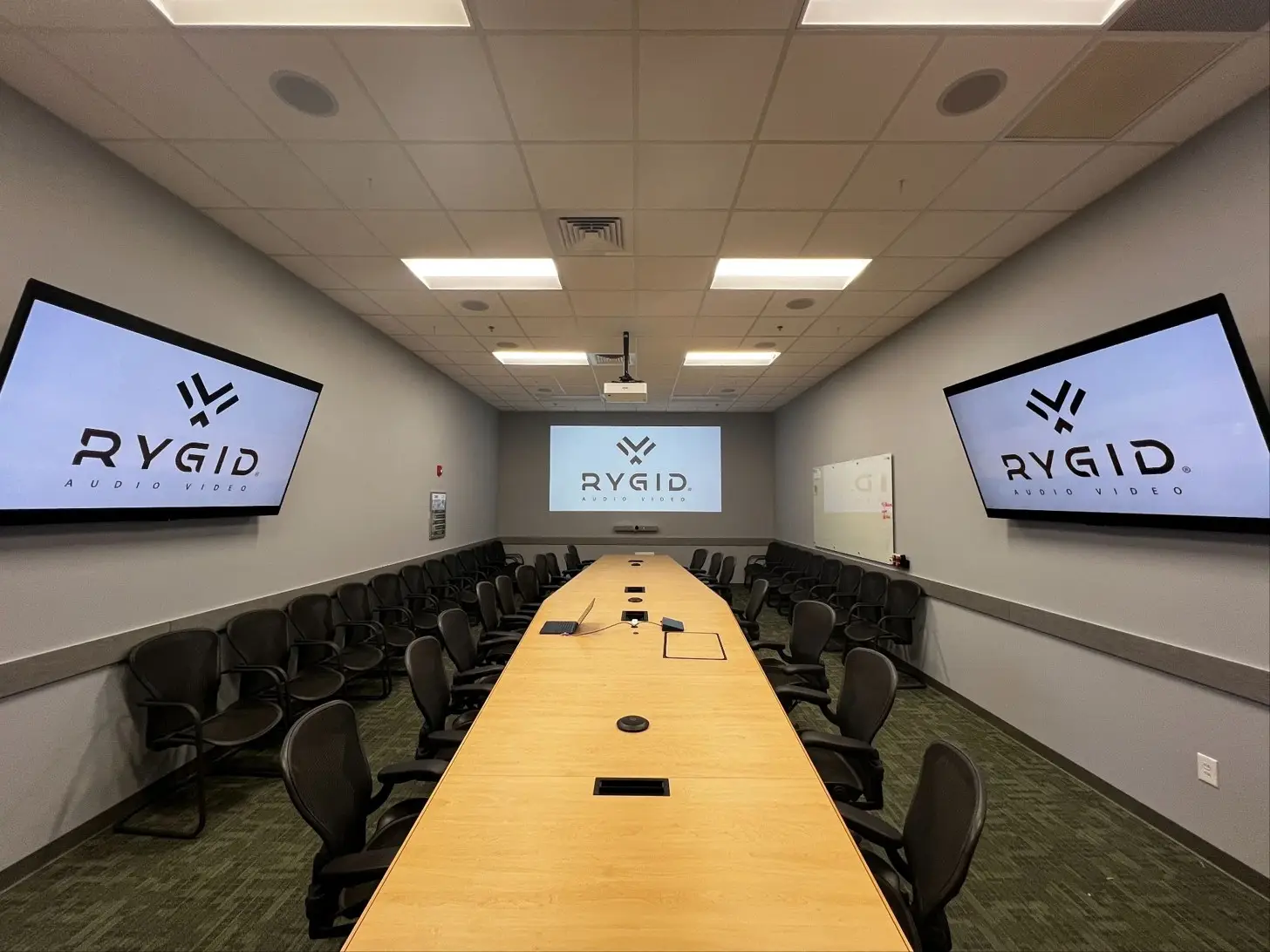
Large entry displays create a strong first impression. Meeting rooms use walls for presentations, remote collaboration, and interactive conference room setups.
Houses of Worship
LED video walls are becoming the preferred replacement for projectors because they're bright, easy to read, and visible from long distances.
School Auditoriums and Gyms
They help with assemblies, performances, and announcements that need to reach a large crowd.
Control Rooms
Operators need to monitor feeds, data, maps, and alerts on one surface. A video wall makes that easier to manage.
Retail and Hospitality
Digital signage, menus, promotional loops, and large creative visuals attract attention and help guide visitors.
What to Consider Before You Install a Video Wall
Choosing a video wall gets easier when you think through a few core points.
1. Room Size and Lighting
Spaces with a lot of natural light benefit from LED. Smaller rooms may not need extremely high brightness.
2. Viewing Distance
Your viewing distance determines the correct pixel pitch. A space with close viewers needs tighter pixel pitch.
3. Content Style
Detailed presentations and text need sharper clarity. Simple visuals can use a wider pixel pitch.
4. Mounting and Installation Requirements
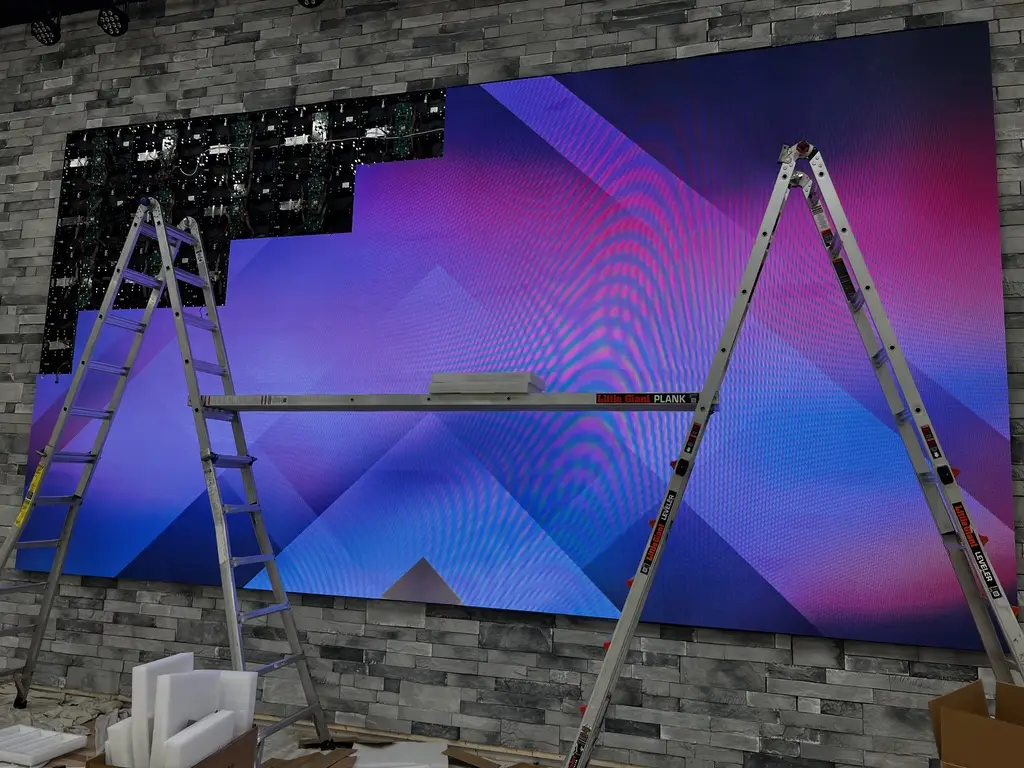
Walls, ceilings, and freestanding structures all require different mounting approaches. Proper installation ensures safety and long-term reliability.
5. Integration With Existing AV Systems
If you already have cameras, audio, streaming tools, or control devices, the wall should connect smoothly with the rest of your setup. Professional AV system design ensures all components work together reliably, following industry standards for integration and performance.
6. Long-Term Support and Maintenance
LED walls are durable, but calibration and upkeep help keep image quality consistent for years.
Ready to Explore LED Video Walls for Your Space
LED video walls offer a clear, bright, and flexible way to share content in all types of buildings. They work well in lobbies, training rooms, auditoriums, and many other environments where a single display isn't enough. The right choice depends on your room size, the type of content you use, and how close your audience will stand.
If you're thinking about a digital display for your space and want guidance on size, layout, or pixel pitch, the team at RYGID AV can help. They design systems that fit the room, the budget, and the day-to-day needs of your staff. A short conversation is usually enough to point you in the right direction and get your project moving.
.webp)
Recommended articles
Explore our latest news & articles below


Where to Contact + Connect with RYGID AV
Mooresville, NC 28117