
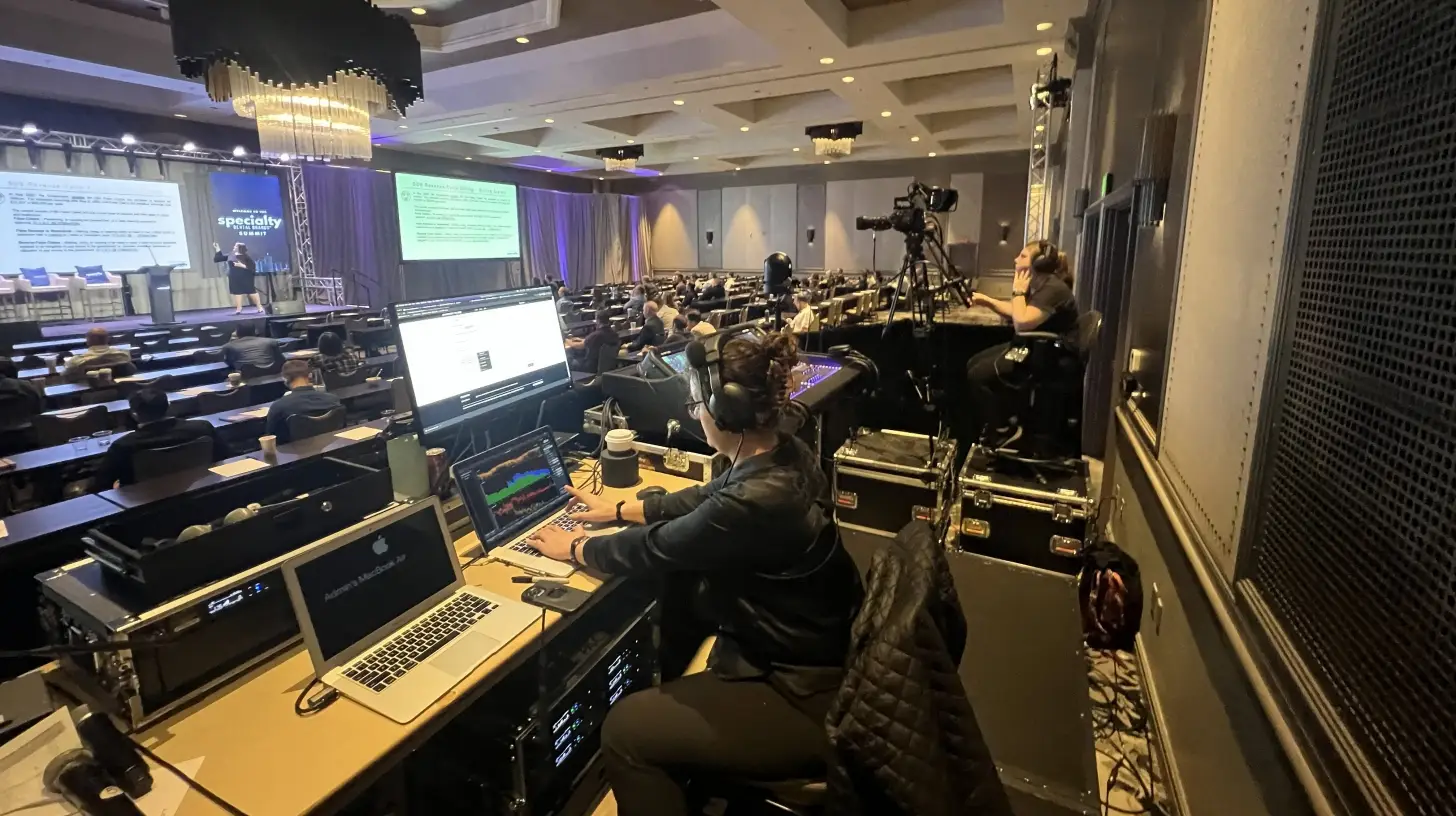
AV equipment is audiovisual equipment that captures, processes, and displays sound and images in professional spaces. If you've attended a meeting where everyone could hear the presenter clearly, watched a church service with crisp video, or given a presentation that actually worked, you've experienced professional AV equipment in action.
The term "AV" stands for audiovisual - the combination of audio (sound) and visual (images) technology working together. While you might have similar technology at home, professional AV equipment is built for entirely different demands: constant use, multiple users, and the reliability expectations that come with mission-critical communication.
What AV Equipment Actually Does
Professional AV equipment handles four basic functions in any environment:
Capture - Microphones pick up voices, cameras record or transmit video, and audio interfaces bring it all into the system.
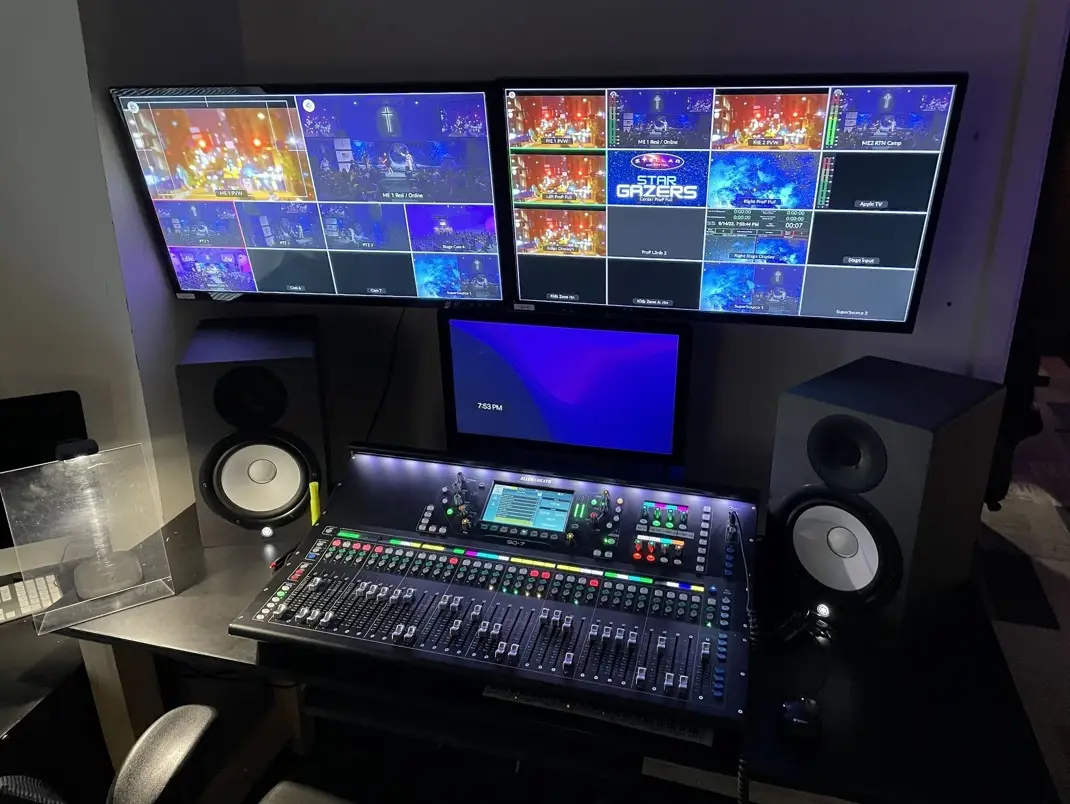
Process - Mixers balance audio levels, video switchers route multiple sources, and control processors manage how everything works together.
Distribute - Amplifiers power speakers, video distribution sends signals to multiple displays, and network infrastructure moves everything where it needs to go.
Display - Speakers deliver sound to the audience, projectors or monitors show visual content, and everything comes together for clear communication.
Understanding the difference between home and commercial AV equipment helps explain why professional systems work differently than consumer electronics. The demands are not comparable.
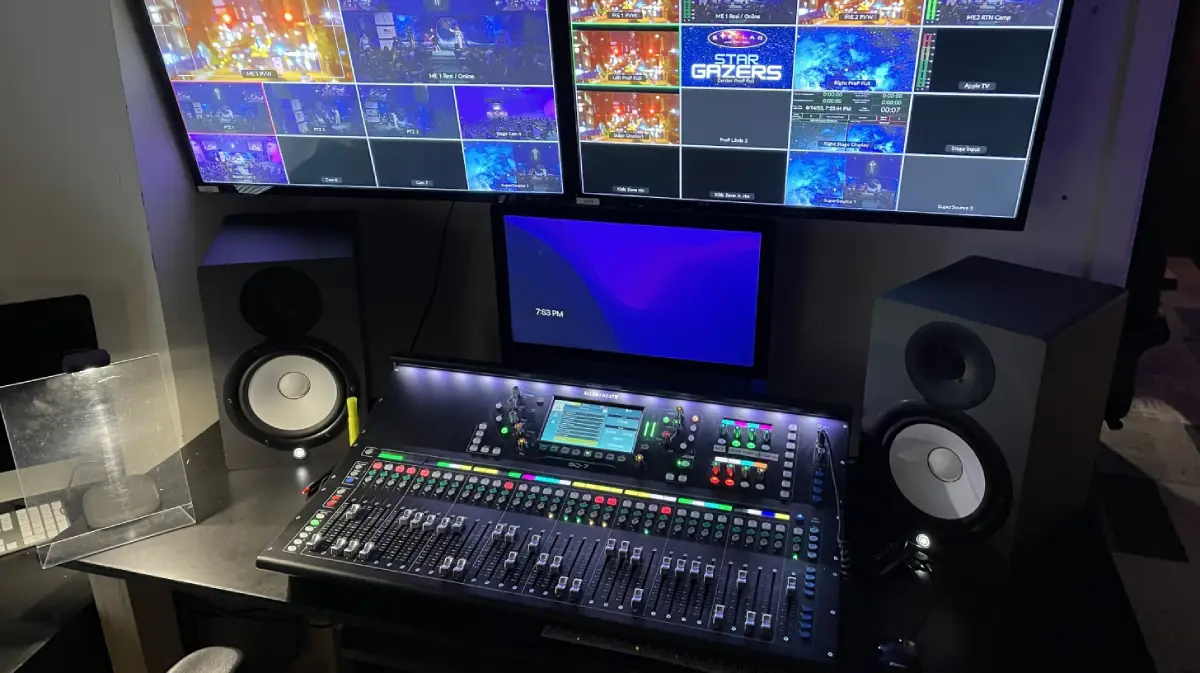
The Main Categories of AV Equipment
Audio Equipment
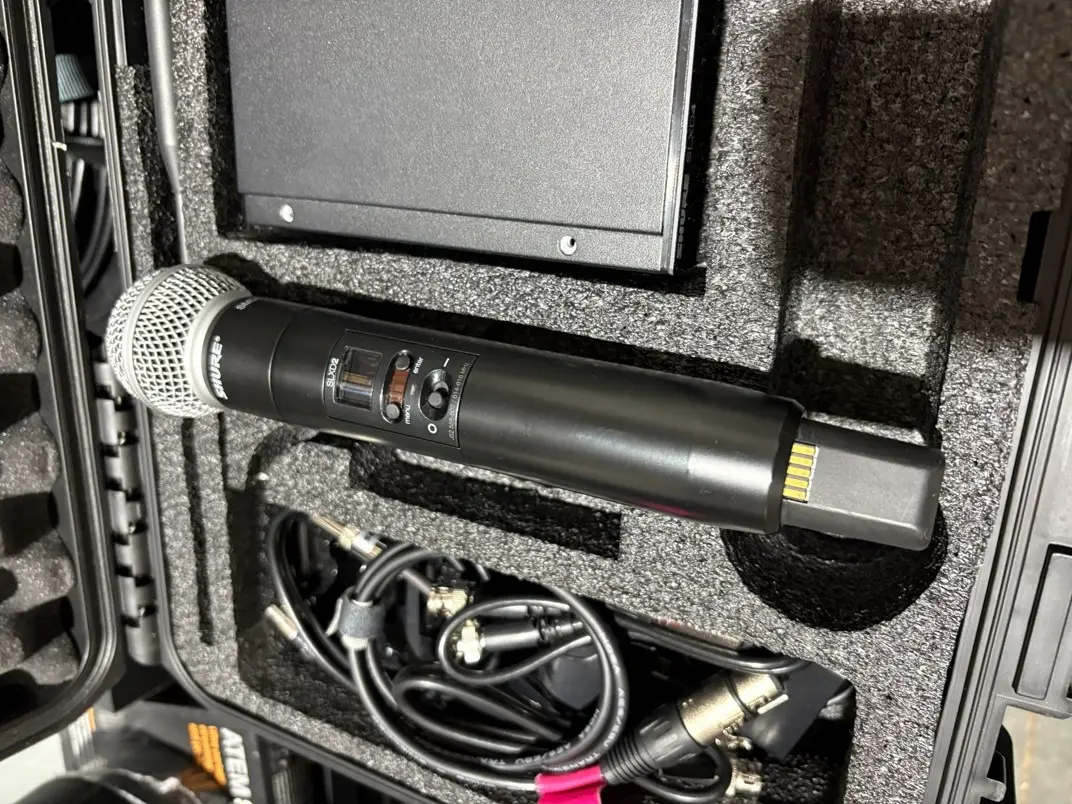
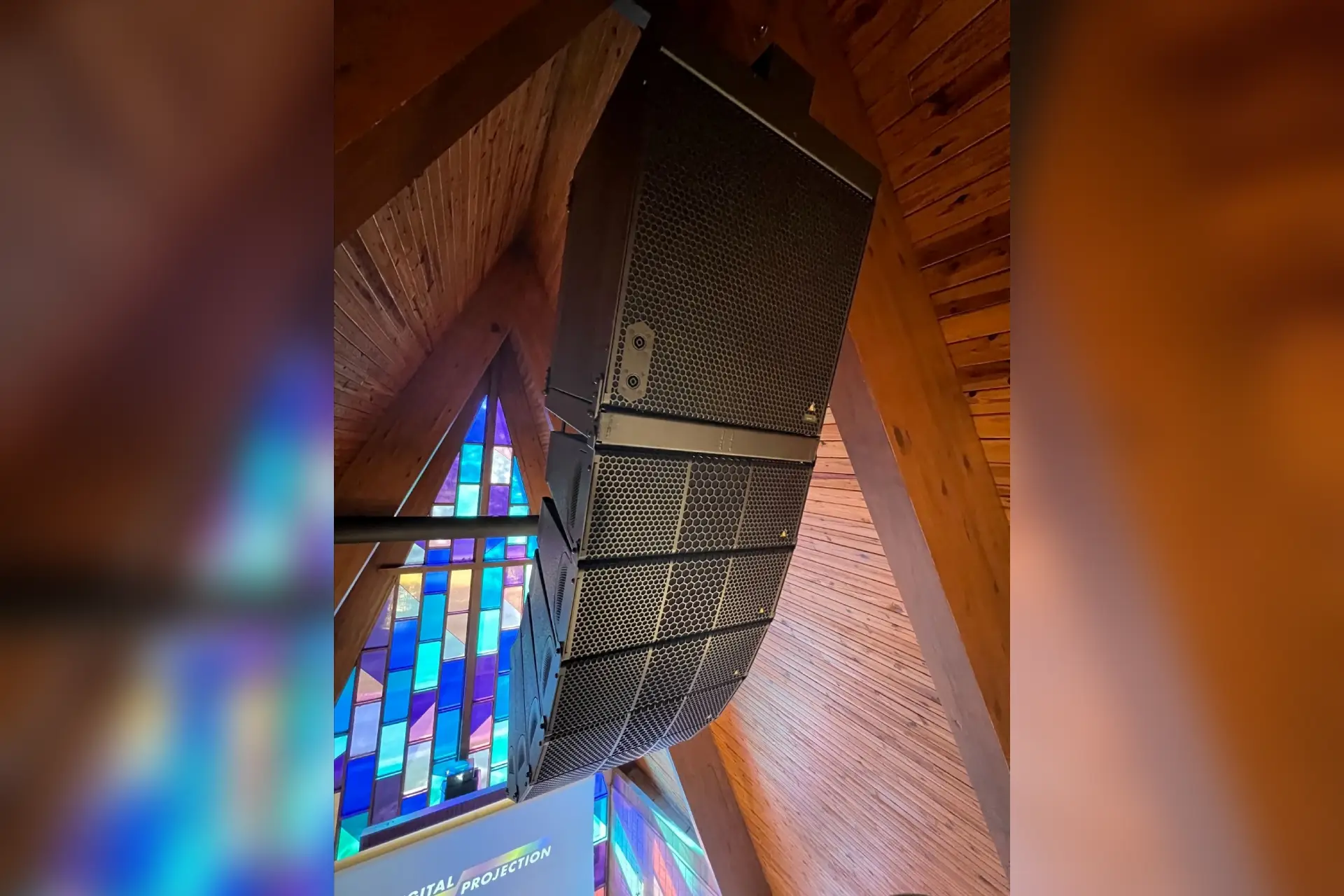
Microphones capture sound - whether that's a pastor speaking, a presenter in a conference room, or a panel discussion. Speakers distribute that sound evenly throughout the space. Mixers and processors control levels, eliminate feedback, and ensure everyone hears clearly regardless of where they're sitting.
We see this question all the time from churches: "Can't we just use a portable speaker?" The answer depends on your space and needs, but professional audio equipment is engineered to handle acoustically challenging environments that consumer gear can't manage.
Video Equipment
Displays include projectors, flat screens, and LED walls that show content to your audience. Cameras capture video for recording or live streaming. Video switchers and distribution equipment route multiple sources (laptops, document cameras, streaming feeds) to the right displays at the right time.
A common scenario: You need to show a PowerPoint presentation on the main screen, share it with remote participants on a video call, and switch seamlessly to a live camera feed. That requires video equipment designed to handle multiple signals simultaneously.
Control Systems
Control systems make everything work together without requiring a technical degree to operate. Someone walks into a conference room, presses one button, and the displays turn on, the sources route correctly, and the audio sets to appropriate levels.
Without proper control integration, using professional AV equipment becomes complicated enough that many organizations don't use what they've paid for. You've invested in capable technology that sits idle because operating it feels too difficult.
Infrastructure
Cabling, networking equipment, power conditioning, and mounting hardware form the invisible foundation that everything else relies on. Many DIY installations fail right here - the visible equipment might be adequate, but the infrastructure can't support reliable operation.
Professional installation means proper cable management, appropriate network bandwidth, clean power delivery, and physical mounting that can handle years of use.
Where AV Equipment Works
Corporate conference rooms need video conferencing, wireless presentation, and audio that makes remote participants feel included. The equipment has to work reliably because failed meetings cost time and money.
Worship spaces require sound reinforcement that reaches every seat, video displays for lyrics and announcements, and often live streaming capabilities to reach online audiences.
Educational facilities use AV equipment for lectures, presentations, distance learning, and collaboration spaces where students and faculty share ideas.
Auditoriums and presentation venues demand higher-end systems that can handle large audiences, complex productions, and the technical requirements of professional events.
Each environment has specific needs, but they all share one requirement: reliability when it matters most.
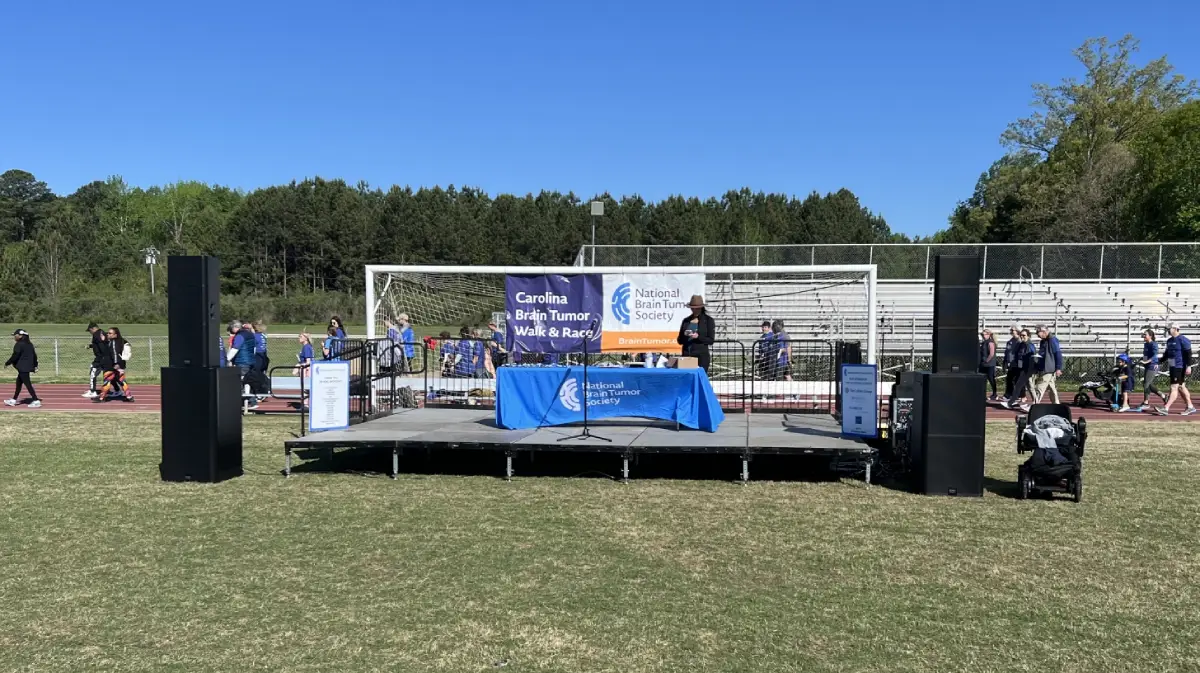
Why Professional AV Equipment Matters
The difference between consumer and professional AV equipment shows up when you depend on it. Home electronics are designed for occasional personal use. Professional AV equipment is engineered for constant operation, multiple users, and integration with other systems.
We've seen organizations try to use consumer equipment in commercial settings. It might work initially, but pushing equipment beyond its design limits leads to premature failure, inconsistent performance, and frustrated users who stop trusting the technology.
Professional AV systems are also planned with lifecycle and budgeting in mind - understanding that technology investments need to serve your organization for years, not months.
Understanding Your AV Needs
If you're researching AV equipment, you're probably facing a decision about what your organization actually needs. Understanding the basics puts you in a better position to have productive conversations about solutions.
Every space is different. A small conference room has different requirements than a large worship center. A simple presentation setup serves different needs than a full video production environment.
At RYGID AV, we work with organizations to understand their actual needs before recommending equipment. Sometimes that means a straightforward conference room setup. Sometimes it's a comprehensive church AV system. But it always starts with understanding what you're trying to accomplish.
If you're ready to explore what AV equipment makes sense for your specific situation, we'd be glad to talk through your needs and help you make informed decisions about solutions that will actually work for how you'll use them.
RYGID AV | 122 Backstretch Ln., Mooresville, NC 28117
(980) 263-9194 | info@rygidav.com
.webp)
Recommended articles
Explore our latest news & articles below


Where to Contact + Connect with RYGID AV
Mooresville, NC 28117