
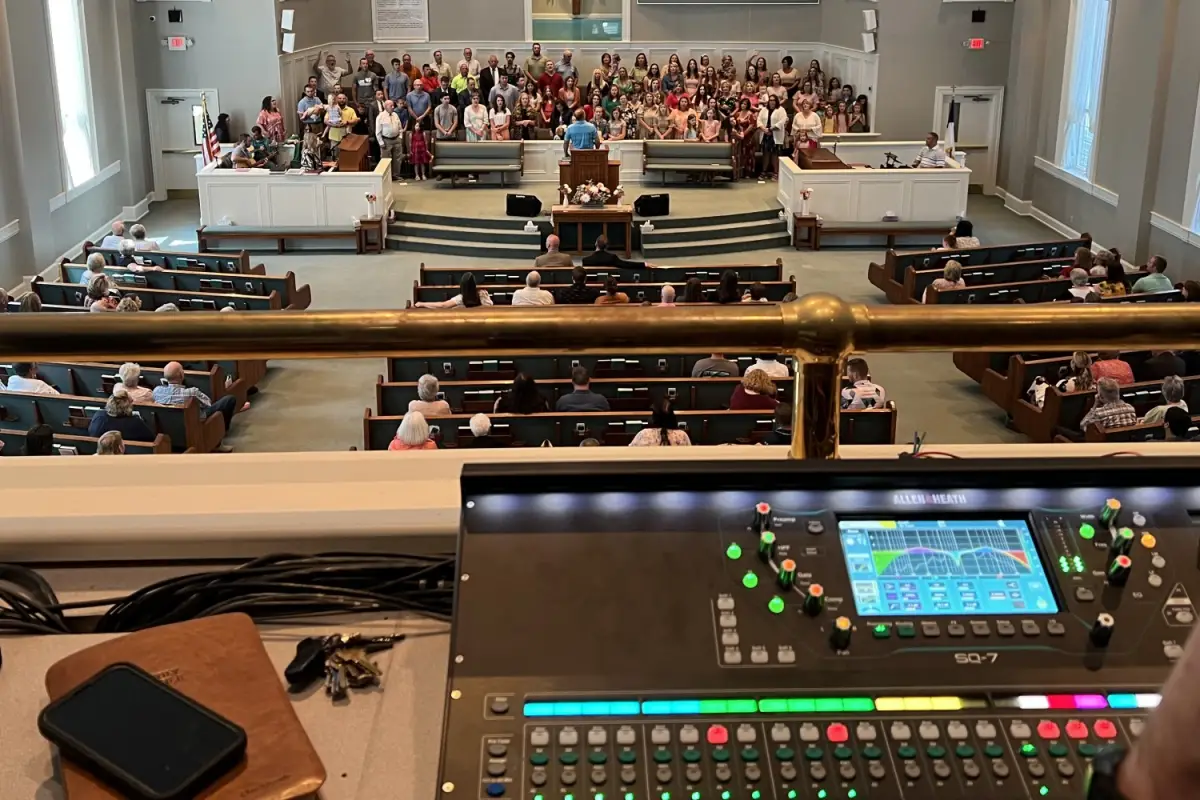
I get this question a lot: "What's the best sound mixer for our church?"
There isn't one universal answer. A church with a volunteer-led worship team and a weekly livestream has different needs than a large ministry with a dedicated production staff and multiple venues. But after helping churches evaluate and install audio systems for more than 15 years, I've learned that the right mixer is almost always the one that supports your worship experience, fits your team's capabilities, and doesn't box you in as your ministry grows.
If you're starting from scratch or replacing aging equipment, here's how to think through the decision.
What Should Churches Prioritize When Choosing a Sound Mixer?
Selecting a sound mixer is about more than comparing specifications. The best choice often comes down to how well the mixer supports the people and ministries that will use it every week.
Volunteer usability
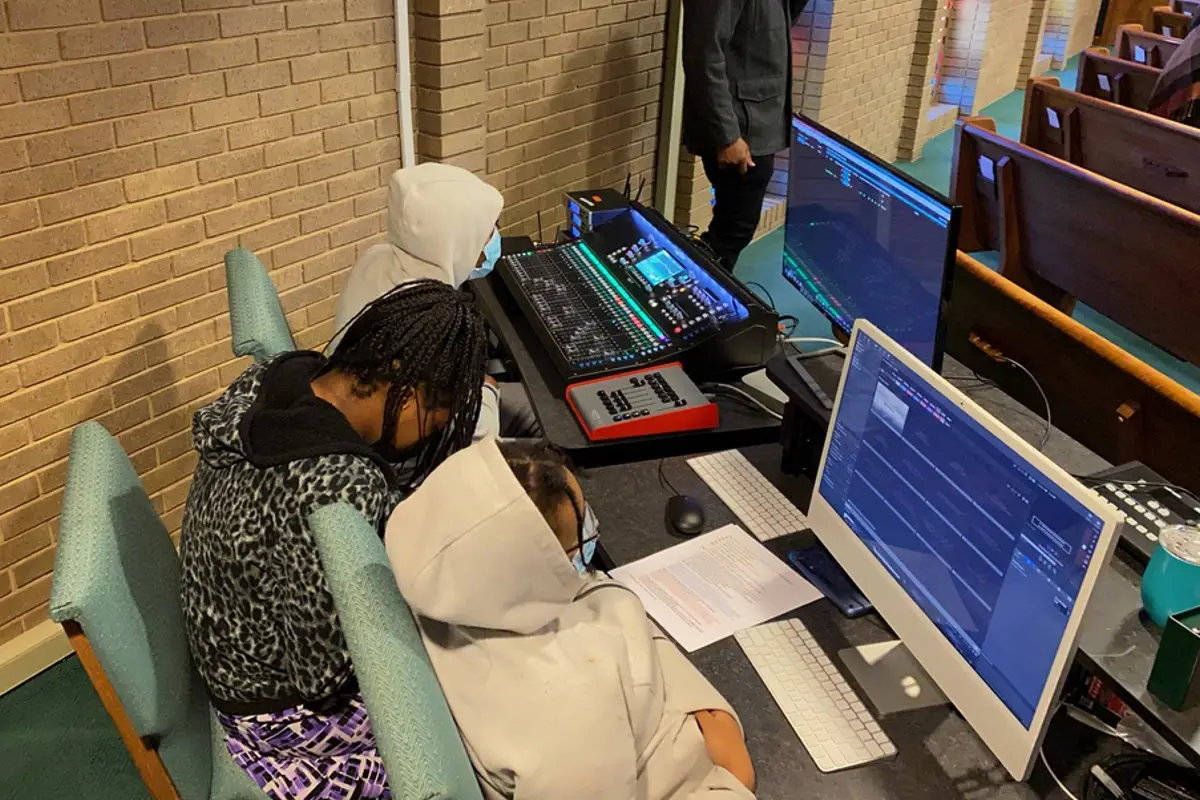
Most churches rely on volunteers to operate their audio systems. A mixer may offer advanced capabilities, but if it requires extensive training or feels overwhelming to volunteers, it creates unnecessary problems. The easier a mixer is to learn and operate, the more consistent your audio will be week to week. When evaluating a mixer, ask yourself: How quickly can a new volunteer learn the basics? Is the interface intuitive without being oversimplified?
Routing capabilities
Today's churches need more than a single front-of-house mix. Most ministries require separate feeds for livestreams, recordings, overflow spaces, and hearing assistance systems. A mixer with sufficient routing flexibility can support all of those needs now and as they expand.
Channel count
Plan for where you're headed, not just where you are today. A church with a pastor microphone and a small worship team has very different needs than one that regularly incorporates choirs, guest musicians, and special productions. One mistake I see often is churches buying a mixer that only meets today's needs — and then running out of capacity within a few years. When planning channel count, consider your worship team inputs, all microphones, playback devices, and any seasonal or special event requirements. Building in extra capacity upfront saves real headaches down the road.
Livestream support
For many churches, online ministry has become a permanent part of their outreach strategy. A mix that sounds great in the room doesn't always translate well online. The right mixer should make it possible to create separate mixes for in-person and online audiences — and do it without requiring a second console.
Budget and long-term value
Price matters, but it shouldn't be the only factor. In most cases, investing in a mixer that can serve your ministry for years will provide greater value than selecting the lowest-cost option today. Think about expected lifespan, reliability, training requirements, and manufacturer support — not just purchase price.
My Most Recommended Sound Mixer for Churches
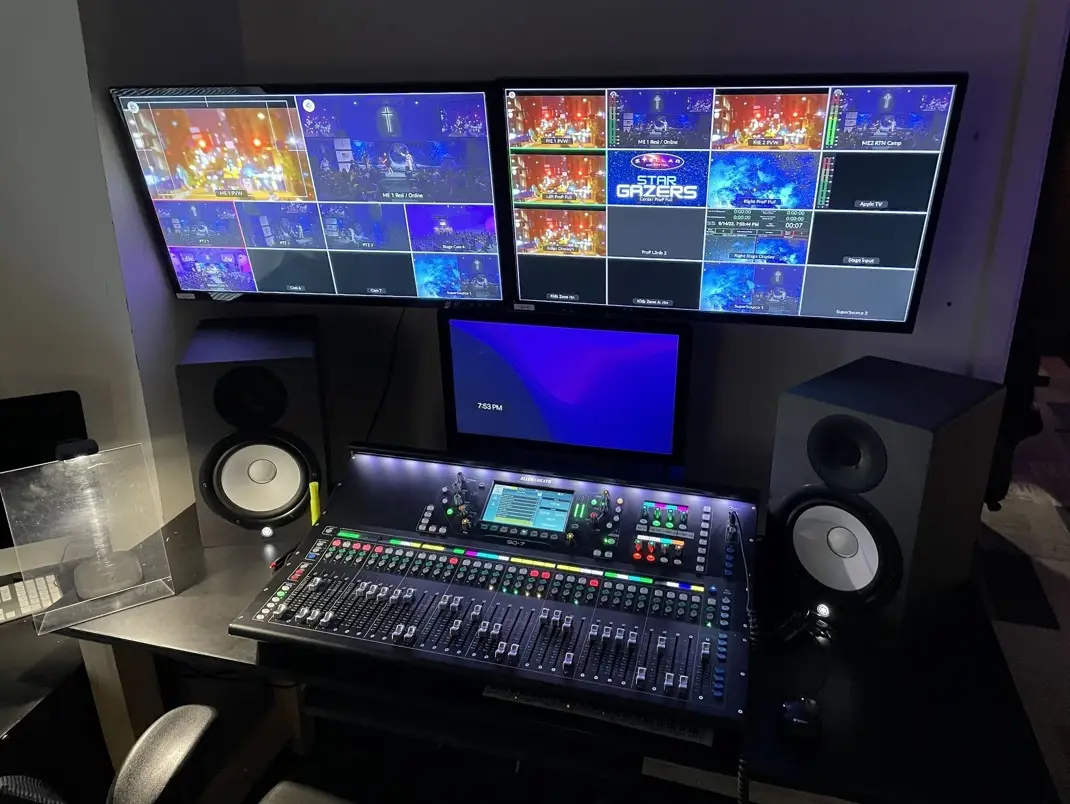
After doing this work for more than 15 years, one mixer family consistently comes up: the Allen & Heath SQ Series.
To be clear, it's not the only quality mixer available. But for most churches I work with, it hits a combination of usability, performance, and long-term value that's hard to match at its price point.
Why the SQ Series works for churches
The SQ platform gives you 48 channels of processing at 96kHz along with 26 mix buses. In practical terms, that means your main sanctuary mix, all your monitor mixes for the worship team, and your livestream feed can all run through one console without compromise. Many comparable consoles at this price point claim similar channel counts on paper — but when you're actually running all those channels simultaneously, the audio quality degrades. The SQ Series has more under the hood than the specs suggest, and we've verified that across years of real-world installations.
It's also worth knowing that Allen & Heath wasn't always the recommendation. About 15 years ago, they had reliability concerns in the industry. But they developed a new proprietary processing chip that's now across their entire current lineup, and the difference is significant. These systems have been rock-solid and stable in live church environments, and that consistency is a big part of why we keep recommending them.
One other thing churches appreciate is the routing flexibility. The SQ Series supports multiple simultaneous mixes — front-of-house, stage monitors, livestream, overflow, hearing assistance — without requiring additional hardware. And with Allen & Heath's iPad apps and software options, you can manage complex needs without adding consoles.
For a deeper look at the full SQ Series, including how it performs in both church and corporate environments, we've written a detailed product breakdown that covers the technical specs and real-world application.
Which SQ model is right for your church?
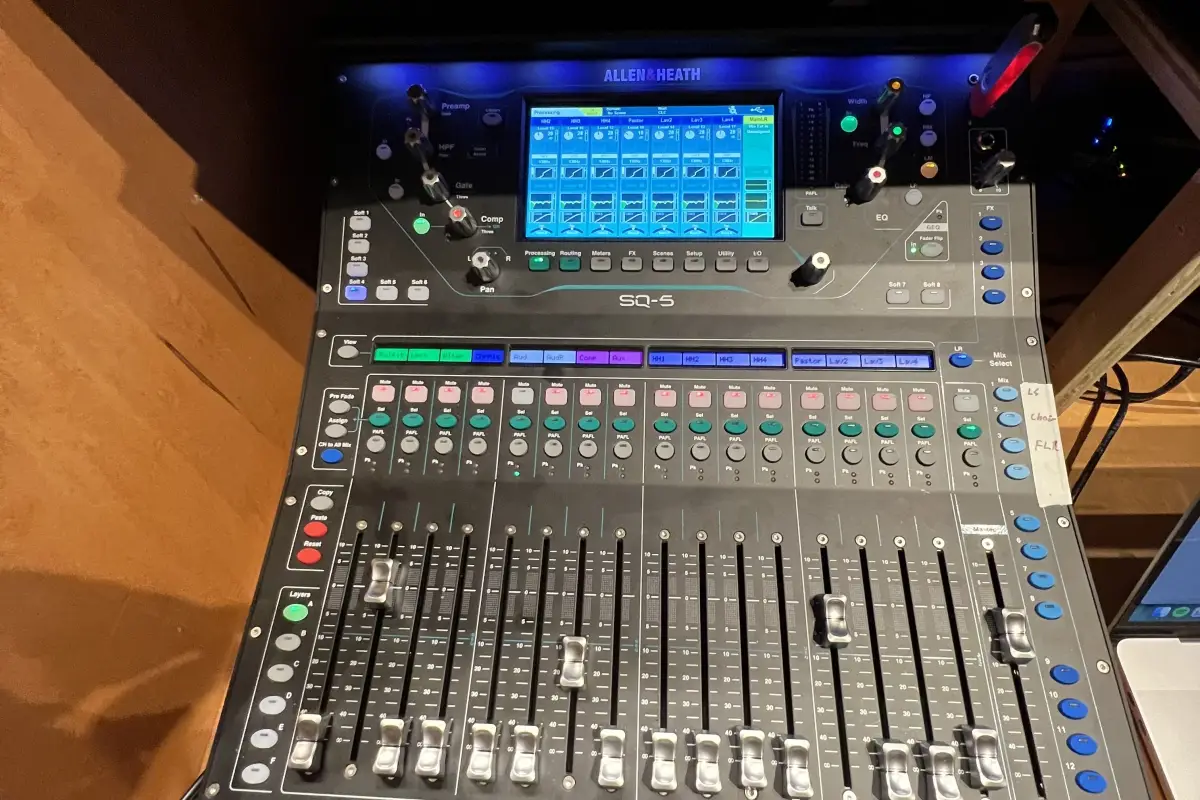
Allen & Heath offers several models within the SQ family — the SQ Rack, SQ-5, SQ-6, and SQ-7 — all running the same processing engine with different numbers of physical faders. The right model depends on your space, your I/O needs, and how complex your mixes are.
- The SQ-5 is a strong fit for smaller and mid-sized churches. It provides substantial capability in a compact footprint, which matters when your tech booth is tight.
- The SQ-6 is the goldilocks of the series — a comfortable balance between size and functionality that works well for growing churches with larger worship teams or more involved services.
- The SQ-7 is built for larger churches with big mixes and more demanding production environments. If you're running a significant channel count and need the physical surface to manage it, this is the one.
When a different mixer may make sense
The SQ Series is a strong fit for many churches, but not every ministry. A smaller church with very basic audio needs — a single microphone and simple playback — probably doesn't need this level of system. Allen & Heath makes consoles across a range of budgets, so there's usually a right fit at any scale. On the other end, churches with complex multi-venue production environments or dedicated full-time audio engineers may need a higher-end console designed for those workflows. That's exactly why I encourage churches to start with their ministry goals rather than a specific product.
Questions to Ask Before Making a Purchase
Before selecting any mixer, talk through these with your leadership and production team:
- How many volunteers will operate the system?
- Do we livestream regularly, or plan to in the future?
- What is our realistic budget?
- What are our current audio challenges?
- What growth do we anticipate over the next 3–5 years?
Answering these questions usually narrows the field significantly and keeps the conversation focused on what actually matters for your ministry.
We Can Help You Figure This Out
Choosing a sound mixer is an important decision — it affects nearly every aspect of your worship experience. There are mixers I recommend more often than others, but the goal is never to push a particular product. Every church has different needs, volunteers, production goals, and budget constraints.
At RYGID AV, we help churches design and implement audio systems that support both current needs and future ministry goals. Whether that leads to an Allen & Heath mixer or something else entirely, our focus is on finding the right fit for your congregation.
If you're evaluating sound mixers and would like expert guidance, we'd be glad to help you work through the options and build a system that serves your mission for years to come.
RYGID AV | 122 Backstretch Ln., Mooresville, NC 28117 (980) 263-9194 | info@rygidav.com
.webp)
Recommended articles
Explore our latest news & articles below


Where to Contact + Connect with RYGID AV
Mooresville, NC 28117