

Designing a sound system for an auditorium comes with unique challenges. Large, open spaces with high ceilings and reflective surfaces can make it difficult to achieve clear and even sound throughout the room. The goal is simple: every person in every seat should be able to hear speech and music clearly, without harshness, echo, or uneven volume. But the path to get there requires thoughtful planning.
Why Auditorium Sound Systems Require Careful Design
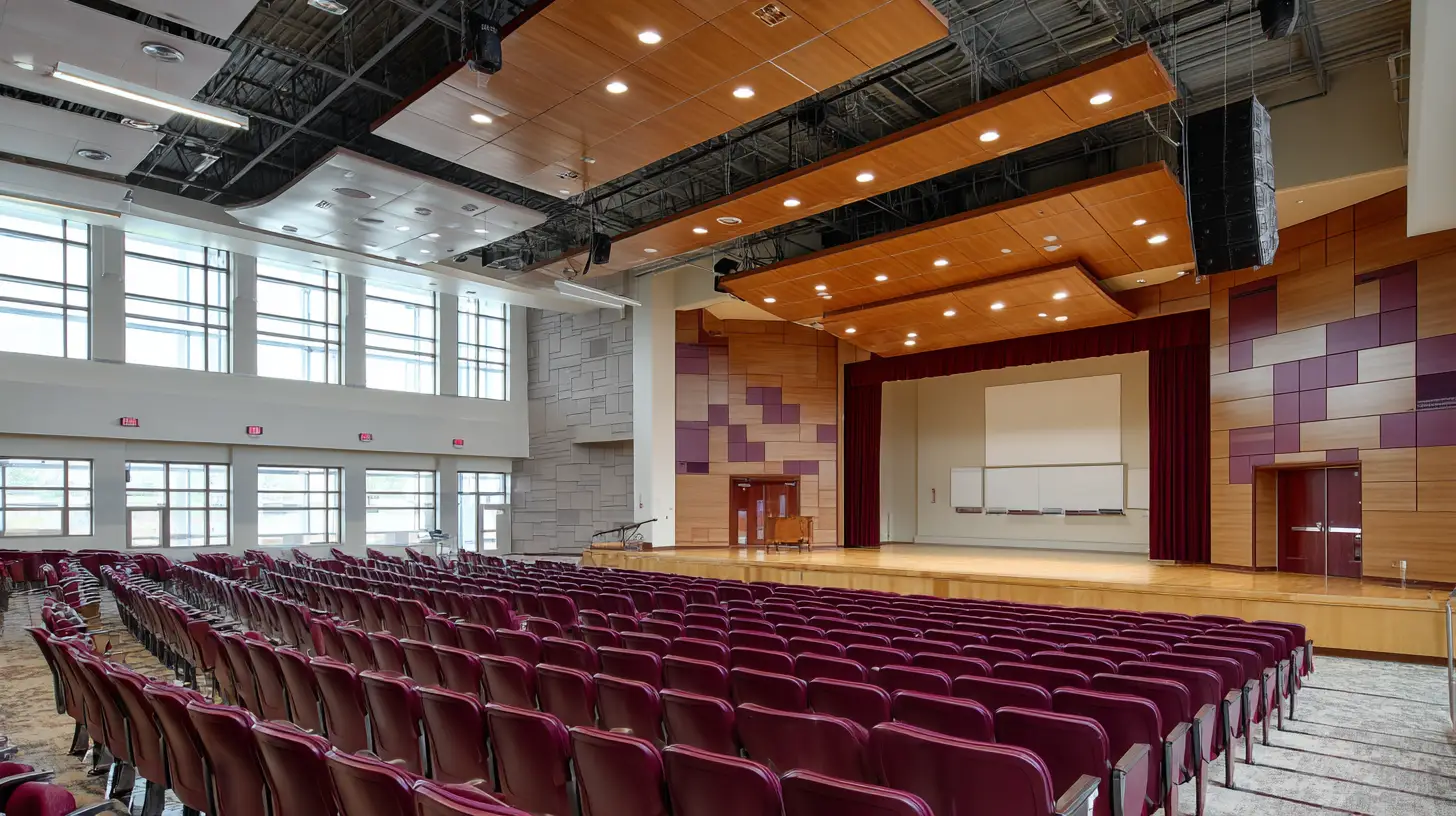
Unlike smaller rooms, auditoriums come with multiple factors that impact sound quality. Multi-purpose school auditoriums face different acoustic challenges than dedicated concert halls. Room shape, ceiling height, seating layout, and building materials all affect how sound moves through the space. Hard surfaces like concrete, glass, or bare walls can reflect sound and cause echo. Soft materials absorb sound, which can help clarity but may reduce volume in certain areas.
Because of these conditions, simply placing powerful speakers at the front of the room isn't enough. The design of an auditorium sound system must account for how sound travels and how it will be experienced in every part of the room.
Start with Coverage: Reaching Every Seat
Coverage refers to how evenly sound reaches listeners throughout the auditorium. Ideally, everyone should hear the same level of sound, regardless of where they are seated.
Speaker placement and aiming play a crucial role here. Placing speakers only at the front can lead to the first few rows getting too much sound while the back rows struggle to hear. Adding more speakers isn't always the solution either. Too many overlapping speaker zones can create echo or muddiness.
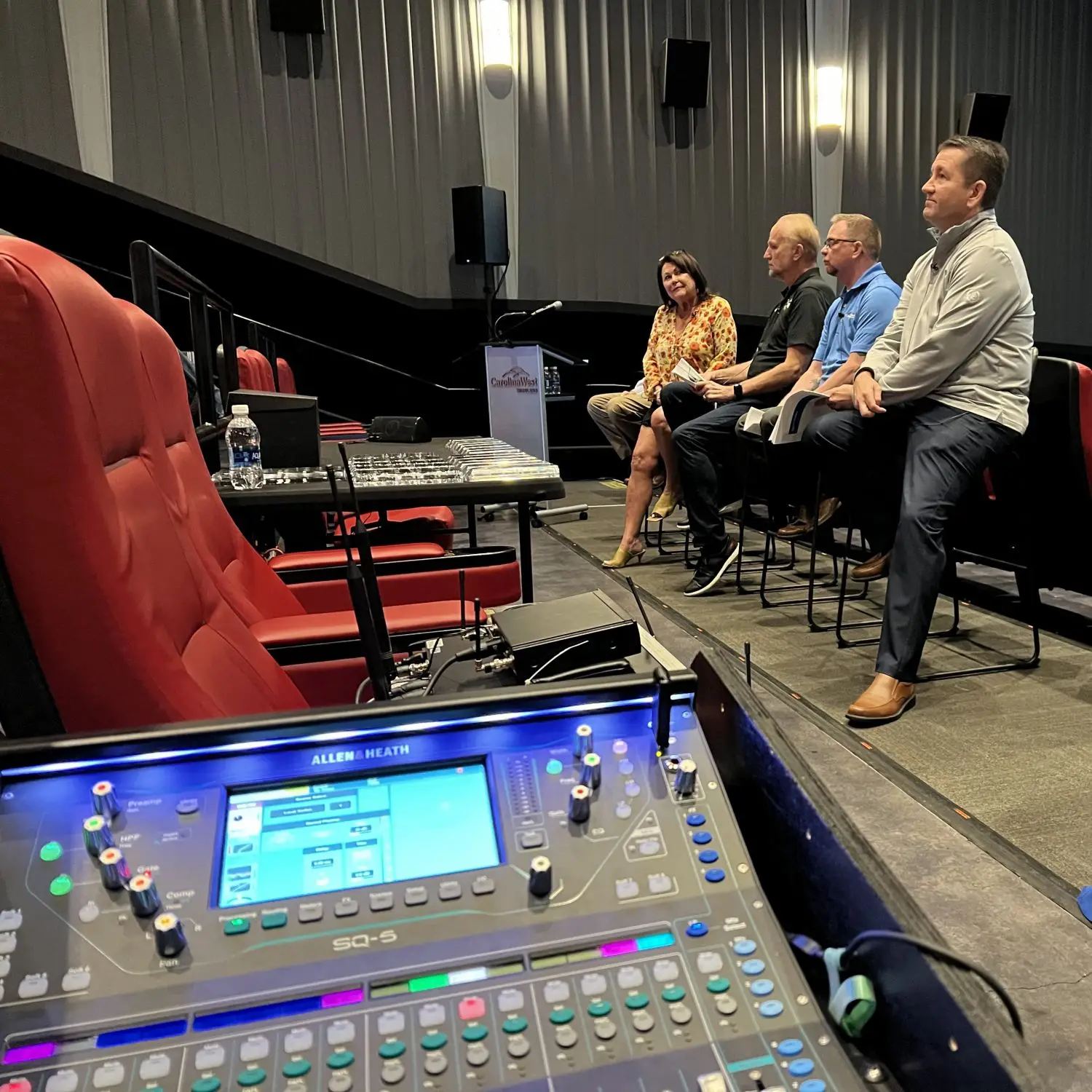
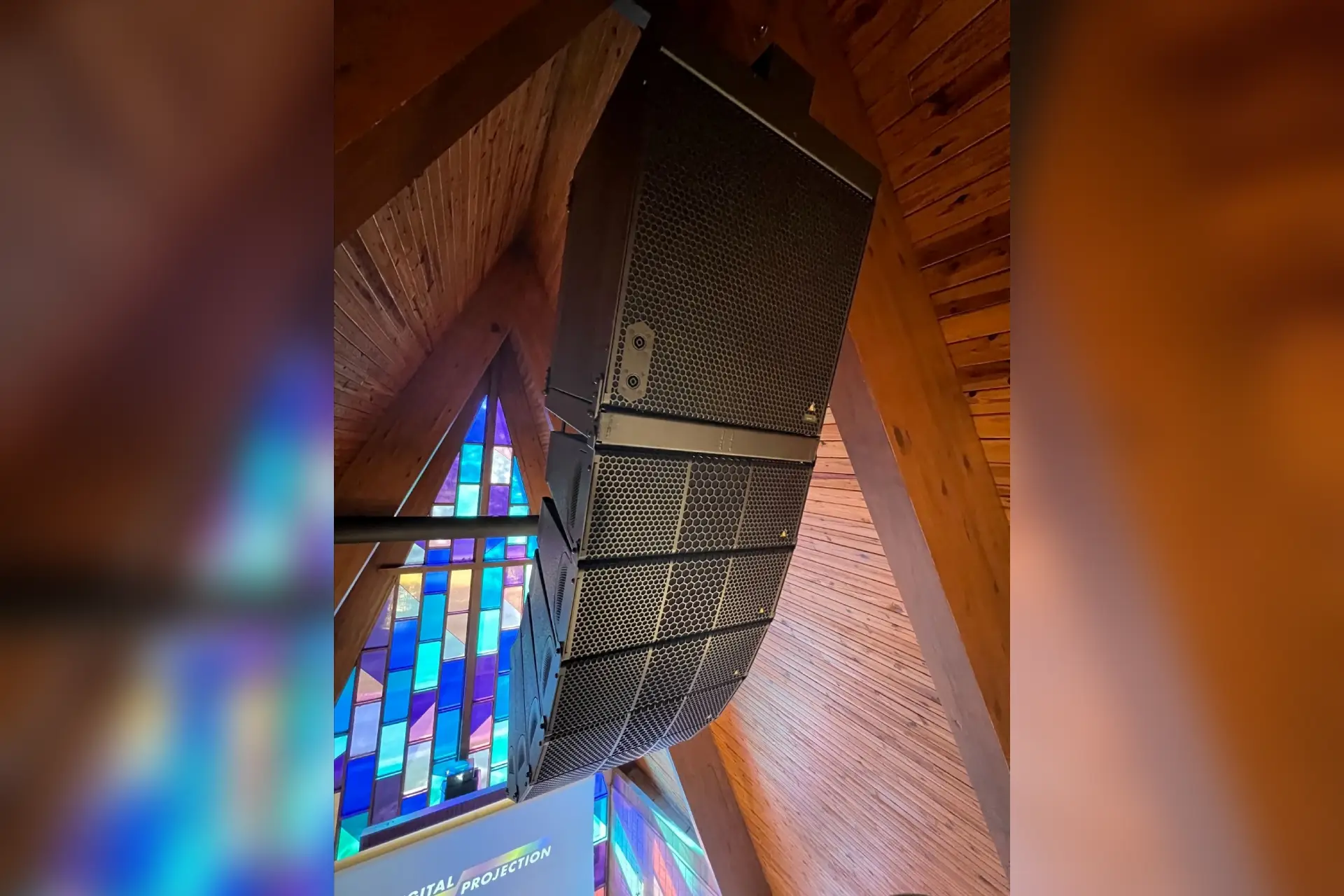
Proper speaker placement ensures that sound is distributed evenly, whether using a line array configuration or a distributed speaker array. This often means positioning and angling speakers in specific ways to direct sound where it's needed - not simply relying on one central source.
Tip: During a speaking engagement, rehearsal, or live sound performance, walk around the room to observe how sound changes. Are some areas noticeably louder or quieter? These observations can provide valuable insight into how well your current system is performing.
Focus on Clarity: Ensuring Speech and Music Are Understandable
In many auditoriums, speech intelligibility is just as important as musical performance, especially during events like school assemblies, guest lectures, worship services, and theater productions. If a speaker's voice isn't clear, even slight echo or muddiness can make it hard for listeners to follow along.
Factors That Influence Sound Clarity in Auditoriums
Clarity relies on how each part of the system works together, not just individual components acting alone:
- Speakers and their placement: Directing sound toward the seating areas helps avoid muddiness or echo.
- The acoustic environment: Room shape, ceiling height, and materials all affect how sound behaves in the space.
- Microphone systems and the public address setup: These determine how clearly speech and music are captured and transmitted.
- Wireless systems used on stage: These can introduce noise or inconsistency if not configured properly.
- Stage monitors performers rely on: If performers can't hear themselves, timing and delivery can suffer, impacting the audience's experience.
- Power amplifiers driving the speakers: These ensure the system can deliver consistent and balanced volume.
Additional Acoustic Considerations
Auditoriums often include large, reflective surfaces that cause sound waves to bounce, creating delay or echo. Sound-absorbing materials and acoustic treatments reduce these reflections and improve clarity. Understanding how to reduce echo in your space is essential for achieving the clarity your auditorium needs.
The type of speakers used also matters. Speakers designed to control the direction of sound can help focus audio on the audience, rather than allowing it to scatter into reflective surfaces.
Tip: Test clarity using spoken word rather than music. Spoken announcements can reveal issues that may not be immediately obvious with music alone.
Common Mistakes and How to Avoid Them
We often see the same pitfalls when organizations attempt to configure or upgrade auditorium sound systems on their own.
Turning up the volume won't solve clarity issues. It makes sound louder, but it won't make it clearer. In fact, increasing volume can amplify existing problems.
Not all speakers are designed for large spaces. Using speakers intended for smaller rooms can lead to uneven sound distribution.
While central speaker placement may seem logical, it often leads to uneven volume levels across the room. Sound needs to be distributed strategically, not concentrated in one location.
Reflective surfaces create echo and muddiness. Without addressing room acoustics, even high-quality equipment may not perform as expected.
Professional system tuning ensures that the system is balanced for the room's unique characteristics. Skipping this step leaves performance on the table.
Avoiding these mistakes can help improve both clarity and coverage in your auditorium.
Getting Started: Simple Ways to Assess Your Current Sound System
You don't need to be an audio engineer to identify issues in your current system. A few simple steps can help you understand where improvements might be needed:
- Walk the room: As mentioned earlier, listening from different seats can reveal volume and clarity issues.
- Look for reflective surfaces: If your room has a lot of hard surfaces, consider how sound might be reflecting.
- Consider your usage: Is your auditorium used primarily for speech, music, or both? Many auditoriums also rely on intercom systems for backstage communication or event coordination, and these may interact with your main sound system. Different uses have different sound requirements.
- Take notes: Document what you're hearing in different parts of the room. This can help guide future changes.
Making these assessments can help you decide whether your current system needs adjustments, upgrades, or a more significant redesign.
Create a Better Sound Experience for Every Seat
Every seat in your auditorium deserves the same quality sound experience. Understanding coverage, clarity, and common pitfalls helps you create that consistency - whether you're troubleshooting issues or planning a complete redesign.
If you're planning a new system or evaluating an existing one, our auditorium AV solutions can help you explore the best options for your space. Reach out to RYGID AV to discuss your goals and find a solution that meets your needs.
RYGID AV | 122 Backstretch Ln., Mooresville, NC 28117
(980) 268-8066 | info@rygidav.com
.webp)
Recommended articles
Explore our latest news & articles below


Where to Contact + Connect with RYGID AV
Mooresville, NC 28117