
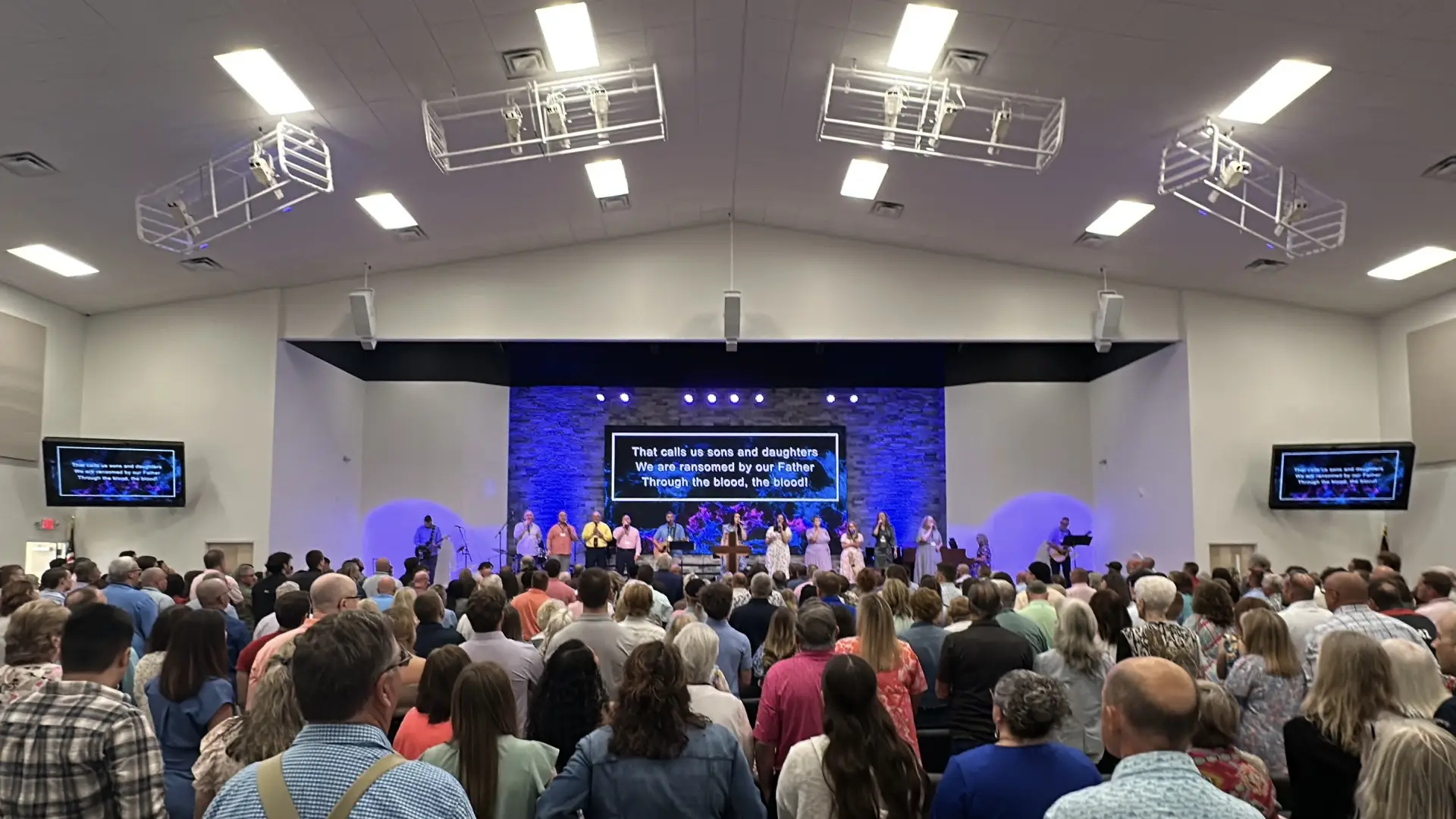
Think about what happens when a photographer takes a portrait in a dimly lit room. The camera might be top of the line, the subject perfectly posed, but if the light is wrong, the photo is wrong. No amount of post-processing fixes it when it really matters.
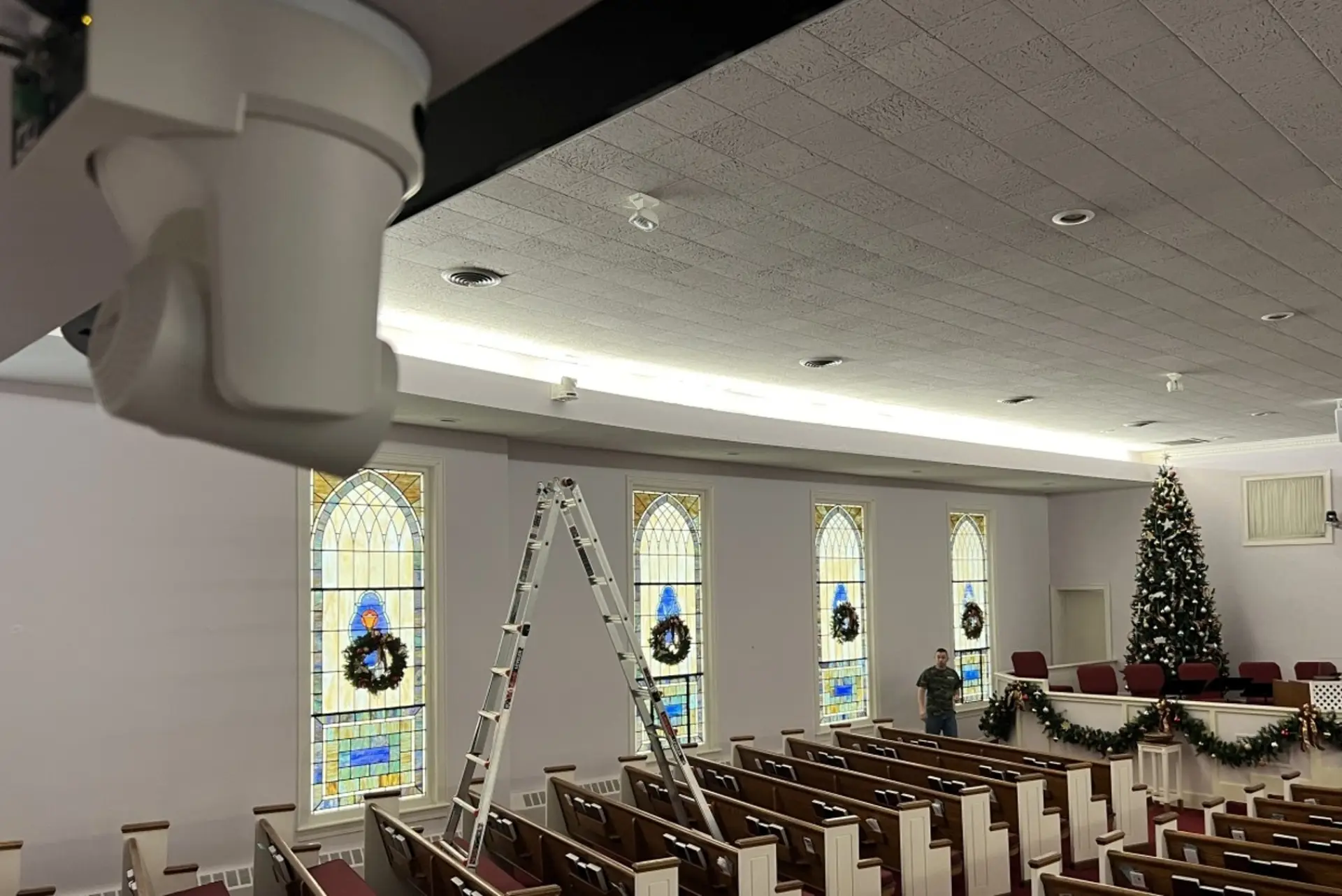
The same principle applies to a worship service. A church can have an excellent sound system and quality cameras, but if the platform isn't properly lit, both suffer. Congregation members struggle to see facial expressions. Cameras fight with shadows and uneven exposure. Online viewers get a muddy image of someone they can't clearly make out.
Lighting is one of the most overlooked parts of a church AV system. It's also one of the most important.
Functional Lighting vs. Intentional Worship Lighting
Most worship spaces already have lighting. The question is whether it's doing the right job.
Functional lighting makes the room visible. It lets people enter safely, find their seats, and read along. Ceiling fixtures that illuminate the entire room evenly fall into this category.
Intentional worship lighting goes further. It's designed around how a service flows: directing attention to the platform, balancing the congregation area, and ensuring cameras capture clear, consistent footage.
The difference isn't about dramatic effects. In most churches, it's a matter of putting the right light in the right places for the right reasons.
How Poor Lighting Undermines Your Sound and Video Investment
Cameras don't see the way human eyes do — and that distinction matters more than most churches realize.
Your eyes constantly adjust across different light levels without much effort. Cameras lock onto a single exposure setting and struggle when a scene has dramatic brightness differences. So when the projection screen behind the speaker is brighter than the speaker, the camera adjusts for the screen — and the speaker's face falls into shadow.
The instinct is to blame the camera. Often, the real issue is the lighting.
The same is true beyond video. Even when audio is clear and well-balanced, it's harder for people to stay engaged when they can't clearly see the speaker or worship team. Visibility and sound work together in ways we don't always think about consciously, which is why at RYGID AV, we include lighting in the conversation whenever we're helping a church think through its church AV solutions.
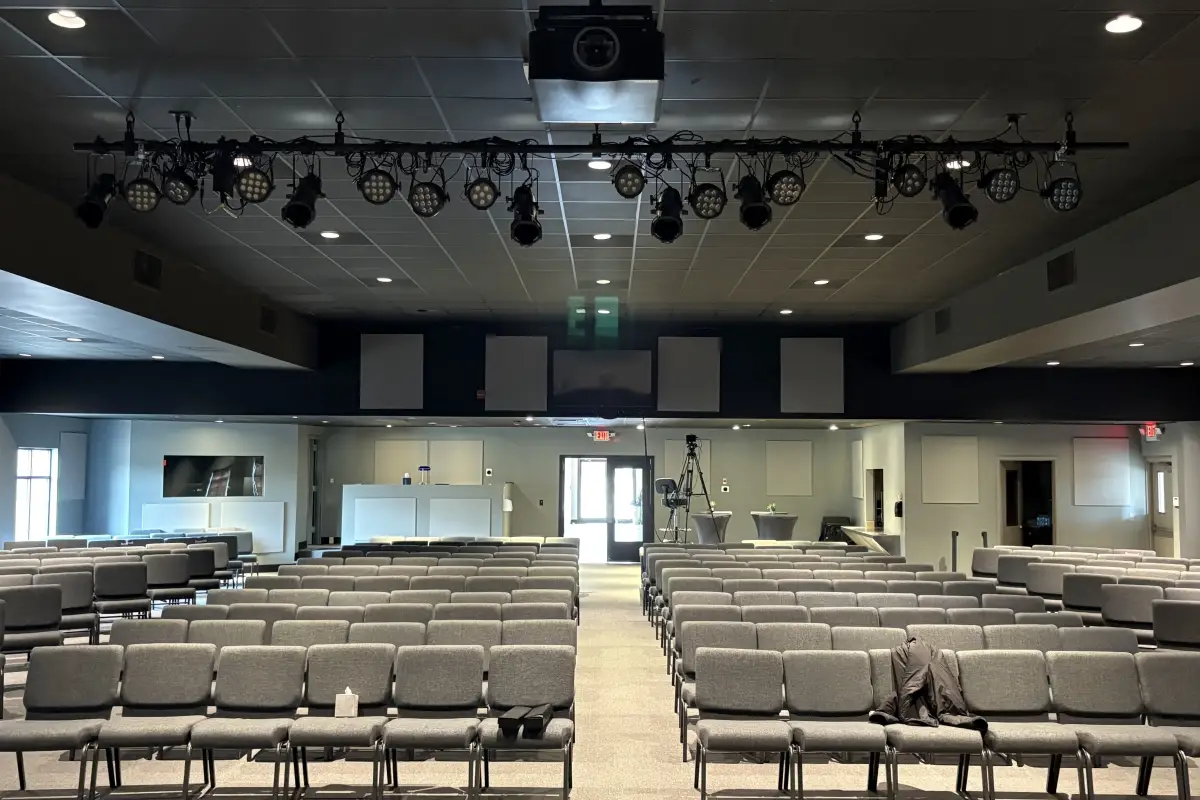
The Three Basic Types of Lighting in a Church
House lighting covers the congregation area: safe movement, reading along, participating in the service. It matters, but it shouldn't carry the entire load for the room.
Platform lighting focuses on the people leading the service: the pastor, worship team, musicians, and readers. When done right, someone in the back row and someone watching the livestream see the same thing — a person they can clearly follow.
Accent lighting draws attention to specific features: a cross, a backdrop wall, a baptistry area. It adds visual depth and helps the platform stand apart from the background without competing with it.
Often, the real improvement comes from adjusting the balance between these three rather than replacing everything.
Common Lighting Mistakes Churches Make
Relying entirely on overhead lighting. Ceiling fixtures illuminate the room but create downward shadows that look acceptable to the human eye and cause real problems on camera.
Lighting the congregation brighter than the platform. When the audience area matches or outshines the speaker, nothing in the room signals where to focus.
Ignoring what cameras need. Lighting that's comfortable for the human eye can still create exposure problems for video. If your church livestreams, camera requirements belong in the lighting conversation from the start.
Mixing color temperatures without a plan. Warm incandescent fixtures next to cool LEDs can make a platform look uneven and unflattering on camera, even if neither fixture is wrong on its own.
Treating lighting as an add-on. It often gets addressed after sound and video upgrades are complete, when it should be part of the same conversation.
When a Simple Upgrade Is Enough — and When to Bring in Help
A targeted upgrade is usually sufficient when:
- The platform just needs more visibility
- The room layout is straightforward
- Livestreaming is minimal or not a current priority
Adding the right lighting equipment to the platform, adjusting brightness levels, or addressing a specific shadow problem can go a long way without a full system review.
Professional planning makes more sense when:
- The church livestreams regularly
- Cameras are installed but producing inconsistent results
- The space has high ceilings or unusual architecture
- Audio, video, and lighting are all being evaluated at the same time
When those systems are planned together, the results compound. A well-lit platform supports the camera, the camera supports the livestream, and the livestream extends the reach of the service beyond the building's walls.
Lighting as Part of the Larger Picture
Lighting shapes how a worship service is experienced, both in the room and online. It directs attention, supports your cameras, and affects how clearly the message lands for people watching from home.
When churches approach audio, video, and lighting as a single integrated system rather than three separate upgrades, the whole thing works better. If your church is exploring improvements and you're not sure where lighting fits in, we're glad to help you think it through. Our church AV solutions are built to bring all three together in worship environments.
.webp)
Recommended articles
Explore our latest news & articles below


Where to Contact + Connect with RYGID AV
Mooresville, NC 28117
Mooresville, NC 28117