

Every church has had this moment.
The pastor steps off the stage after the service and says, "It's loud, but people still can't understand me." The worship leader asks for more volume in the monitors. Someone suggests upgrading the sound system again.
On paper, everything looks fine. The speakers are new. The mixer is capable. The microphones work. Yet the message still feels muddy. Words blur together. Singing feels powerful but unclear. People in the back strain to follow along.
When this happens, the problem usually isn't the sound system. It's the room.
Think about what happens when you try to have a conversation next to a highway overpass. You can talk louder. You can move closer. But until you get away from the source of the interference, none of that helps. Church acoustics work the same way, except the interference is already built into the walls.
No amount of gear can fix a space that's working against you.
What's Really Happening Inside Your Worship Space
Sound doesn't travel in a straight line and stop. It moves as waves, bouncing off every surface it touches: walls, ceilings, floors, windows, even empty pews. All of those surfaces shape what people actually hear.
In many church buildings, especially older sanctuaries, those surfaces are hard and reflective. Brick. Stone. Plaster. Glass. High ceilings. Long walls. All beautiful. All challenging for audio.
When someone speaks or sings, part of the sound reaches the congregation directly. The rest reflects around the room and arrives a fraction of a second later. Those reflections stack on top of each other, and that overlap is what causes speech to lose clarity.
People often call this an echo, but it's usually something more specific: excessive reverberation time. That's how long sound lingers in the room after the source stops. When reverberation time is too long, syllables run into each other and consonants blur. Turning up the volume doesn't fix it. It often makes things worse by adding more sound to an already crowded space.
A room can feel loud and still be hard to understand.
Why Better Sound Systems Don't Solve the Problem
A church sound system can control where sound goes. It cannot control how long it stays.
EQ adjusts tone, not timing. Compression controls dynamics, not reflections. Volume raises everything, including the reverberant sound that's already causing the problem.
Better speakers, upgraded amplifiers, additional processing — none of that removes reflections already bouncing around the room. Once the space fills with reverberant energy, the system is no longer in charge. The room is.
Churches often find themselves in a cycle of upgrades with little real improvement because the root issue never gets addressed.
The Difference Between Loud and Clear
Loud is easy. Clear is not.
Clarity depends on how much direct sound reaches a listener compared to reflected sound. When reflected sound dominates, speech intelligibility drops, and that affects everything: preaching, spoken scripture, congregational singing, even announcements.
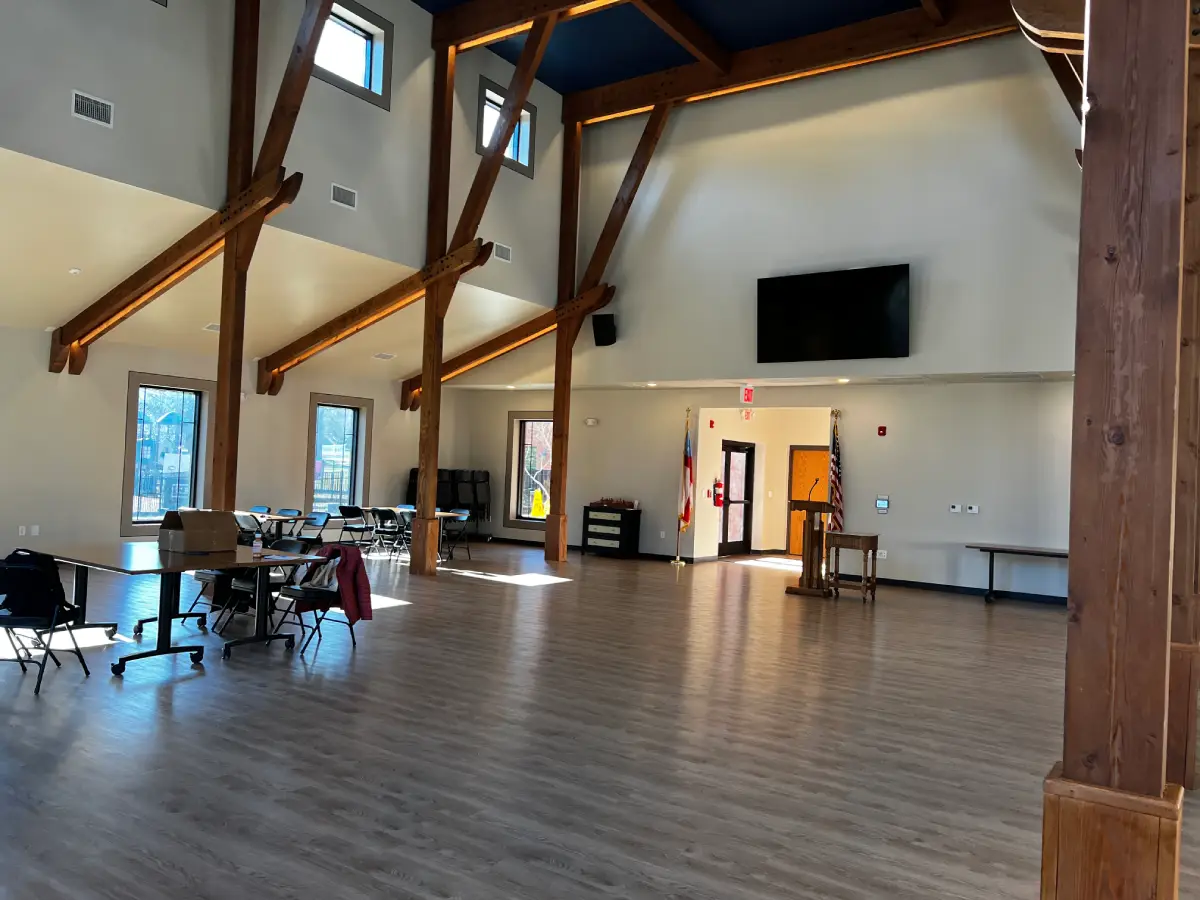
People may hear the melody just fine but struggle to follow lyrics. In a fellowship hall, the same issue shows up during events where conversation feels exhausting after an hour.
The goal isn't maximum volume. It's controlled sound that arrives when it should and fades when it should.
Why Churches Are Especially Challenging
Many sanctuaries were designed long before modern sound systems existed. High ceilings helped voices carry without amplification. Hard surfaces projected sound across large rooms. That worked when speech was slower and music was unamplified.
Today, worship spaces serve many purposes simultaneously. Sermons rely on microphones. Bands use full sound systems. Spoken word has to coexist with music. That puts new demands on rooms that were never engineered for it.
Add in wide seating areas, balconies, and strong architectural features, and the problems compound. It's not a failure of design. It's a mismatch between the space and how it's used today.
Common Signs the Room Is the Real Problem
If any of these sound familiar, acoustics are likely the issue:
- Speech feels clear up close but falls apart toward the back
- Turning up the system doesn't improve understanding, it just gets louder
- Music sounds full, but lyrics are hard to follow
- Your sound team makes EQ adjustments that never quite solve anything
- The fellowship hall feels noisy even at moderate volume levels
These aren't operator problems. They're room problems.
What Actually Improves Clarity
Fixing a room acoustic problem means addressing the room.
Sound absorption where it matters. Acoustic panels reduce reflections by converting sound energy into heat, which shortens reverberation time without deadening the space. That balance matters in worship because music still needs to feel full and engaging. Panels don't need to go everywhere, either. Strategic placement on side walls, rear walls, and ceiling areas typically does the most work.
Measurement before treatment. Every room behaves differently. What helps one worship space may do little in another. Measuring reverberation time, reflection paths, and problem areas before installing any acoustical treatments produces better results and avoids wasted effort.
Speaker placement that works with the room. Once acoustics are under control, the sound system can finally do its job. Good speaker design and placement focuses sound on people, not on reflective surfaces, which improves clarity without requiring excessive volume. The system and the room have to work together. One cannot compensate for the other.
Why Getting This Right Changes Everything
When acoustical treatments are done well, everything downstream improves.
Sermons become easier to follow without strain. Music feels cleaner without being harsh. Sound systems run at lower levels with better results. Volunteers stop fighting the room and start making real mixing decisions.
People engage more. They hear the message. They sing more comfortably. They stay focused on what matters.
That's not a better-sounding room. That's a more connected congregation.
If your church is dealing with clarity problems that better gear hasn't solved, the room is worth a serious look. At RYGID AV, we evaluate church acoustics first, then design sound systems that work with the space instead of fighting it. Reach out and let's figure out what's actually going on.
RYGID AV | 122 Backstretch Ln., Mooresville, NC 28117 (980) 268-8066 | info@rygidav.com
.webp)
Recommended articles
Explore our latest news & articles below


Where to Contact + Connect with RYGID AV
Mooresville, NC 28117
Mooresville, NC 28117