
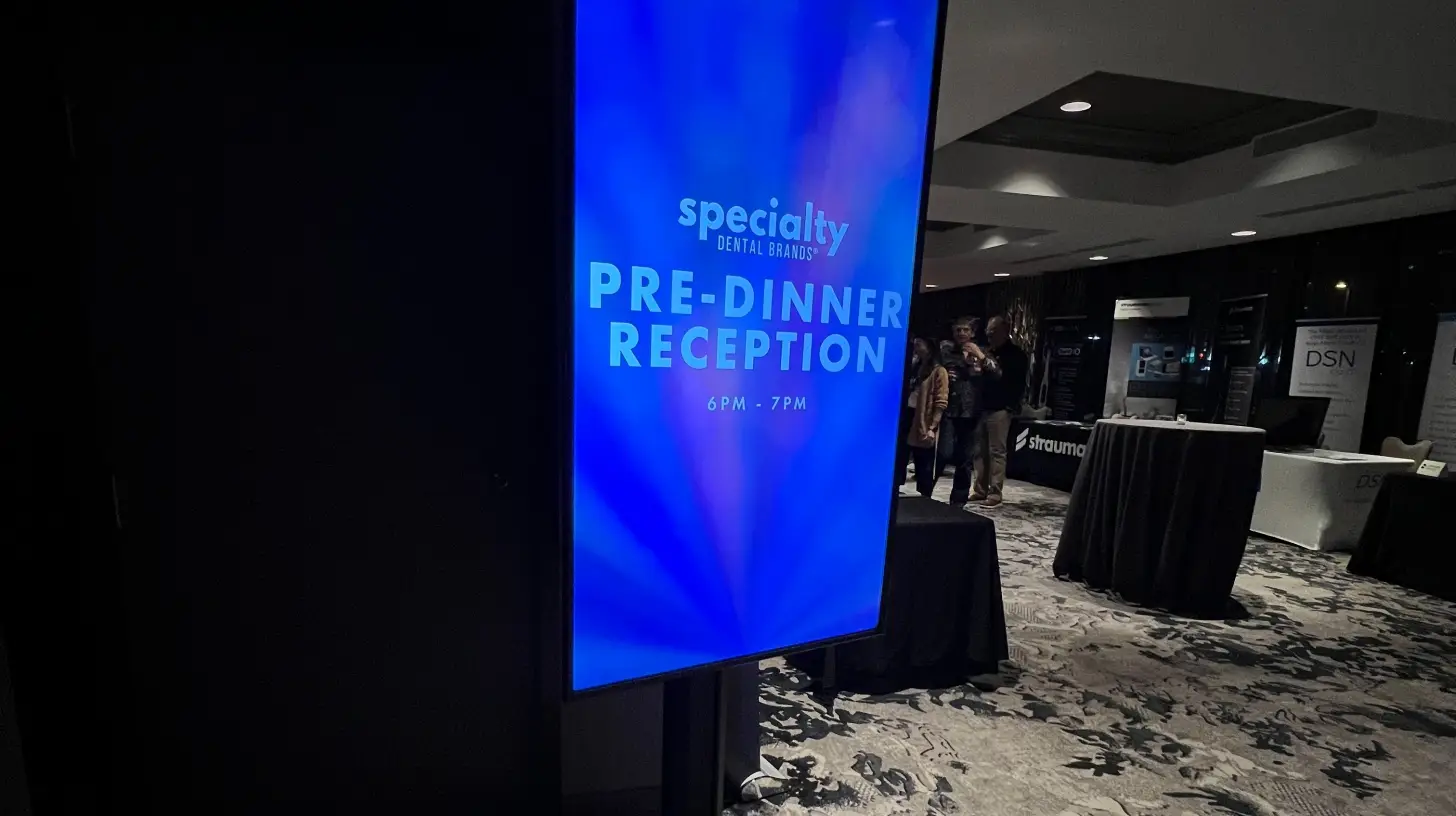
Imagine trying to redirect 500 conference attendees to a different room using printed signs. By the time you've replaced every poster in the hallways, half the attendees are already lost or frustrated. Now imagine updating every directional sign in the building from your laptop in under 30 seconds.
That's the difference between static and digital signage. I get questions about this technology pretty regularly, especially from organizations planning conferences or managing spaces where information changes frequently. Here are the benefits that make the biggest difference.
Improved Communication and Clarity
Digital signage keeps information current without manual intervention. Content updates push instantly through centralized management systems, which means schedule changes, room assignments, or emergency updates reach everyone immediately.
Common applications:
- Conference schedule changes reflected across all displays in real time
- Registration or check-in location updates without reprinting
- Session room assignments adjusted between events
- Real-time attendance or capacity information
This clarity reduces staff workload and eliminates confusion for attendees and visitors.
Faster Updates With Less Staff Workload
Static signage requires significant staff time – design, print, walk to every location, remove old versions, post new ones. Digital signage reduces this to minutes.
Efficiency gains:
- Update every display across your facility from one dashboard
- Single staff member can manage facility-wide changes in seconds
- No printing, laminating, or physical distribution required
- Changes take effect immediately, not hours later
For organizations running multi-day events or managing facilities with frequent changes, this makes responsive communication actually practical.
More Engaging and Dynamic Content
Motion naturally draws attention in ways static content simply can't match. Organizations can rotate content, display videos, and create visually compelling announcements that people actually notice.
Engagement opportunities:
- Sponsor content highlighted with imagery and motion during events
- Rotating announcements that cycle multiple messages throughout the day
- Video content showcasing upcoming programs or speakers
- Visually rich designs that capture attention better than printed materials
Better attention means better communication and fewer repeated questions from staff.
Cost Savings Over Repeated Printing
Frequent printing creates recurring costs: paper, ink, laminating materials, labor for printing and posting. For organizations that update materials weekly or daily, these expenses compound quickly.
Financial benefits:
- Eliminate ongoing printing and distribution costs
- Reduce staff time spent on manual signage updates
- Breakeven often within 1-2 years for event-heavy organizations
- Lower environmental impact from reduced printing waste
Better Visitor Experience and Navigation
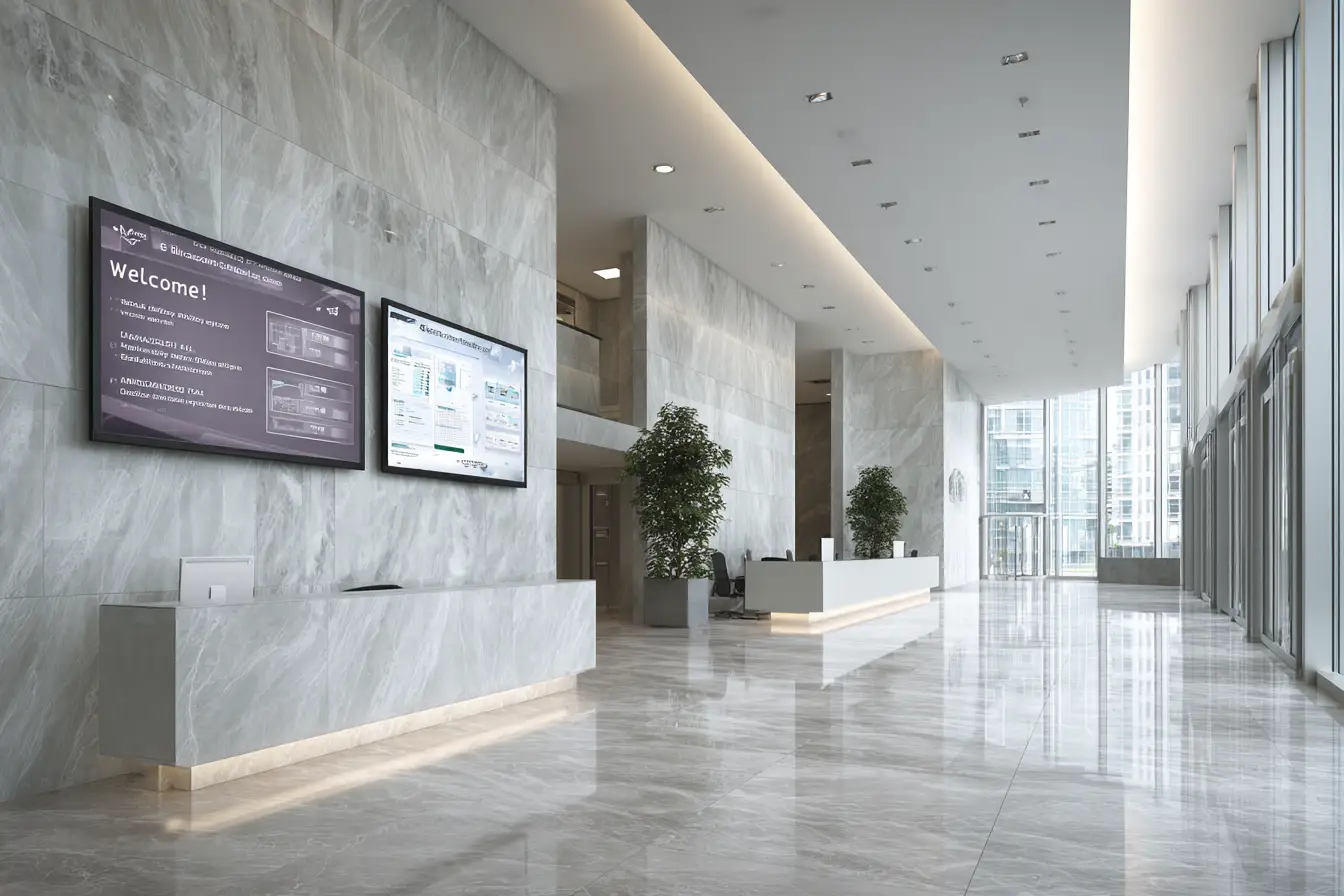
Clear wayfinding makes unfamiliar spaces less intimidating. Digital signage creates intuitive navigation through dynamic directions and real-time updates.
Navigation improvements:
- Conference attendees find sessions without hunting for staff assistance
- Visitors directed to correct meeting rooms or departments
- Maps and directional information updated based on building changes
- Real-time room availability or event timing displayed
When navigation feels effortless, the overall experience improves and staff spend less time giving directions.
Consistent Messaging Across Multiple Spaces
Organizations with multiple buildings or large campuses struggle to maintain communication consistency. Digital signage solves this through centralized control.
Consistency advantages:
- Multi-site organizations synchronize messaging across locations
- Conference venues maintain cohesive communication in all spaces
- Safety information reaches every area simultaneously
- Branding and announcements stay aligned facility-wide
When everyone receives the same information at the same time, you eliminate confusion from conflicting messages.
Real-Time Alerts and Safety Communication
The same screens showing everyday information can pivot immediately to weather warnings, building updates, or safety instructions when needed.
Safety applications:
- Emergency notifications pushed instantly to all displays
- Evacuation routes or shelter-in-place instructions displayed immediately
- Event schedule updates for safety concerns
- Weather alerts for outdoor event components
This infrastructure becomes a critical tool during unexpected situations.
Reduced Clutter in Common Areas
Traditional bulletin boards and flyers create visual noise. Digital signage consolidates information into streamlined displays that maintain a cleaner, professional appearance.
Aesthetic benefits:
- Conference venues maintain modern, polished look
- Corporate lobbies present organized communication
- Worship spaces integrate technology without visual competition
- Information delivery doesn't compromise intentional design
A cleaner visual environment makes the information itself more effective.
Flexible Scheduling and Automation
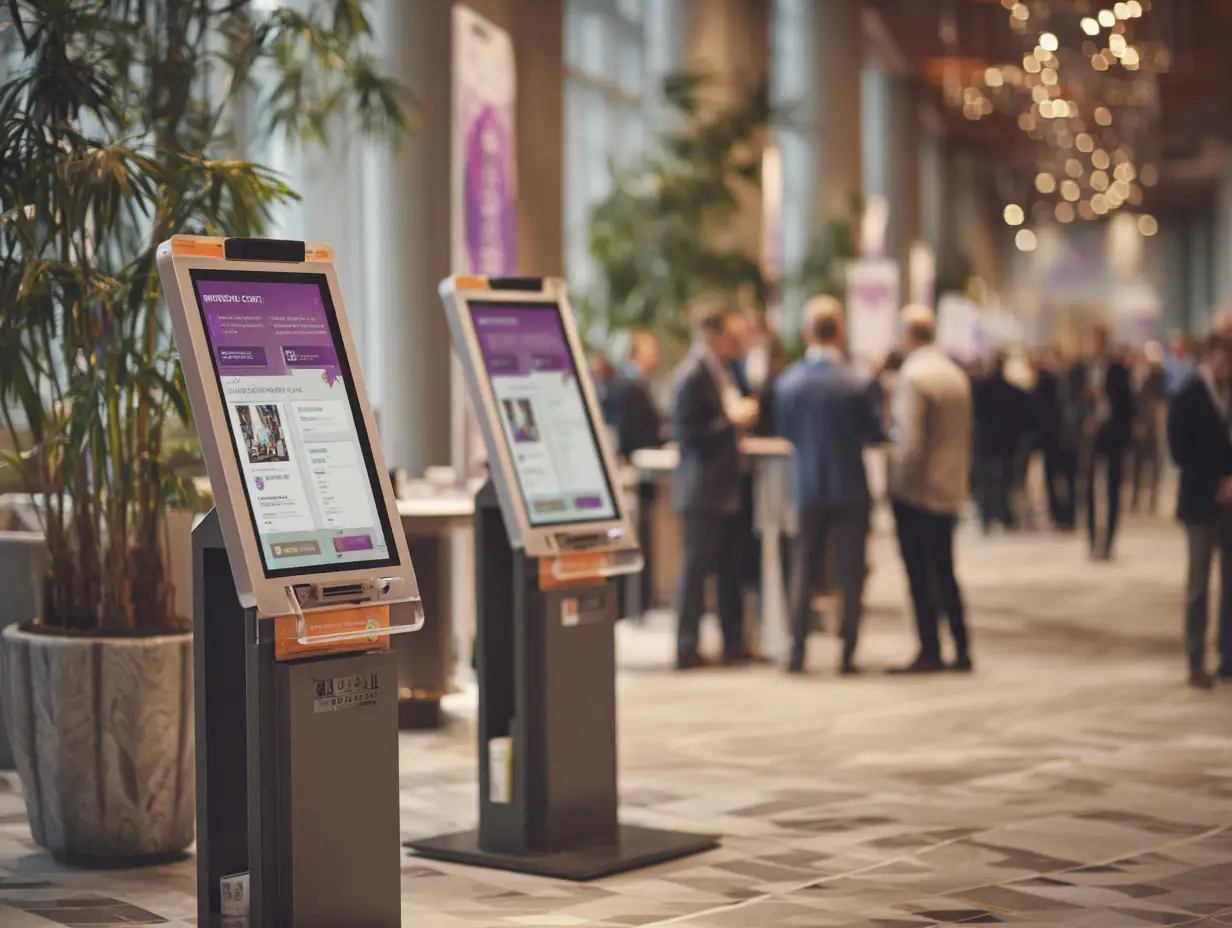
Digital signage platforms allow content scheduling by time, date, or event cycle. This automation reduces manual intervention while keeping communication relevant.
Scheduling capabilities:
- Different content for morning versus afternoon sessions
- Messaging rotates based on time of day or activities
- Meeting room displays sync with calendar systems automatically
- Event-specific content activates on scheduled dates
Once configured, the system runs reliably in the background.
A Modern and Professional Appearance
Digital signage instantly modernizes a space, whether deployed as standard displays, video walls, or interactive kiosks. Organizations recognize that facilities reflect their values and approach.
Professional impact:
- Modern technology signals intentionality and attention to detail
- Demonstrates investment in positive visitor experiences
- Enhances atmosphere while supporting practical needs
- Contributes to the impression your space makes on everyone who enters
Choosing the Right Solution
Not all digital signage deployments are the same. Display brightness, screen size, and placement should match your specific environment and use case.
Key considerations:
- Bright areas with natural light require higher-specification displays
- Interactive elements versus display-only screens depend on your application
- Reliable network connectivity and media players ensure long-term performance
- Integration with existing systems affects overall functionality
At RYGID AV, we help organizations design digital signage solutions that match their actual needs. Whether you're planning a conference room upgrade or implementing wayfinding for a large facility, we need to understand how you'll use the technology and design the system to support those requirements.
If you're considering digital signage, let's talk about your specific situation. We'll assess your space, understand your communication patterns, and recommend solutions built for how you'll actually use the system.
Ready to improve your facility's communication? Contact RYGID AV to discuss how digital signage can work for your organization's specific needs.
RYGID AV | 122 Backstretch Ln., Mooresville, NC 28117
(980) 263-9194 | info@rygidav.com
.webp)
Recommended articles
Explore our latest news & articles below


Where to Contact + Connect with RYGID AV
Mooresville, NC 28117