
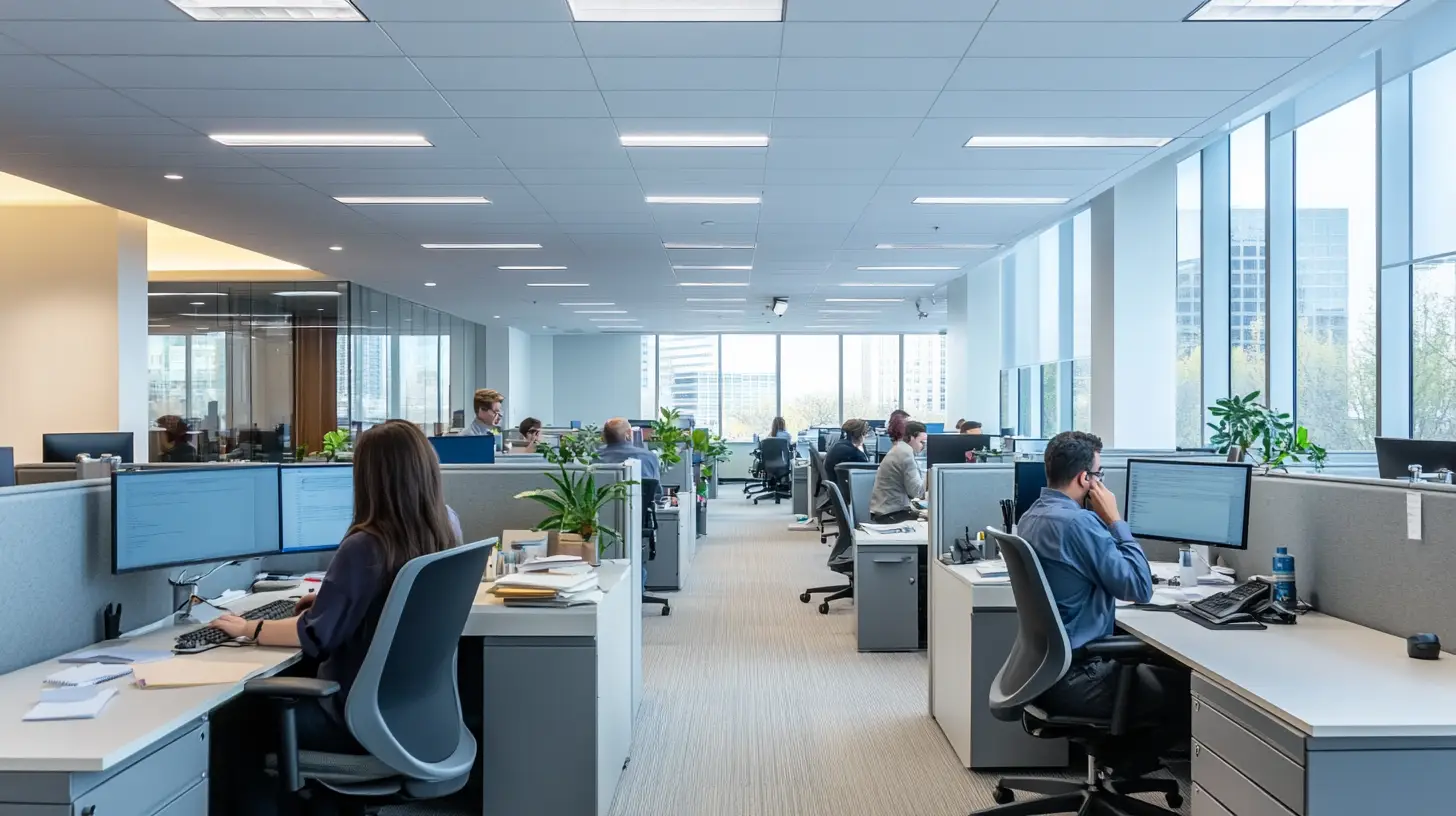
Most people assume a closed door means a private conversation. In many offices, that assumption is wrong.
If you've ever sat near an HR office and caught fragments of something you weren't supposed to hear, or watched a colleague lower their voice on a client call because people were walking by, you've already seen the problem. It's not about volume. It's about how far speech carries, and how much of it stays intelligible once it does.
Sound masking systems are designed specifically for that problem. They don't silence an office. They make speech harder to understand beyond its intended area, which is a more practical goal for most commercial environments.
The Problem Is Speech Intelligibility, Not Noise
Most office noise complaints aren't about printers or HVAC systems. They're about people hearing other people and understanding what they're saying.
Open offices are the obvious example. Conversations drift across rows of desks. A call at one workstation becomes background content for the five people within earshot. But it's not just open layouts. In private offices, voices can carry through walls, gaps under doors, or dropped ceilings into adjacent spaces. Conference rooms that feel contained because a door is closed may not be as private as they look.
For HR departments, legal teams, financial offices, and healthcare environments, that's not just uncomfortable. It's a real compliance and trust issue. Clients expect confidentiality. Employees expect discretion. Sound masking helps deliver both.
How It Actually Works
Speakers or emitters installed in or above the ceiling distribute a specifically engineered background sound tuned to the frequencies where human speech is most noticeable. The goal is to raise the ambient noise floor just enough that conversations don't carry clearly beyond their intended area — not so much that the office feels loud or distracting.
Done correctly, most employees won't notice the system running. Coverage is distributed evenly across the space and can be zoned, so a conference room, reception area, and open workspace can each be adjusted to meet their needs.
Not the Same as a White Noise Machine
This is the most common misconception we run into. A consumer white-noise machine adds ambient sound to a small area. It may help a little, but it doesn't provide consistent coverage across a professional environment. A machine near an HR desk won't reliably prevent conversations from carrying down the hallway. Commercial sound masking is engineered around office acoustics, speech frequencies, and spatial distribution in ways a desktop device simply isn't.
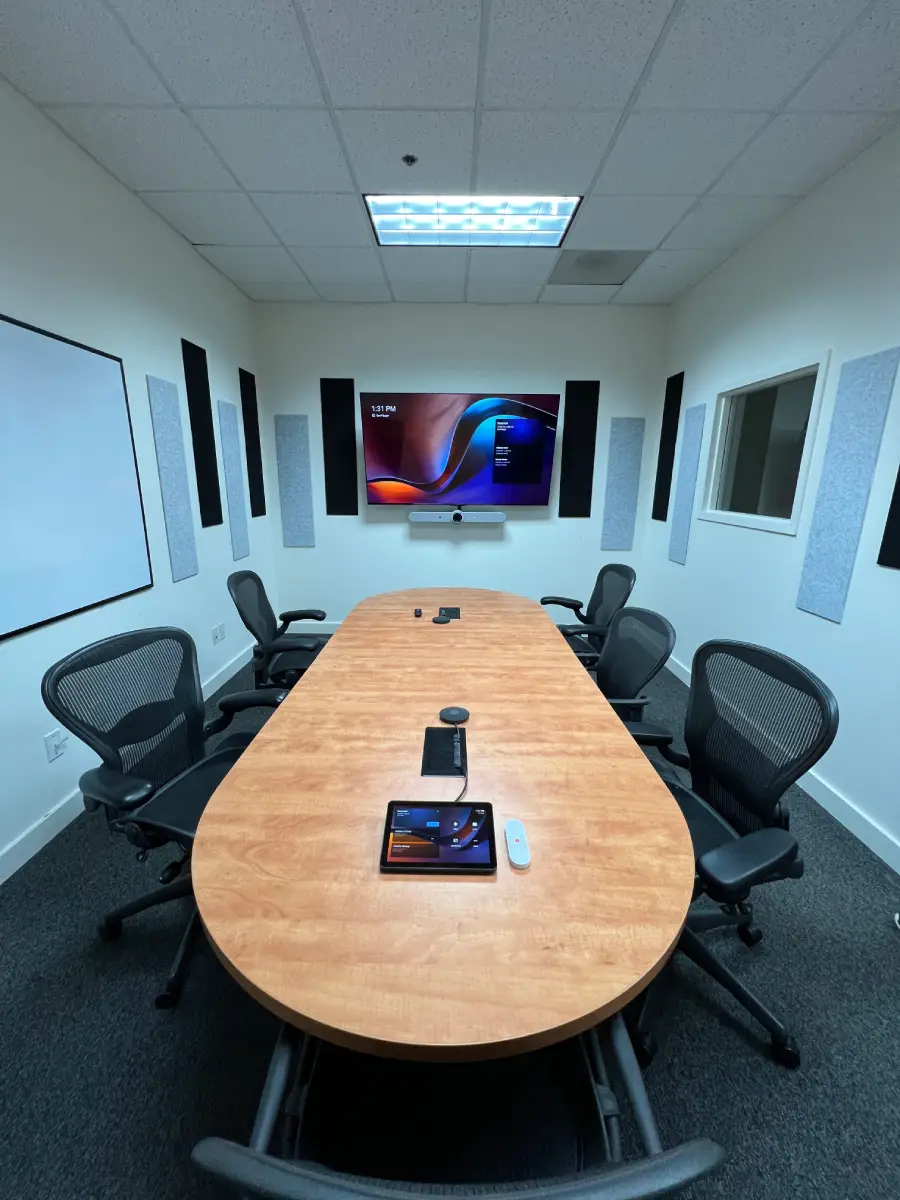
Sound Masking vs. Acoustic Panels
These two solutions address different problems and often appear together, so it's worth being clear about what each does.
Acoustic panels absorb sound reflections and reduce echo within a room. If your conference room has hard surfaces and voices bounce around, making calls difficult, acoustic treatment addresses that. The goal is to improve sound quality inside the space.
Sound masking is about what happens outside the space — specifically, how much of a conversation remains intelligible beyond its intended area. Both can be part of a well-designed office acoustic strategy, but they're solving different problems. Treating them as interchangeable is a quick way to solve the wrong one.
Where Sound Masking Has the Most Impact
Nearly any shared workspace can benefit from better acoustic planning, but some environments feel the absence of sound masking more than others.
Open offices are the most obvious case. When there are no walls separating workstations, there's nothing to stop a conversation from becoming everyone's background noise. Sound masking doesn't change how your team communicates. It just keeps those conversations from traveling as far and staying as clear.
HR and executive offices carry a different kind of risk. Compensation discussions, disciplinary conversations, organizational decisions: these aren't just sensitive, they're the kind of thing that erodes trust when overheard. A closed door helps, but it doesn't always do enough in a building with shared ceilings or thin walls.
Legal, financial, and healthcare environments often have compliance obligations tied to confidentiality. A client overhearing something in a waiting room or hallway isn't just awkward. It can be a real problem. Sound masking adds a layer of protection that physical layout alone may not provide.
Conference rooms are frequently underestimated. People assume that closing the door creates privacy, but glass walls, dropped ceilings, and nearby open workstations can undercut that entirely. The more a conference room is used for sensitive discussions near active parts of the office, the more this matters.

What It Can and Can't Do
What it does well:
- Reduces how far speech carries and how clearly it's understood
- Lowers conversational distractions in open workspaces
- Adds a layer of confidentiality where physical barriers fall short
- Can be zoned and adjusted as your office layout or needs change
What it doesn't do:
- Soundproof walls, doors, or ceilings
- Eliminate loud external noise or mechanical sound
- Fix echo or reverberation problems (that's acoustic treatment)
- Compensate for significant structural gaps in office design
It's one layer in a solid acoustic strategy, not a single fix for every sound issue in the building.
Is It Right for Your Office?
If employees regularly overhear nearby calls, if HR or leadership conversations feel exposed, if conference room discussions drift into adjacent spaces, or if staff struggle to focus because speech travels too easily, those are the signs.
Sound masking isn't the right answer for every office, but when it fits the problem, the improvement in day-to-day function is noticeable. If you're not sure whether it makes sense for your space, we're glad to have that conversation.
Contact RYGID AV to talk through your office's acoustic situation. We'll help you figure out whether sound masking, acoustic treatment, or a combination of both actually fits your needs, before you invest in the wrong solution.
.webp)
Recommended articles
Explore our latest news & articles below


Where to Contact + Connect with RYGID AV
Mooresville, NC 28117