

You’ve been there before. The team gathers, the video call connects, and everyone settles in to start the meeting. Within minutes, someone says, “Can you hear me?” Another person leans toward the mic, repeating the same line a little louder. Across the table, you catch every echo, every shuffle, every sound that bounces off the walls. What should be a smooth exchange of ideas turns into a struggle to understand basic sentences.
This is one of the most common problems businesses face in modern offices. Many assume the answer is better microphones or stronger speakers, but the real issue usually starts with the room itself. The truth is that soundproofing conference rooms is not just about keeping noise out. It’s about creating an environment where sound travels cleanly, voices stay clear, and unwanted echoes disappear.
Before you invest in more gear or another “quick fix,” it’s worth understanding why so many attempts at soundproofing fall short and what actually improves meeting room acoustics for good.
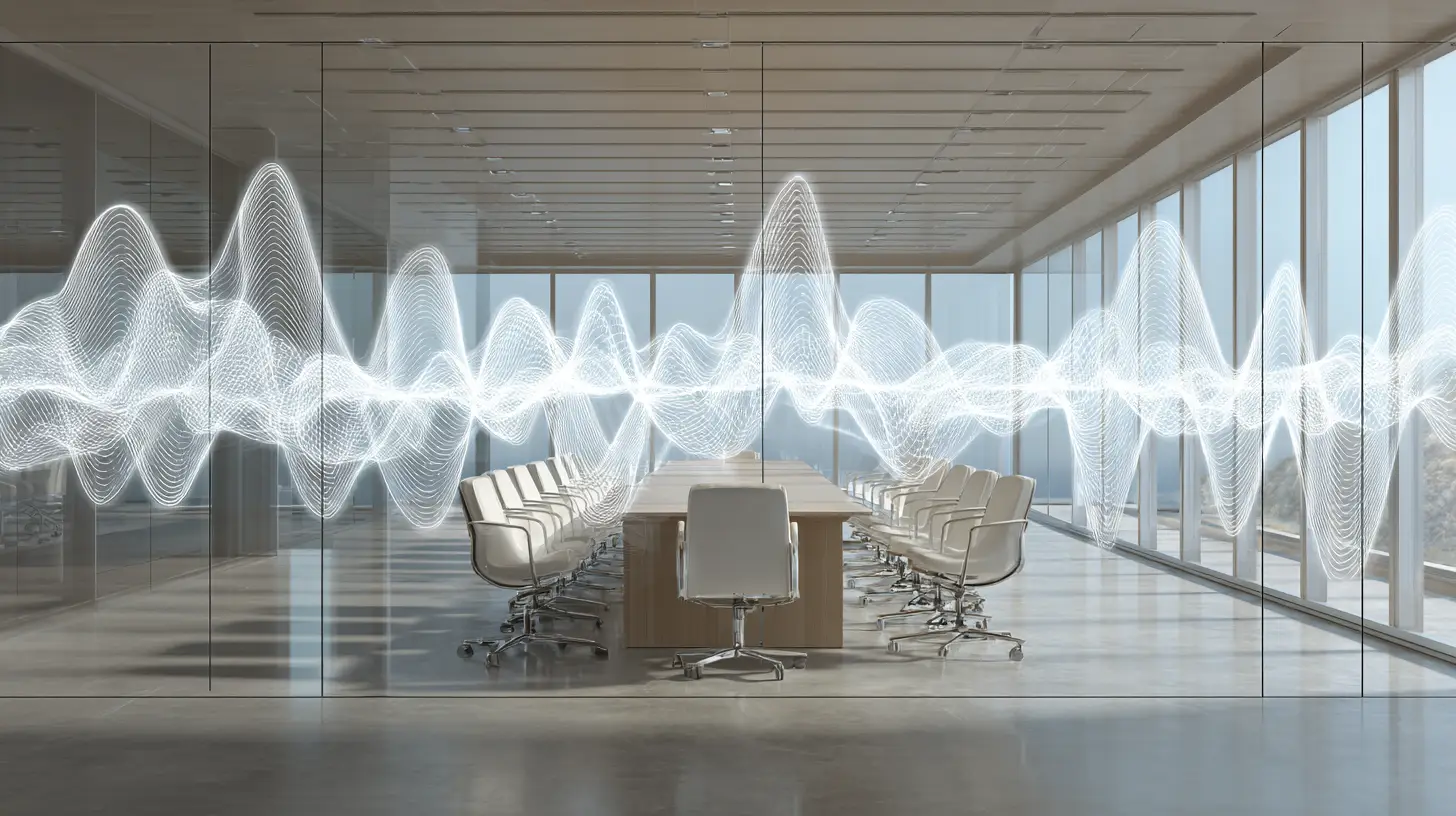
The Myth of Soundproofing
When people say they want their conference room “soundproofed,” they often mean two different things without realizing it. One part is about blocking sound from leaving or entering the space. The other is about controlling how sound behaves inside the room. Blocking and controlling are not the same thing.
Sound barriers such as insulated walls and solid doors help keep noise from spreading between rooms. Acoustic panels, on the other hand, are designed for sound absorption inside the space. They soften the reflection of sound waves so speech sounds clear and natural. Many companies hang foam panels on walls, thinking they’ve “soundproofed” the room, only to find conversations still travel through the ceiling or walls.
Understanding this difference is the first step toward better sound quality. Without both isolation and absorption, the space will always struggle with echo, background noise, and distractions.
Why Conference Room Soundproofing Fails
Most conference rooms that fail acoustically do so for very simple reasons. The problems are often hidden in plain sight.
Flanking Paths That Carry Sound
Sound behaves a lot like water. It flows through cracks, vents, and gaps wherever it finds the easiest route. Even when walls are thick, sound waves can move through ceiling plenums, shared ductwork, and open cable holes. Unless the entire perimeter is sealed and insulated, conversations leak into hallways and nearby rooms.
Doors and Ceilings That Don’t Hold Up
Doors are almost always the weakest link in the room. A small gap under the door can cancel out the benefit of a high-rated wall. Many standard ceiling tiles are made for noise control inside the room, not to block speech from escaping. Without full-height walls or proper plenum barriers above the ceiling grid, privacy will always be compromised.
HVAC and White Noise Confusion
Another common issue is HVAC systems. Shared air returns and unlined ducts let sound travel easily between spaces. Sometimes companies rely on white noise generators to mask these leaks, but that’s not real noise control. White noise can make a room feel less quiet, but doesn’t fix the problem. In fact, it often makes speech clarity worse if not balanced correctly.
Quick Fixes That Don’t Work
Online, you’ll see plenty of “miracle” materials and noise cancellation gadgets promising studio-like silence. Most of them focus on one part of the problem while ignoring the rest. Thin foam doesn’t block sound; it only absorbs high frequencies. Heavy vinyl sheets can add mass, but without sealing or decoupling, the results will be minimal. True solutions are always layered and planned from the start.
What Actually Works
The good news is that proper meeting room acoustics can be achieved with the right combination of design and materials. It doesn’t take magic, just attention to how sound behaves.
Start with a Solid Design
Effective soundproofing begins with planning, not patchwork. The walls should extend from the floor slab to the structural deck above, not stop at the ceiling grid. Seams must be sealed, and electrical boxes or data plates should be staggered rather than back-to-back. These details may seem small, but they stop sound leaks before they start.
Use the Right Layers
Successful noise isolation relies on three principles: mass, airtightness, and separation. Heavy, dense materials block sound. Airtight construction stops leaks. Decoupled surfaces prevent vibrations from passing through. When done together, they provide the foundation for real sound barriers.
Treat the Room’s Interior
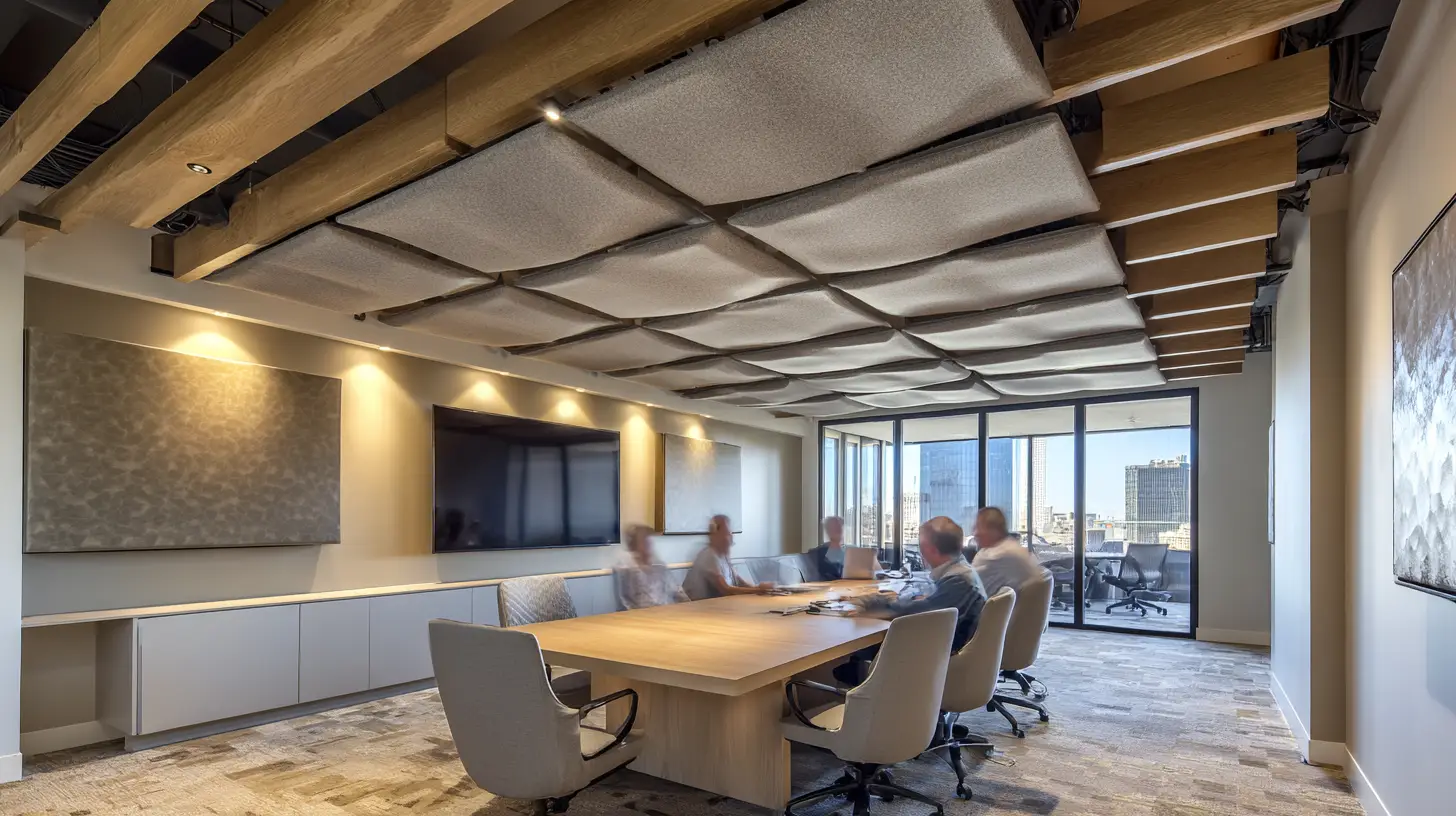
Once the structure is solid, focus on what happens inside. Hard walls, glass, and smooth ceilings bounce sound waves back and forth, creating long echoes that make voices unclear. Installing fabric acoustic panels or suspended acoustic panels helps manage these reflections. These panels improve sound absorption, making voices feel close and natural instead of distant. Adding sound masking systems strategically can also smooth out remaining unevenness in background noise, enhancing comfort during long discussions.
Partner with Experienced Professionals
Many of the most effective improvements happen when architectural planning and AV design work together. A skilled integrator understands how speakers, microphones, and room surfaces interact. This partnership ensures your soundproofing conference room project addresses both structure and technology instead of treating them separately.
How to Know It’s Working
Soundproofing success isn’t about guesswork. You can measure it.
A quiet conference room should stay around NC or RC 25-30, which means the background sound is low enough for clear speech but not so quiet that small noises become distracting. The room’s reverberation time (RT60) should be around 0.6 seconds. That’s the sweet spot where voices sound natural without echo. Finally, the walls between spaces should reach about STC 45-50, which means conversations won’t leak to the next room.
If you’re unsure where your room stands, ask for a professional test. Acoustic consultants and AV integrators can measure these values accurately. These numbers may sound technical, but they directly translate to better sound quality, improved privacy, and fewer meeting disruptions.
Soundproofing and the AV Connection
Even the best acoustic design won’t help if the audio setup isn’t adjusted for the room. Microphones that sit too far from speakers will always pick up more reflections than voices. Cameras and conferencing systems rely on clean audio to process signals effectively, and poor sound absorption or high background noise make that impossible.
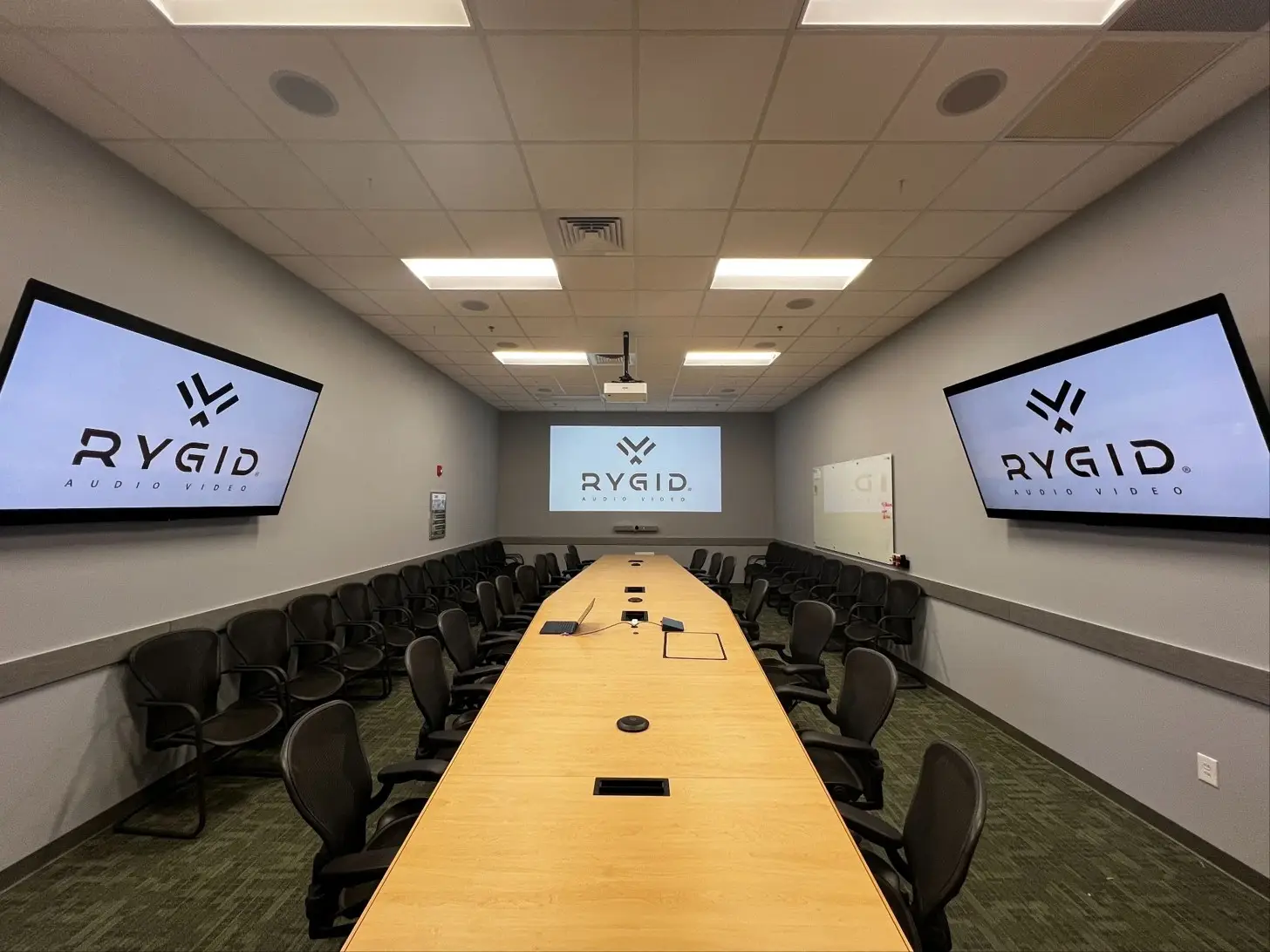
This is where professional integration matters. Teams like RYGID AV don’t just install AV equipment; they fine-tune the entire sound environment. They align microphone pickup zones, calibrate sound masking, and configure audio processors to complement the room’s natural acoustics. When technology and design work together, meetings sound effortless and natural, no matter who’s in the room or calling in remotely.
Building Rooms That Sound as Good as They Look
Most soundproofing problems in conference rooms aren’t about bad luck or poor materials. They come from incomplete planning and small oversights that compound into larger issues. The reality is simple: you can’t hide poor meeting room acoustics with gadgets or foam. Real results come from solid construction, balanced sound absorption, and systems that consider how people actually use the space.
A well-designed conference room feels calm and private. Voices sound warm, not harsh. You don’t need to repeat yourself, and your clients on the other end of the call can hear every word. That’s what effective soundproofing conference rooms should deliver.
If your meetings still struggle with echoes or unwanted noise, it might be time to look beyond quick fixes. Talk to a professional team that understands both sound and technology. RYGID AV helps businesses build spaces where communication truly works; rooms that sound as good as they look.
.webp)
Recommended articles
Explore our latest news & articles below


Where to Contact + Connect with RYGID AV
Mooresville, NC 28117
Mooresville, NC 28117