
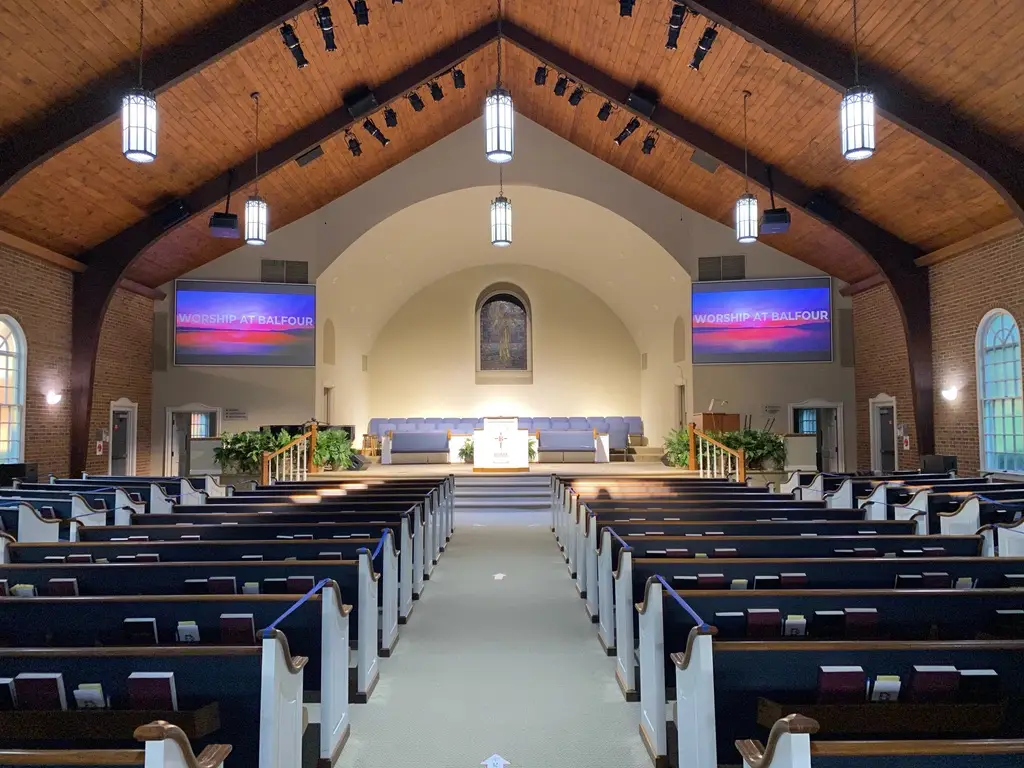
When a church starts exploring hearing assistance, the first question is rarely whether people need help. Most church leaders already know someone who's struggling to follow the sermon clearly. The real question is which system fits your space, and that answer is rarely as simple as picking a technology and ordering it.
A small chapel, a historic sanctuary, and a modern multi-room worship center can all require different approaches depending on room layout, existing sound system quality, building materials, and how your congregation uses the space week to week. Hearing loops, FM systems, and infrared systems are not interchangeable, and the right fit depends far more on your room than on which option comes with the best brochure.
Hearing Assistance Is Not About Amplification
This is worth clarifying upfront, because it's a common misconception.
Hearing assistance for churches is not about choosing hearing aids or personal amplifiers. It's about getting your church's existing sound system audio to listeners more clearly, through compatible hearing aids, portable receivers, or headsets, rather than just making everything louder.
That distinction matters because it changes the starting point for any conversation about these systems. If sermons already sound muddy, inconsistent, or echo-heavy in your sanctuary, hearing assistance will not fix the root problem. It will deliver that muddy audio to more people more efficiently. Clear source audio has to come first.
This is also why hearing assistance decisions belong inside a broader church AV conversation rather than a standalone product purchase. The system you choose is only as good as the audio it's working with.
The Three Main Options
Most churches will evaluate one of three assistive listening system types. The differences between them matter more than most church leaders expect going in.
Hearing Loops
A hearing loop runs a wire through a defined listening area and sends audio directly to telecoil-enabled hearing aids and cochlear implants. For users whose devices include that functionality, it can feel seamless — no borrowed equipment, no setup, just clearer audio when they switch to the right setting.
Hearing loops tend to work well in sanctuaries where discreet accessibility is a priority, for congregations with regular attendees already using compatible devices, and in new builds or planned renovations where installation can be built into the project from the start.
The tradeoff is that the building itself has real influence over how well the system performs. Floor materials, structural steel, and electrical interference can all affect the signal. Retrofit installations in existing sanctuaries can be more complex than they look on paper, and not every hearing aid includes telecoil functionality, meaning some users would still need a receiver regardless.
FM Systems
FM systems transmit audio via radio signal to portable receivers. They're typically easier to integrate into existing spaces without significant construction, which is why they're common in churches that need a practical solution without a major infrastructure project.
They work well in mid-size to larger worship spaces, multi-purpose rooms, and campuses where portability is useful. The operational reality, though, is that receivers need to be charged, stored, cleaned, and distributed, which usually means volunteers taking on that responsibility. Some congregation members may also feel self-conscious about requesting equipment, which is worth factoring into how you think about accessibility in practice.
Infrared Systems
Infrared systems use light-based signals to transmit audio within a defined room. Because the signal doesn't pass through walls, they're a natural fit when privacy or signal containment matters, for adjacent rooms that shouldn't share audio, for example.
They perform well in controlled environments and auditorium-style spaces. Line of sight matters more here than with FM or hearing loops, and bright sunlight can affect performance, so room conditions and layout need to be thought through. Receiver management is still required, similar to FM.
Why the Room Determines the Answer
Churches most often go wrong when they treat hearing assistance as a technology decision rather than a room decision.
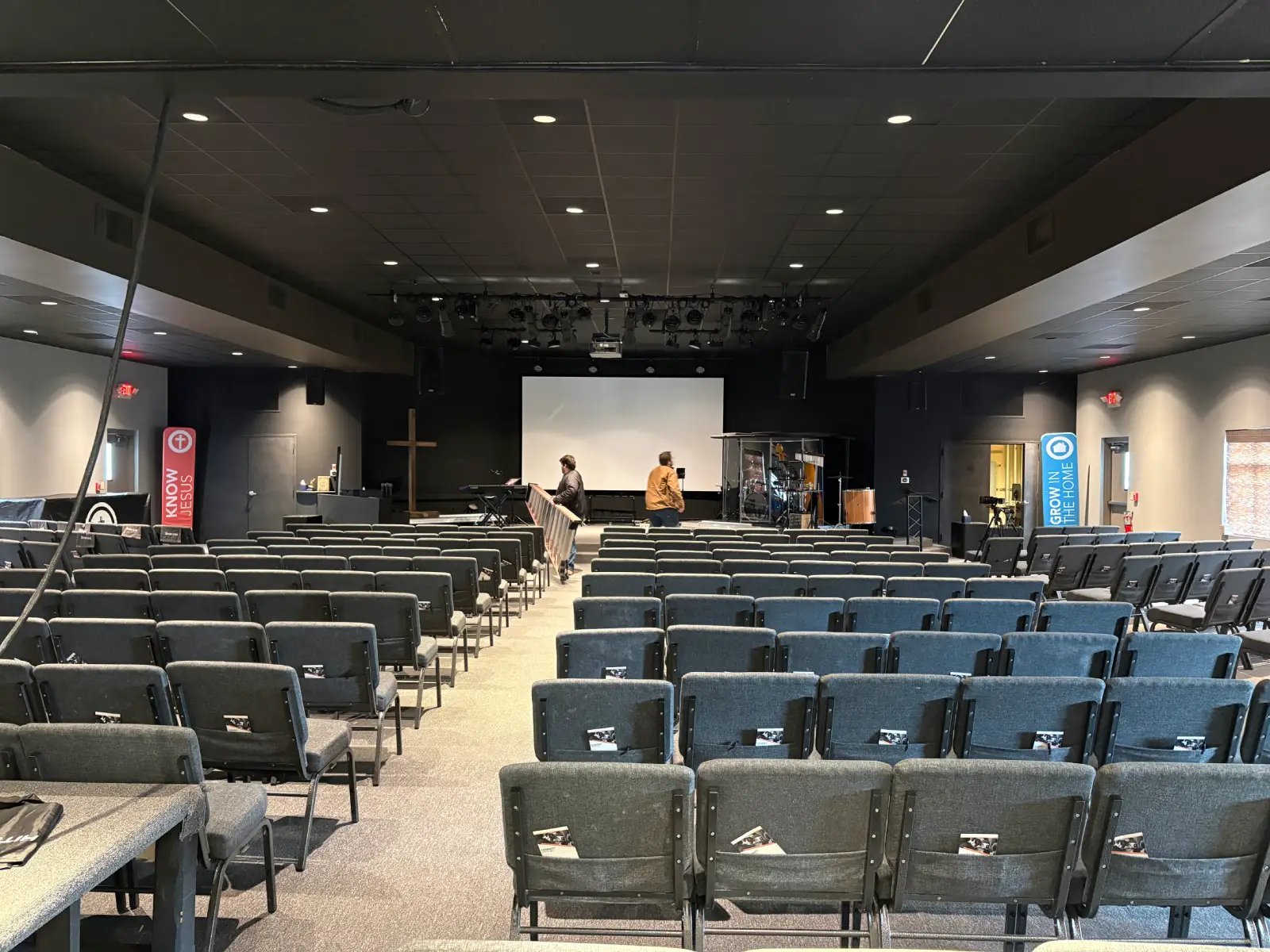
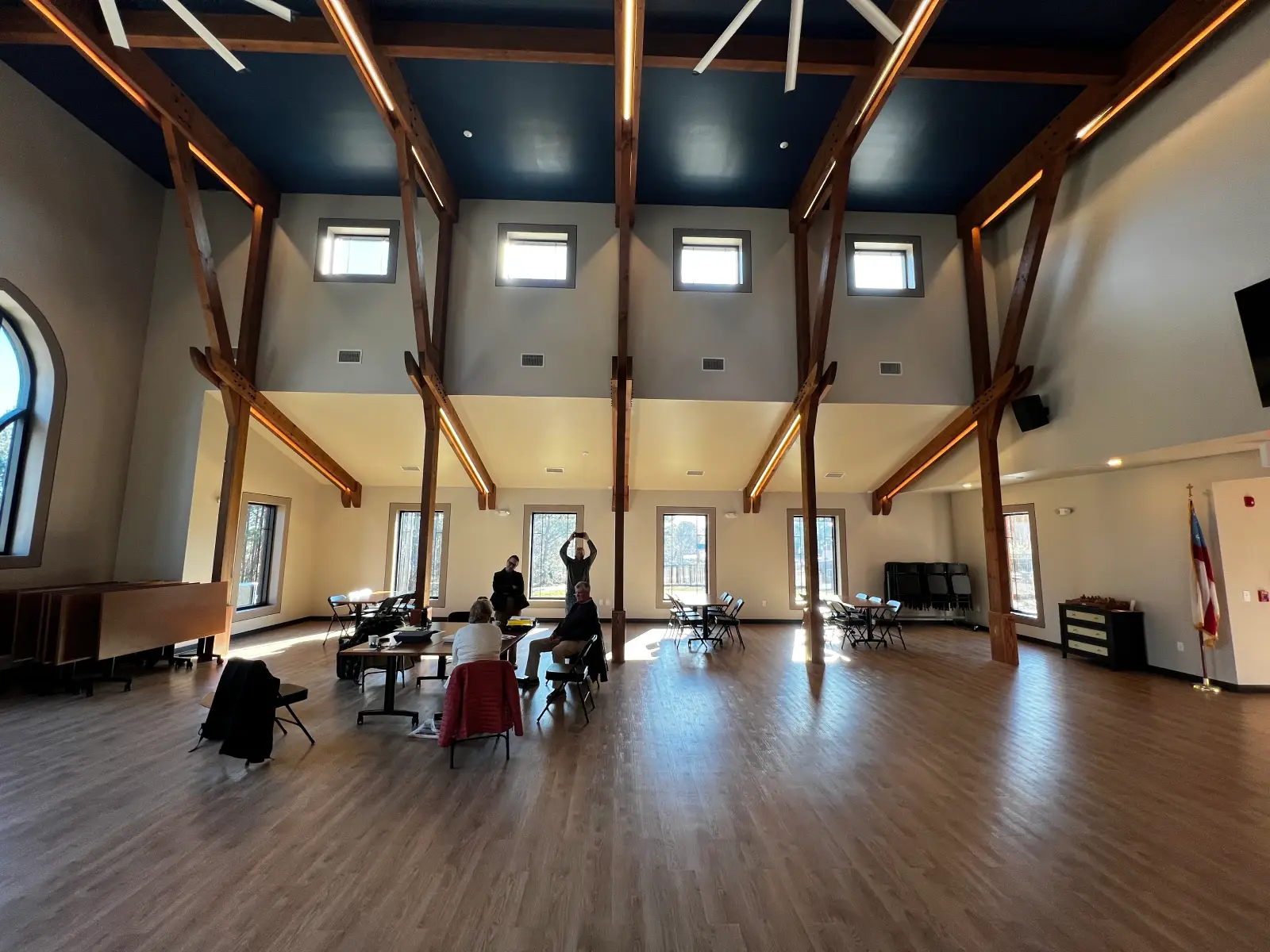
A small chapel has lower coverage demands and simpler logistics. The evaluation looks very different from a sanctuary with balcony seating, overflow rooms, and several hundred people spread across a space with its own acoustic challenges. In larger worship environments, room acoustics become especially important. If speech clarity is already compromised by echo or inconsistent microphone coverage, assistive listening will deliver that problem to more people — not solve it.
That's why the evaluation should start with how the room performs, not with which system type sounds most appealing. Churches that approach this question well treat it as an infrastructure conversation from the beginning, not a product selection at the end.
ADA and Renovation Planning
Churches don't need to become legal experts, but accessibility requirements should be part of the conversation whenever renovations or significant upgrades are on the table. Project scope, seating capacity, receiver counts, hearing-aid compatibility, and signage can all factor into planning decisions.
This isn't cause for panic. It's cause for early attention. Getting an AV partner involved before a renovation scope is finalized is far less costly than discovering compliance gaps after the project is done.
Questions Worth Asking Before You Choose Anything
Before the conversation turns to products, these are the questions that shape a good outcome:
- How large is the worship space, and does it include balconies or overflow areas?
- Is this a new build, a planned renovation, or a retrofit into an existing space?
- How clear is the existing sound system? Does speech intelligibility hold up across the room?
- Who will manage receiver distribution and maintenance on a weekly basis?
- Is discretion important: are there members who would be reluctant to request equipment?
- Are building materials or structural elements likely to create installation challenges?
- Does the system need to serve multiple spaces or a campus?
The clearer the answers, the more productive the evaluation becomes, and the more likely the final solution fits how the church operates day to day.
This Is an AV Conversation, Not a Product Purchase
Assistive listening is rarely solved by selecting equipment from a spec sheet. The right outcome depends on how well the system fits the existing sound setup, the room acoustics, the building's physical constraints, the congregation's practical needs, and whoever is going to operate it every Sunday.
For many churches, that means the hearing assistance conversation becomes part of a larger discussion about church AV solutions overall: evaluating speech clarity, understanding what the current system can support, and planning infrastructure that will hold up over time.
Working with an AV partner who can assess the full picture before making recommendations is usually where this starts. We help churches approach these decisions with practical system design and real-world context, so the solution fits the space rather than forcing the space to adapt to the wrong one.
.webp)
Recommended articles
Explore our latest news & articles below


Where to Contact + Connect with RYGID AV
Mooresville, NC 28117