
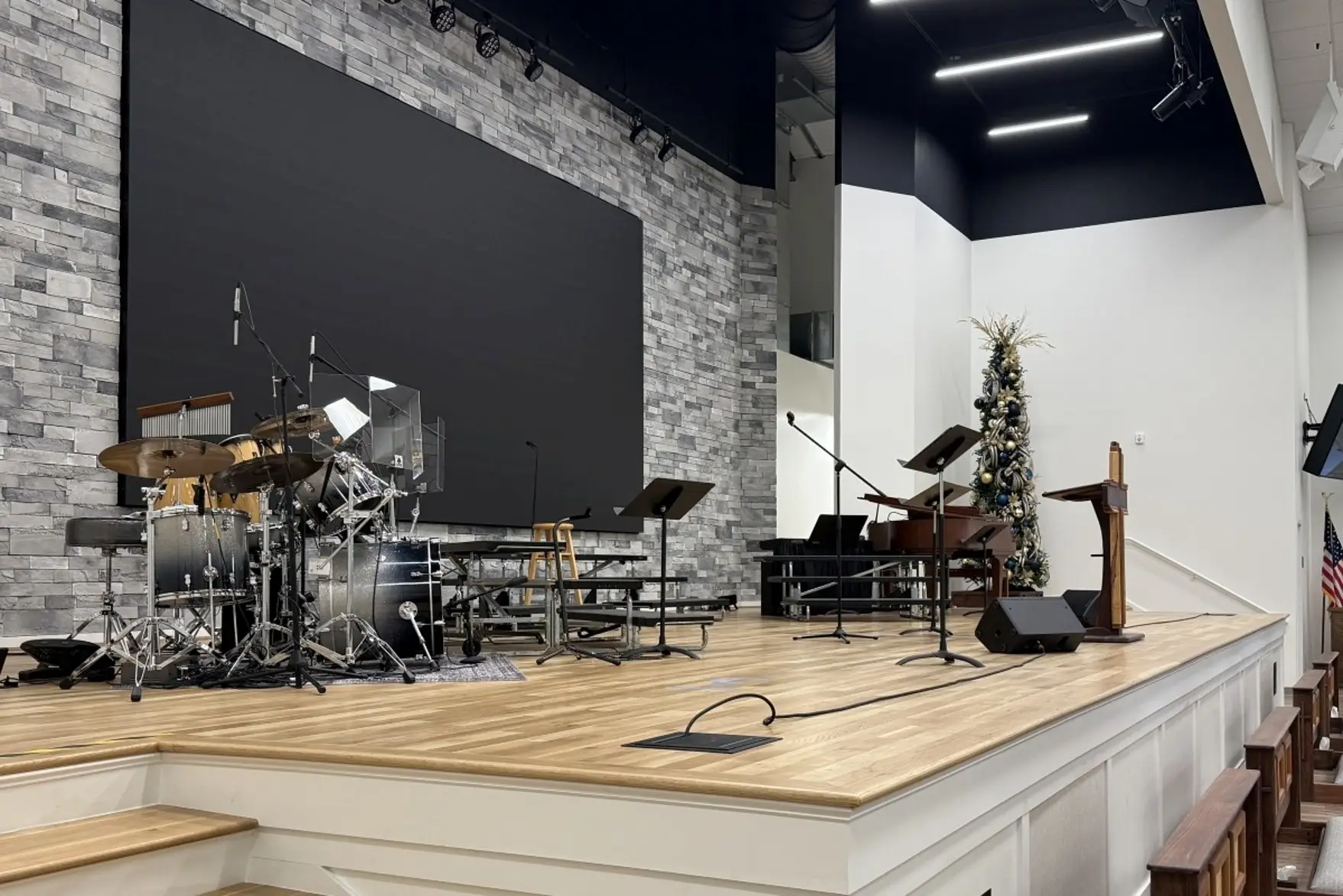
For churches with a full band, the same problems come up again and again. The stage is too loud. Vocalists can't hear themselves over the drums. The guitarist wants more of himself in the wedge, the keys player wants less of the guitarist, and the sound tech is stuck trying to keep the mix clear in the room.
Those problems usually lead to one question: should the team switch from stage monitors to in-ear monitors? It's a fair question, and the answer involves more than what sounds best to the people on stage. Choosing between in ear monitors vs stage monitors changes the sound in your entire sanctuary, so that's where we'll keep the focus as we compare them.
What Stage Monitors and In-Ear Monitors Do
Stage monitors, usually called wedges because of their angled shape, are speakers that sit on the stage floor and point back at the performers. Each one plays a monitor mix: a blend of the instruments and vocals the people near it need to hear to stay in time and in tune. Smaller setups may share one or two mixes across the whole team. Larger ones may give each performer a dedicated wedge.
In-ear monitors replace those speakers with earpieces. Each performer hears a mix sent directly to their ears, either through a cable to a small pack on their belt or through a wireless receiver pack. Because the earpieces sit in the ear canal, they also block a good deal of outside sound, the way earplugs do.
Both do the same job. They let musicians and singers hear what they need to perform well. The difference is where the sound goes once it leaves the speaker, and that difference matters more than most teams expect.
How Stage Volume Affects the Whole Sanctuary
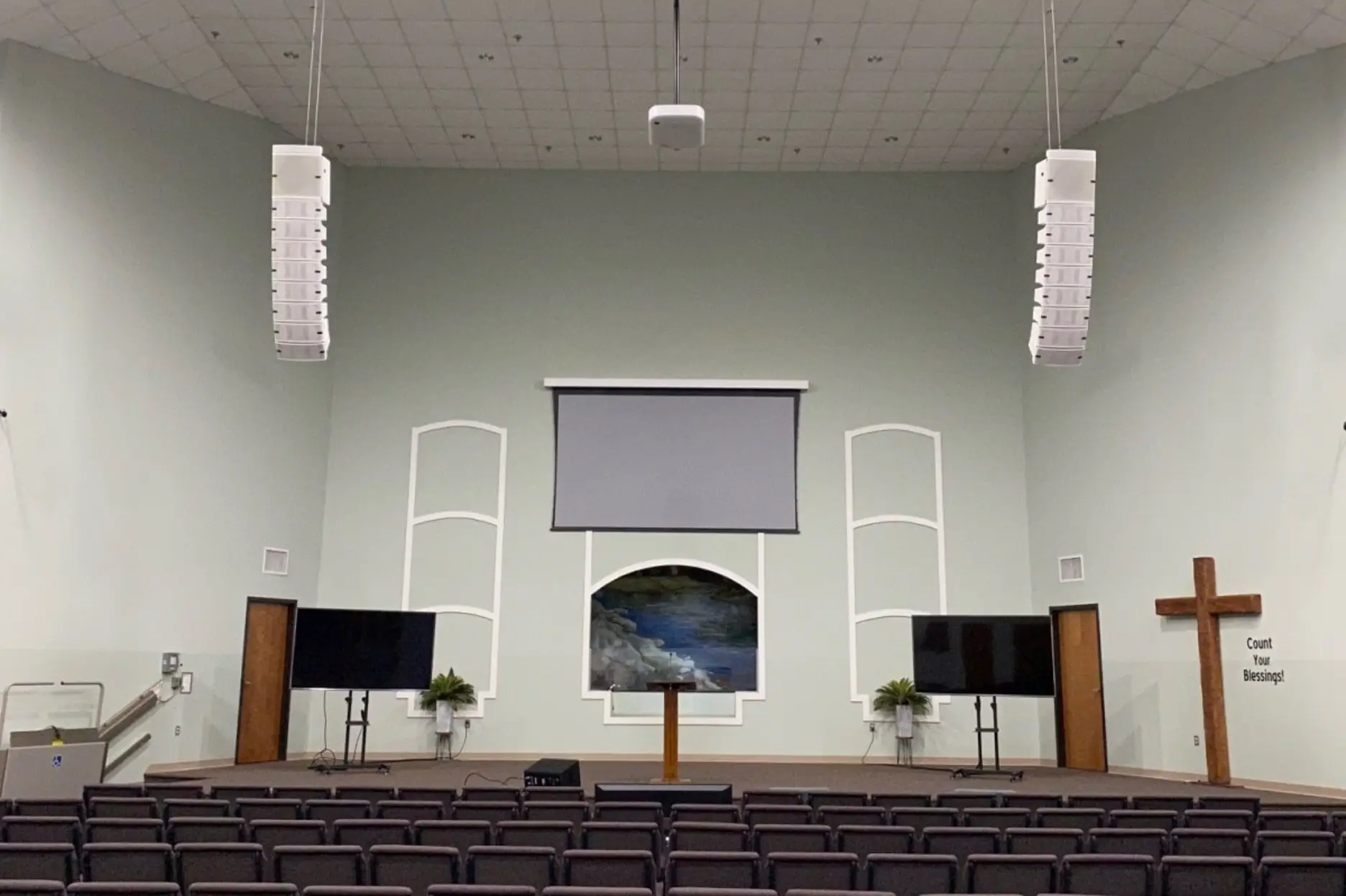
A wedge doesn't only send sound toward the performer in front of it. Speakers spill sound in every direction, and on a church stage that spill ends up in places that cause trouble.
It bleeds into the vocal mics. A vocal mic sits a few inches from a singer's mouth and a few feet from a wedge. It picks up the singer, but it also picks up the monitor mix, the drums, and the guitar amp. That extra sound muddies the vocal and pushes the system closer to feedback, which forces the sound tech to keep the vocals lower than they should be.
It adds to what the congregation hears. In a large room, stage sound fades with distance. In a smaller sanctuary, the people in the first several rows may hear nearly as much from the stage as from the main speakers. The front-of-house engineer can only control what runs through the main system. Everything coming off the stage is sound they can't adjust.
And hard surfaces make all of it worse. Drywall, glass, wood floors, and high ceilings bounce stage sound around the room and smear the mix even further.
Think of it like trying to hear one friend at a crowded restaurant. You can ask them to speak up, but you're still competing with every conversation around you. Lowering stage volume quiets the restaurant. That's why reducing stage volume is often the first step toward a cleaner mix, before anyone touches the main speakers. If your room has bigger acoustic challenges, our church sound system guide covers the other side of the problem.
In-Ear Monitors vs. Wedges: Side by Side
When teams weigh in ear monitors vs wedges, the decision usually comes down to six areas.
For most church teams, in-ears win on the two issues that cause the most Sunday morning friction: mix control and stage volume. When every performer hears exactly what they need, the arguments over the monitor mix stop, and the sound tech gets a stage quiet enough to mix the room properly.
Wedges still have real advantages. They're simple, volunteers understand them, and nothing about them needs to be charged, paired, or fitted. Many musicians also prefer hearing the room around them, especially in worship, where the congregation singing is part of the experience.
Our take: if stage volume is hurting the sound in your sanctuary, in-ears are usually the most effective fix. If your stage is already under control and the mix sounds good in the room, there may be no reason to change.

When Stage Monitors Still Make Sense
In-ears aren't the right call for every team. A small team playing acoustic sets usually doesn't generate enough stage volume to cause problems, and wedges keep things simple. Our guide to small church sound systems covers what that kind of setup needs.
Some vocalists also struggle with the isolation. They're used to hearing their voice in the room, and an in-ear mix can make it harder for them to stay on pitch until they adjust. Teams that rotate through a large pool of occasional musicians may find that wedges are easier to manage than fitting and training everyone on in-ears.
A hybrid setup is often the practical middle ground. The drummer and band go to in-ears, which removes most of the stage volume, while a worship leader who wants to hear the congregation keeps a wedge at a modest level.
What Switching to In-Ears Involves
Moving a team to in-ears is more than handing out earpieces. A few decisions shape how well the switch goes.
How mixes are built. There are two common approaches. The sound tech can build each performer's mix at the main console, which keeps control in one place but adds to their workload during the service. Or each performer gets a personal mixer at their position and sets their own blend. Personal mixers take pressure off the sound booth, though they need some setup and training. Either way, your console has to support the number of mixes you plan to run. If yours is older, check that first, since a console upgrade may need to be part of the plan. You can see the consoles and other commercial audio equipment we work with.
Wired or wireless. Performers who stay in one spot, like the drummer, keys player, or bassist, often do fine with wired packs, which are simpler and don't use any wireless frequencies. Worship leaders and vocalists who move around the stage usually need wireless.
Frequency coordination. Every wireless in-ear pack uses a frequency, and so does every wireless mic. Add several in-ear packs to a stage already running wireless mics, and the risk of interference goes up. The whole wireless system should be planned together, not one piece at a time.
Ambient mics. One common complaint about in-ears is feeling cut off from the room. A pair of mics aimed at the congregation, fed into the in-ear mixes, lets the team hear people singing along and keeps the sense of worshiping together.
The adjustment period. Learning how to use in-ear monitors on stage takes some time. The first few weeks usually feel strange, so have the team rehearse with in-ears before using them in a service.
![BODY IMAGE: worship team performing with in-ear monitors]
When it comes to budgeting, the cost of a switch depends on a handful of factors:
- How many separate mixes your team needs
- How many performers need wireless packs versus wired
- Whether your current console can support the mixes or needs an upgrade
- Whether personal mixers are part of the plan
- Whether performers use generic earpieces or custom molds
Making the Right Call for Your Sanctuary
There's no single right answer in the in-ear monitors vs. stage monitors decision. The best setup depends on your team, your stage, and your room. What matters is making the choice with the whole sanctuary in mind, not only what sounds good to the people holding instruments.
If stage volume is getting in the way of your Sunday mix, RYGID AV can evaluate your stage, your monitor setup, and your sanctuary together during an AV consultation. As part of our church sound system design work, we make sure the fix you choose improves what your congregation hears.
Fighting stage volume or monitor mix problems? Contact RYGID AV, and we'll help you figure out whether in-ears, wedges, or a hybrid setup fits your team and your room.
RYGID AV | 122 Backstretch Ln., Mooresville, NC 28117 (980) 263-9194 | info@rygidav.com

Recommended articles
Explore our latest news & articles below


Where to Contact + Connect with RYGID AV
Mooresville, NC 28117
Mooresville, NC 28117