
If you've ever collected a few AV quotes for a conference room or a worship space and laid them side by side, you already know the problem: they don't look anything alike. One vendor hands you a single bottom-line number. Another breaks out ten line items you don't fully understand. A third seems to have quoted a completely different room than the one you walked them through.
It's not that any of these companies are necessarily wrong. It's that the AV industry doesn't have a standard way of quoting, so you're often left comparing apples to oranges without realizing it.
After years of doing this, here's what I tell people to look for in a quote — and in the company behind it — before they sign anything.
1. Line-Item Pricing, Not Just a Bottom Line
A good quote tells you where every dollar is going: the display, the mounting hardware, the DSP, the labor, the programming. Not just "AV System – $42,000."
I quote this way on every project, and I ask other vendors to do the same when I'm pricing work on a client's behalf. It's not about nickel-and-diming anyone. It's about giving you enough information to actually evaluate what you're buying — to see whether the money is going toward the parts of the system that matter most for how you'll use the room, and to compare that against another quote without guessing.
When a company won't break down pricing, it's worth asking why. Sometimes it's just how they've always done it. But a lack of line items also makes it easy to hide markup, bundle in things you don't need, or pad a number without you ever knowing. I respect that this is a real investment for you, and I think the best way to show that respect is to be specific about where the money goes — not just ask you to trust a total.
2. A Site Visit Before a Number, Not After
Be cautious of any quote built entirely off a phone call or a floor plan you emailed over. Rooms have quirks that don't show up on paper — ceiling height, sightlines, existing wiring, where the sun hits the windows at 4pm, acoustics that make a space louder or deader than it looks.
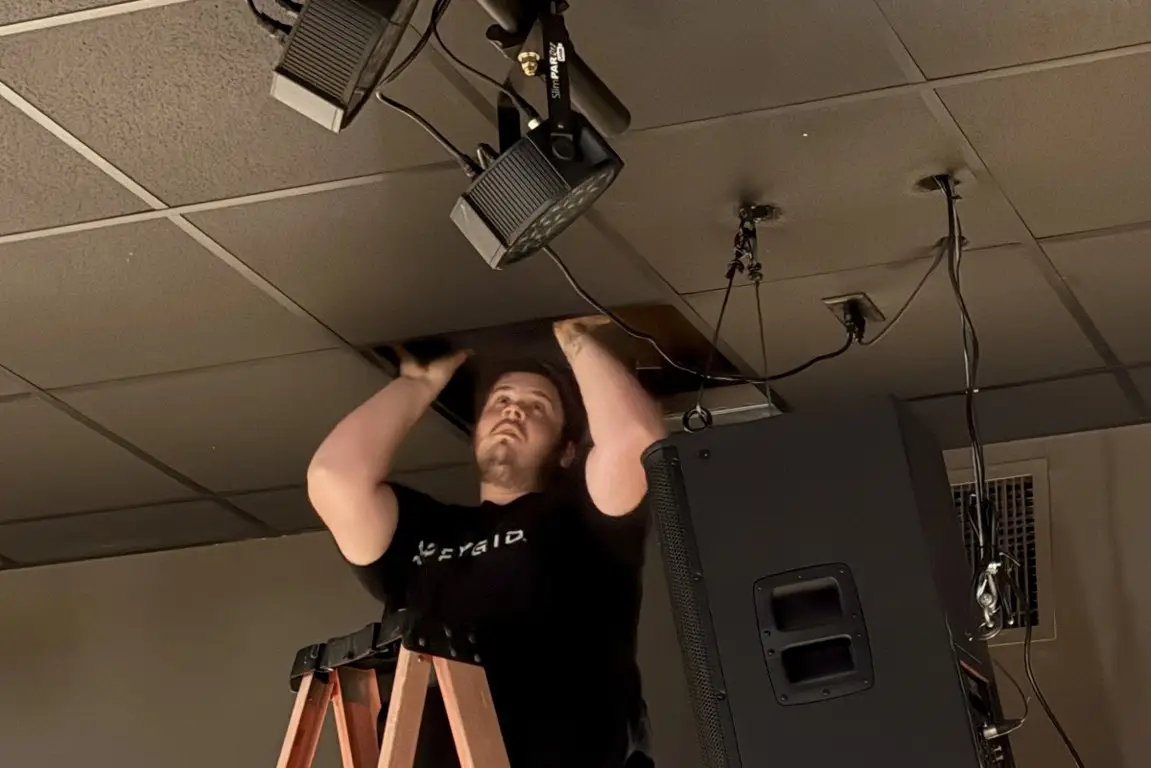
A vendor who walks the room before pricing it can often see things you can't, simply because they've seen hundreds of rooms and you've seen yours. That might mean flagging an acoustic issue before it becomes a complaint six months in, or catching that a wall won't support the mount you asked about. It's a lot cheaper to catch that during a site visit than during installation.
If a company is willing to hand you a number sight unseen, that should tell you something about how much attention your project is going to get later.
3. Recommendations Sized to You, Not to Their Margin
This one's personal for me. Early in my career, I sold cars for a while, and I was bad at it — not because I didn't understand the product, but because I couldn't talk someone into buying more car than they needed. If a family needed something reliable and simple, I wasn't going to push the upgraded package just because it paid better.
That instinct followed me into AV. A good quote matches the technology to how you'll actually use the space, not to what generates the biggest number. Sometimes that means recommending less than a client expected. Sometimes it means recommending more, because I've seen what happens when someone buys the cheapest option for a space that needed better acoustic treatment or a more capable amplifier, and it fails within a couple of years.
Either way, the goal should be the right level of investment for your needs — not the maximum one. If every recommendation in a quote happens to be the most expensive option available, that's worth a second look.
4. A Company That Wants an Ongoing Relationship
AV systems aren't installed and forgotten. Firmware needs updating. New technology gets connected. Something that worked fine for two years suddenly needs a fix nobody expected. The system you install today should still be serving you well in five or ten years, and that only happens with some ongoing attention.
So pay attention to how a company treats you before you've signed anything. Do they answer the phone? Are they interested in understanding how your team actually works, or just in closing the sale? A company that's genuinely building a relationship with you will act like it from the first conversation. One that's just trying to close a deal usually shows that too — you just have to be looking for it.
Why This Matters More Than It Seems
None of these four things are complicated, but together they tell you a lot about how a company operates — not just on this project, but on the ones after it. Transparency, a real look at your space, sizing to your needs instead of their margin, and an interest in the long haul. Those aren't extras. They're the baseline of what a good AV relationship should look like.
If you're in the middle of collecting quotes for a conference room or a worship space right now, it's worth holding each one up against this list. And if you want a second opinion on a quote you've already received, or you're just getting started, we're happy to talk through it with you.
Ready to talk through an AV quote or integration project? Contact RYGID AV — we're happy to walk your space and give you a straight, line-item answer.
RYGID AV | 122 Backstretch Ln., Mooresville, NC 28117 (980) 263-9194 | info@rygidav.com
.webp)
Recommended articles
Explore our latest news & articles below


Where to Contact + Connect with RYGID AV
Mooresville, NC 28117