
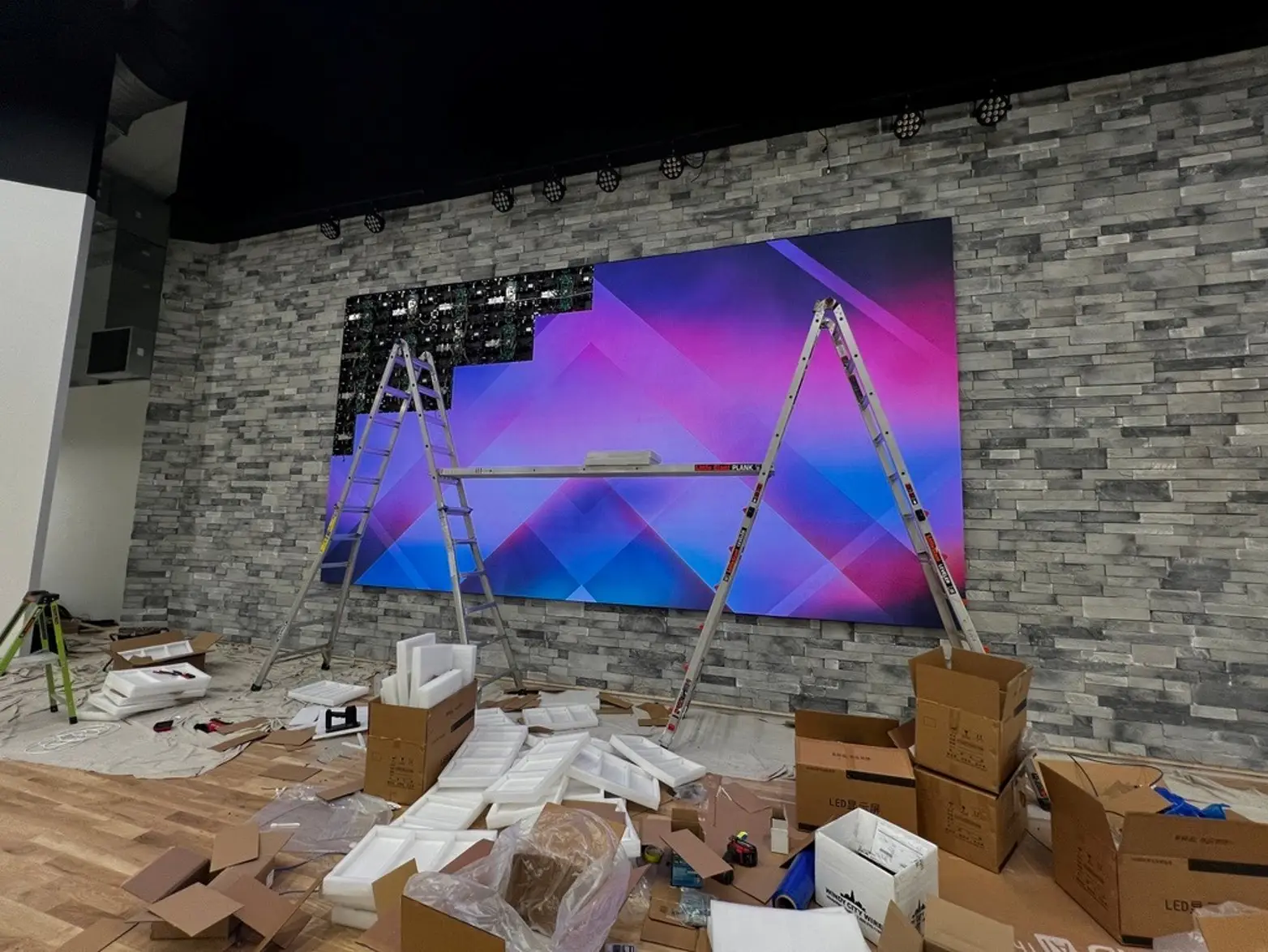
"How much does an LED video wall cost?" is usually the first question we get, and it's a fair one. The honest answer is that it depends. That isn't a dodge. Most folks understand that “How much does a car cost?” or “How much does a house cost?” isn’t as simple as giving someone a number.
The LED video wall cost for any room comes down to a handful of specific, predictable decisions, and once you know them, the number stops being a mystery.
We don't publish a price list, and we'd be wary of anyone who quotes you a wall without seeing the room. Two walls that look identical on a spec sheet can land very far apart once you account for the wall they're hanging on, the power feeding them, and everything they need to connect to. Without that context, a number can turn into a bad surprise later.
What we can do is walk you through what goes into that number, so when a quote lands on your desk, you know what you're looking at.
Why the Prices You See Online Don't Answer the Question
Search for LED video wall prices, and you'll find listings anywhere from a few hundred dollars to well over six figures. That range isn't because some sellers are cheap and others are gouging. It's because those listings are selling completely different things.
A few hundred dollars usually buys a single panel, one piece of a wall. The five-figure listings tend to be packages: a set number of panels at one size and one pixel pitch, sometimes built for outdoor use or for touring events rather than a permanent install. The higher numbers are often all-in-one displays, a finished product in a fixed size, more like an oversized TV than a custom wall.
None of those is the price of your wall, because none of them was sized for your room, your viewing distance, or what you'll put on the screen. They also stop at the box. Getting any of them onto a wall and working with the rest of your room is a separate part of the project, which we'll get to below.
If you're not sure whether a kit or a custom build makes more sense for your space, we break down the difference between a video wall and an LED video wall, including where each one fits.
The Decisions That Set the Price
A few early choices shape the LED video wall price more than anything else.
Size
Bigger walls need more modules, more structure to hold them, and more power to run them. That part is intuitive. What's less obvious is that size touches every other decision on this list, so a change in dimensions can move the whole quote, not just the panel count.
Pixel Pitch and Viewing Distance
Pixel pitch is the distance between the individual LEDs on the wall. The tighter the pitch, the more LEDs you're paying for in the same space, and the cost climbs quickly. Cut the pitch in half and you need roughly four times as many LEDs to fill the same area.
That's why the tightest pitch isn't automatically the smartest spend. The right pitch depends on how far back your audience sits. A congregation 40 feet from the platform doesn't need the same pitch as a conference table eight feet from the screen, and paying for detail nobody in the room can see is one of the easiest ways to overspend. We go deeper on this in our guide to what separates a good dvLED wall from an expensive mistake.
All-in-One Kit vs. Custom Wall
Kits come in set sizes and install more simply, which keeps costs down and makes them a strong fit for many conference rooms. Custom walls fit the space exactly and handle demanding content like fast motion and live camera work better, but they take more engineering and more labor.
Component Quality
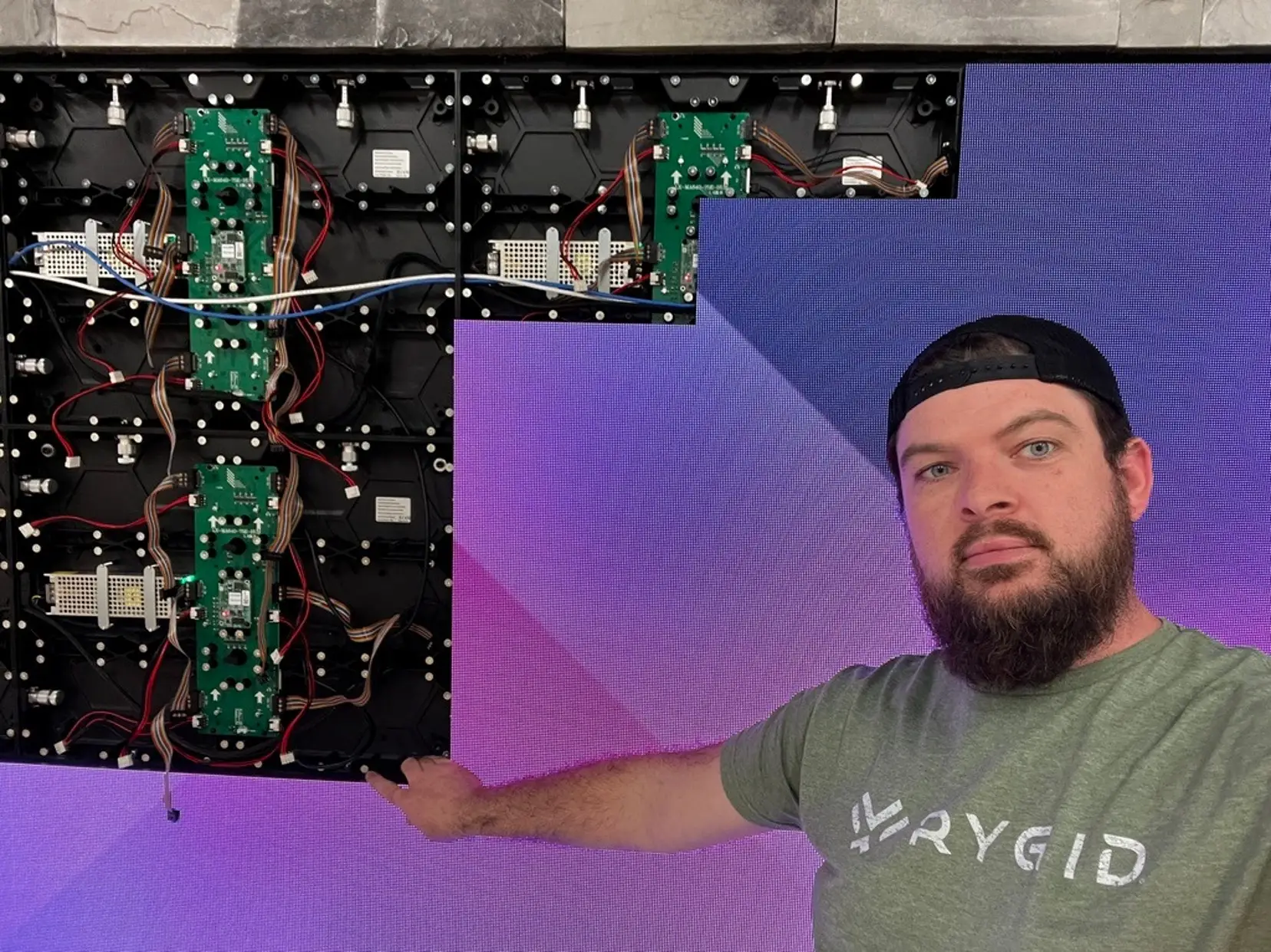
Two walls with the same size and pitch can still be priced far apart because of what's inside them: how the LEDs are packaged, the quality of the drivers, and how the cabinets are built. Lower-cost panels tend to cut corners in exactly these places, and the problems (dead pixels, flicker on camera, colors that don't match from panel to panel) often show up within a year or two. That's a big part of why a cheaper wall isn't always the less expensive one.
What's in an LED Video Wall Quote Besides the Panels
This is where most of the gap between an online listing and a real quote comes from.
Structure and Mounting
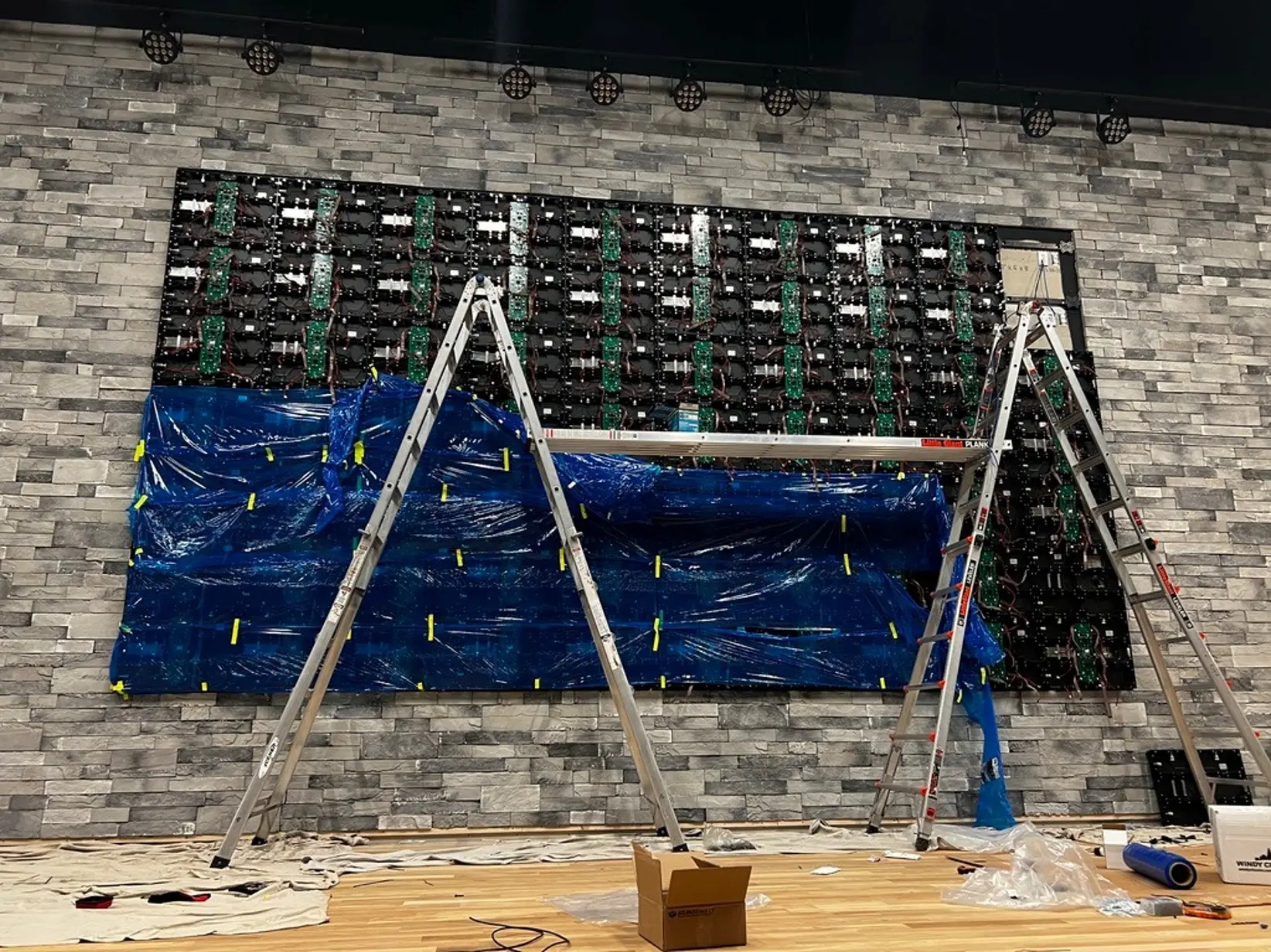
LED cabinets are heavy, and a full wall of them adds up fast. Before anything goes up, someone has to confirm the wall or ceiling can carry the load. Sometimes that means reinforcing the framing. A suspended wall needs rigging, and a freestanding wall needs its own support structure. On larger builds, a structural engineer may need to sign off.
Power and Heat
An LED wall draws real power, and most existing rooms weren't wired for one. New dedicated circuits are common, which means an electrician is usually involved. The wall also generates heat, so a room with limited airflow may need cooling adjustments to keep both the wall and the people in front of it comfortable.
Processing and Control
The wall itself doesn't know what to display. A video processor takes your sources, like a laptop, a camera feed, or presentation software, and maps them across every module so the image reads as one picture. On top of that, your team needs a way to turn the wall on, switch inputs, and change layouts without calling a technician, so there's a control system to plan for too. For a quick look at how these pieces fit together, see our overview of the parts of a video wall system.
Connecting It to Everything Else
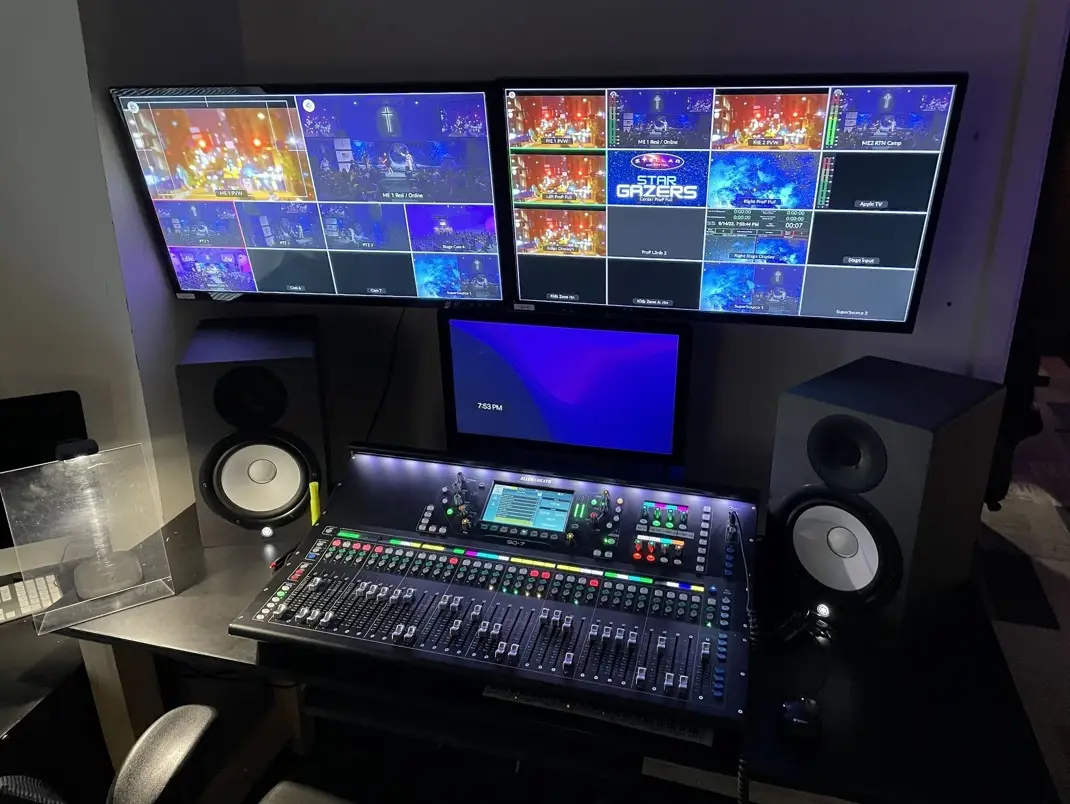
A video wall rarely stands alone. In a church, it has to work with the video switcher, the lyric and slide software, and the livestream. In a conference room, it has to work with your video calling platform, cameras, and microphones. That connection work is where AV integration comes in, and it's a line item worth understanding before you compare quotes.
Installation, Calibration, and Commissioning
Hanging the modules is only part of the labor. Every module has to be calibrated so color and brightness match across the entire surface. Skip or rush that step, and you'll see a patchwork of slightly different panels, especially on solid backgrounds. Then the full system gets tested with real content before it's handed over, so the installer finds problems instead of your audience on day one.
Costs That Come After Installation
The cost of an LED wall doesn't stop on install day. Plan for spare modules from the start, ideally ordered from the same production batch as the rest of the wall. LEDs vary slightly from batch to batch, and a replacement module from a different run can stand out against its neighbors.
Service plans and warranty terms matter too, and they vary a lot from one vendor to the next. So does power use. A wall that runs every Sunday or every workday will show up on the utility bill.
Put together, a lower upfront price can cost more over the life of the wall if panels fail early, replacements don't match, or support isn't there when you need it.
How the Cost Picture Differs for Churches and Conference Rooms
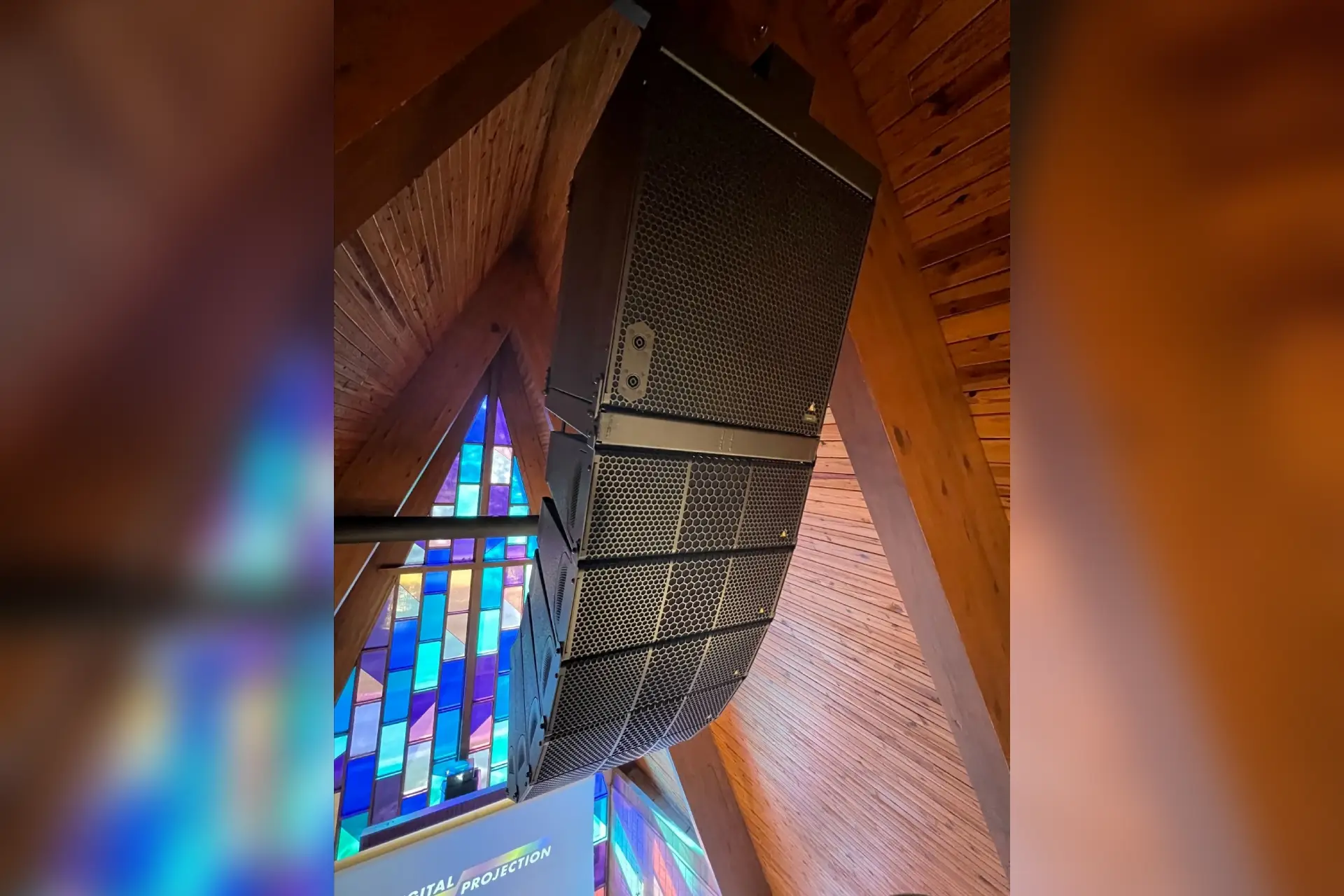
Sanctuaries usually call for larger walls, but people also sit farther back, which often allows a wider, less expensive pixel pitch. That can offset some of the added cost. The bigger factors in a church are usually structure and rigging, plus camera performance. If the wall will appear on your livestream, driver quality and refresh rate matter a lot more, because flicker that's invisible in the room can show up clearly on camera. Our church AV systems page covers how we approach the whole sanctuary, not just the screen.
Conference rooms flip that picture. The walls are smaller and viewed up close, and the content is mostly slides, spreadsheets, and video calls. That makes an all-in-one kit a strong option in many rooms. The biggest cost variable is usually integration: getting the wall to work reliably with your meeting platform and the rest of the room. Our conference room AV page has more on how we plan those spaces.
Why Two Quotes for the "Same" Wall Don't Match
If you collect a few quotes and the numbers are far apart, it doesn't necessarily mean someone is overcharging. More often, the vendors are quoting different things. One may be pricing a kit while another prices a custom wall. One may include structural and electrical work while another leaves them out. Calibration, spare modules, and service might be built in, listed separately, or not mentioned at all.
The fix is to ask for line-item pricing so you can compare like with like. We cover that and a few other things to watch for in what to look for in an AV quote.
LED Video Wall Cost FAQ
Why don't AV integrators list LED video wall prices?
Because a posted price would be wrong for almost everyone. Room size, viewing distance, structure, power, and integration all change the number, and a price that ignores them sets expectations the real project can't meet.
Is an LED video wall more expensive than a video wall made from TVs?
Usually, yes, at least upfront. A wall of flat-panel displays generally costs less, but you'll see the lines between screens, and it can struggle in bright rooms. An LED wall reads as one continuous image and holds up well against ambient light. Which one is worth it depends on the room and what you'll show on it.
Does pixel pitch really affect the price that much?
Yes. Halving the pixel pitch means roughly four times as many LEDs in the same area. That's why matching pitch to your actual viewing distance is one of the most important budget decisions you'll make.
Understanding the Cost Is How You Control It
The LED video wall cost for your room isn't random. It comes from the size, pitch, wall type, component quality, and everything it takes to hang, power, connect, and calibrate it. Once you understand those pieces, you can decide where your budget should go and where a simpler option makes more sense.
Planning an LED wall for a sanctuary or conference room? Contact RYGID AV. We'll walk your space and give you a line-item quote that shows where every dollar goes. If you want to see what's out there first, browse our visual display options.
RYGID AV | 122 Backstretch Ln., Mooresville, NC 28117 (980) 263-9194 | info@rygidav.com
.webp)
Recommended articles
Explore our latest news & articles below


Where to Contact + Connect with RYGID AV
Mooresville, NC 28117